Department of Construction Management, South China University of Technology, Guangzhou, 510641, China.
Department of Applied Physics and Electronics, Umeå University, 901 87, Umeå, Sweden.
Environ Sci Pollut Res Int. 2023 May;30(22):62716-62732. doi: 10.1007/s11356-023-26494-4. Epub 2023 Mar 22.
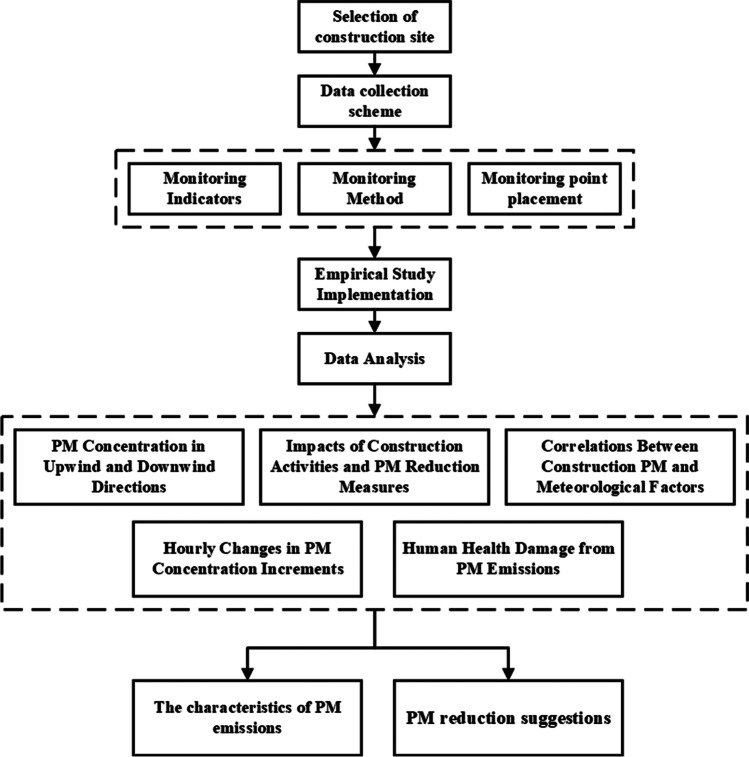
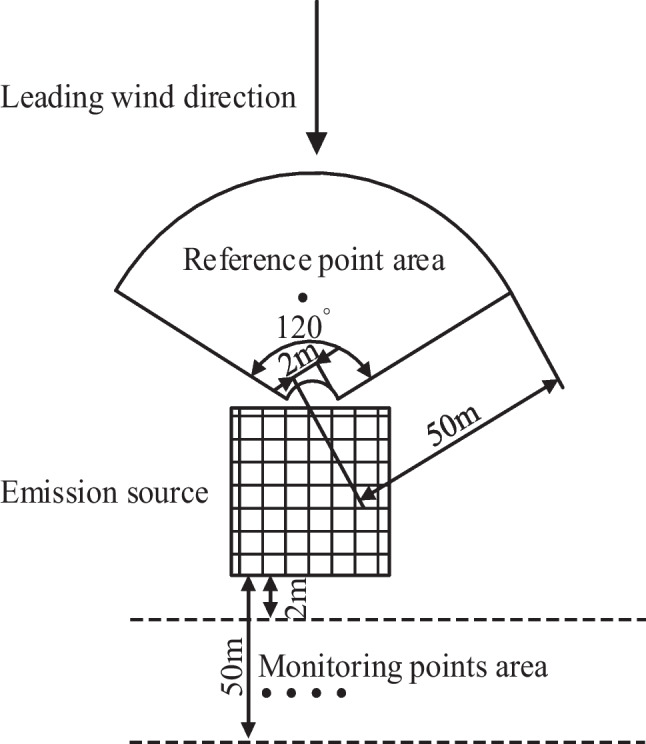
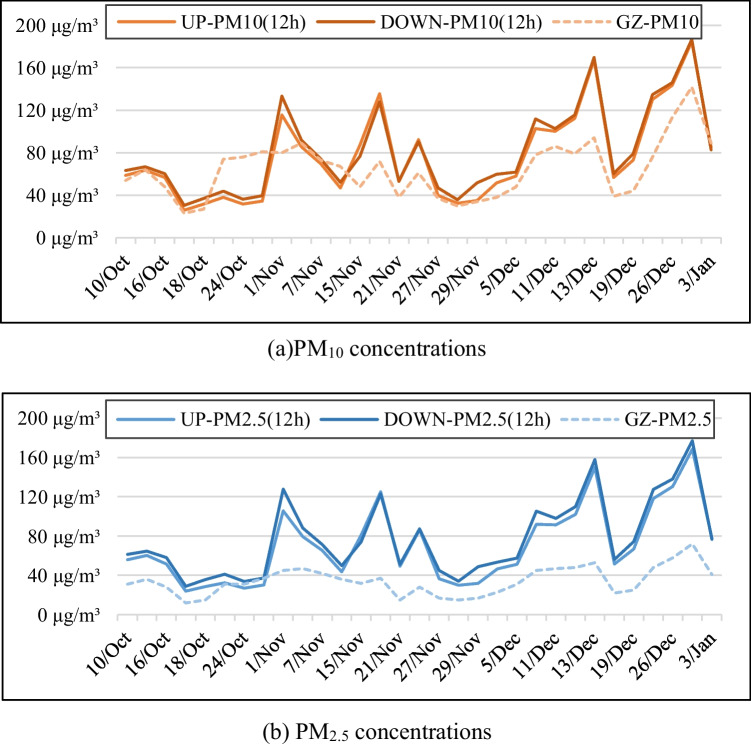
The bulk of the particulate matter (PM) emissions generated during construction projects are significantly released during the earthwork and foundation stages. To reduce and control these emissions, it is necessary to have reliable data on their characteristics. However, construction PM are poorly characterized because their composition depends on several factors (e.g., weather and reduction measures) and various on-site activities whose effects may interact. To address these challenges, a long-term quantitative empirical study using advanced statistical methods was performed on a real construction project during the whole earthwork and foundation stages. The upwind-downwind method was used to collect data on PM emissions throughout the earthwork and foundation construction process, and correlation analysis, paired samples t-test, and partial least squares regression (PLS) were used to analyze TSP, PM, and PM emissions and their relationships with various influencing factors. The results showed that both earthwork and foundation constructions generate substantial PM emissions because there were differences with statistical significances in the PM levels measured upwind and downwind of the construction site. TSP and PM emissions correlated moderately with humidity and wind speed. However, temperature and atmospheric pressure did not correlate significantly with any of the measured emissions. The main activities responsible for PM emissions during the earthwork and foundation construction stages were hammer piling, waste stacking, and materials transportation. Water spraying was found to effectively reduce TSP and PM emissions, while the use of a fog cannon more effectively reduced PM emissions. Construction PM is an important source of atmospheric pollution in cities; the findings presented herein provide cornerstone and knowledge to guide efforts for reducing its impact.
在建筑工程中,大部分颗粒物(PM)排放是在土方工程和基础阶段大量释放的。为了减少和控制这些排放,有必要掌握有关其特性的可靠数据。然而,建筑 PM 特性描述较差,因为它们的组成取决于多种因素(例如天气和减排措施)和各种现场活动,其影响可能相互作用。为了解决这些挑战,在整个土方工程和基础施工阶段,对一个真实的建筑项目进行了长期的、使用先进统计方法的定量实证研究。使用上风下风法在整个土方和基础施工过程中收集 PM 排放数据,并使用相关分析、配对样本 t 检验和偏最小二乘回归(PLS)分析 TSP、PM 和 PM 排放及其与各种影响因素的关系。结果表明,土方和基础施工都会产生大量的 PM 排放,因为在施工现场的上风和下风处测量的 PM 水平存在统计学差异。TSP 和 PM 排放与湿度和风速中度相关。然而,温度和气压与任何测量的排放物均无显著相关性。在土方和基础施工阶段导致 PM 排放的主要活动是锤击桩、废物堆积和材料运输。喷水被发现能有效地减少 TSP 和 PM 排放,而雾炮的使用则更有效地减少了 PM 排放。建筑 PM 是城市大气污染的一个重要来源;本文的研究结果为减少其影响提供了基石和知识。