Institute of Medical Physics and Biophysics, University of Leipzig, Leipzig, Germany.
Skin Barrier Research Group, Faculty of Pharmacy, Charles University, Hradec Králové, Czech Republic.
J Lipid Res. 2023 May;64(5):100356. doi: 10.1016/j.jlr.2023.100356. Epub 2023 Mar 21.
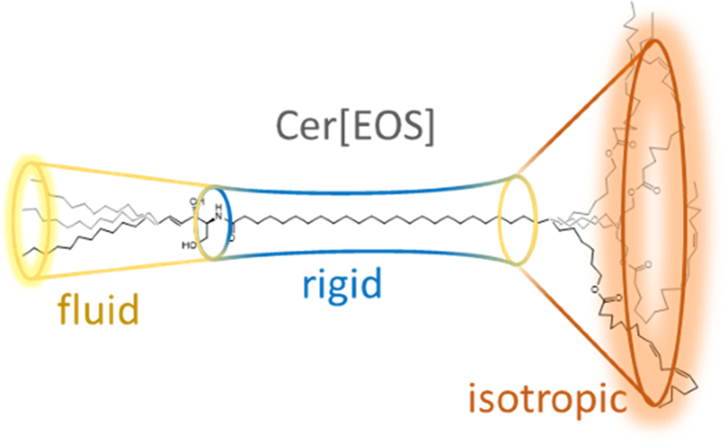
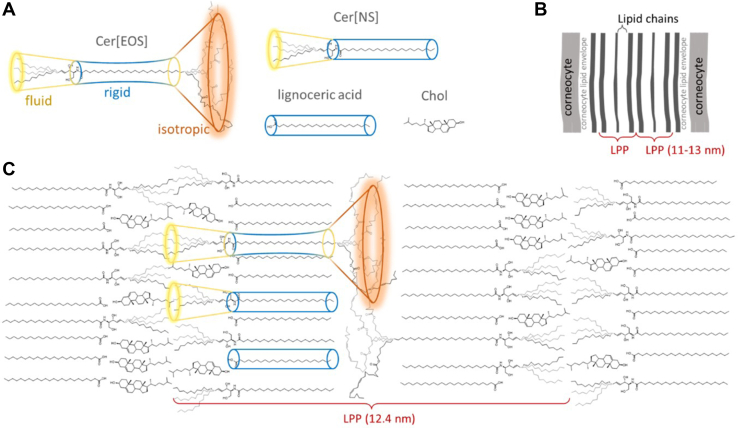
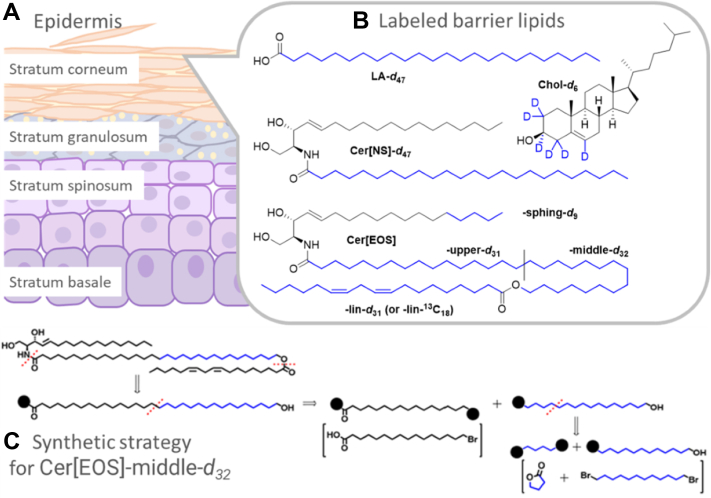
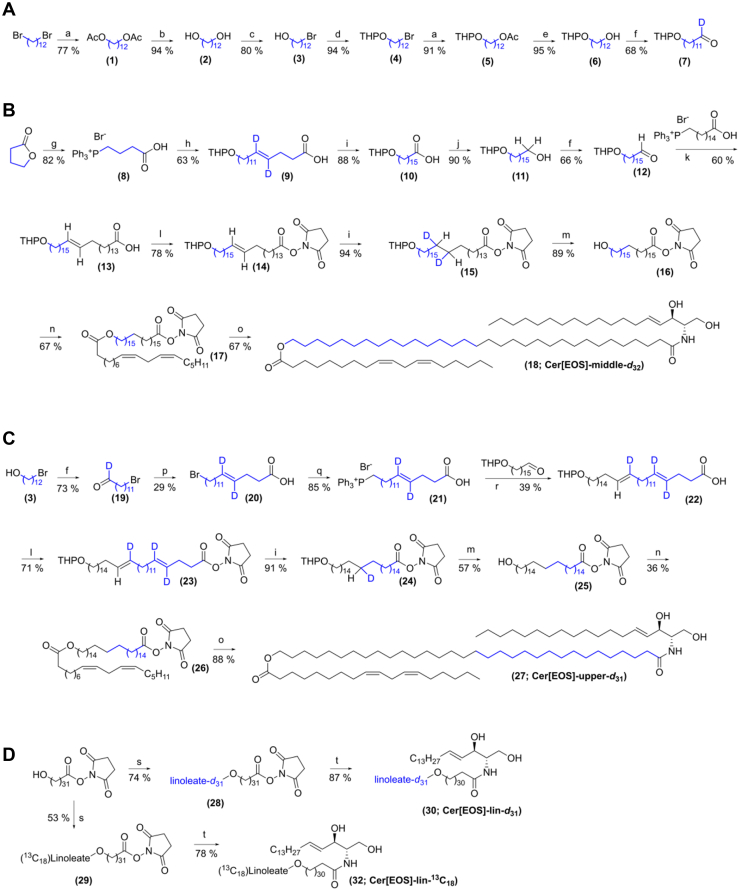
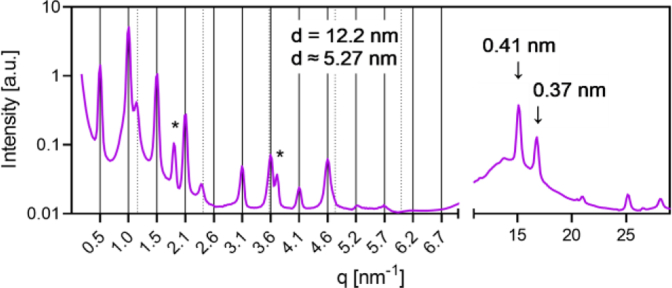
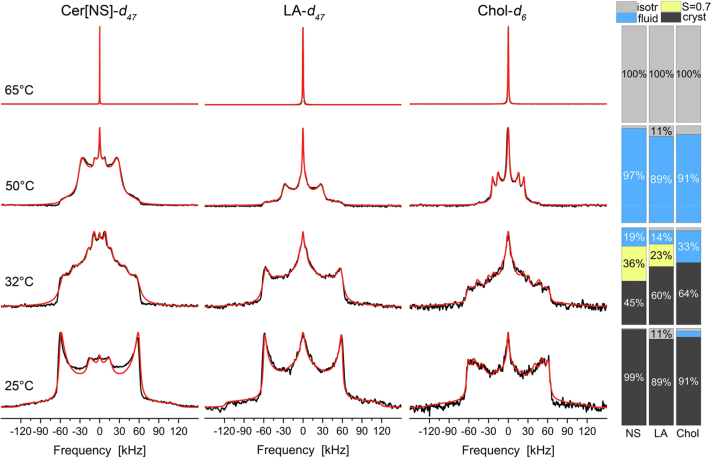
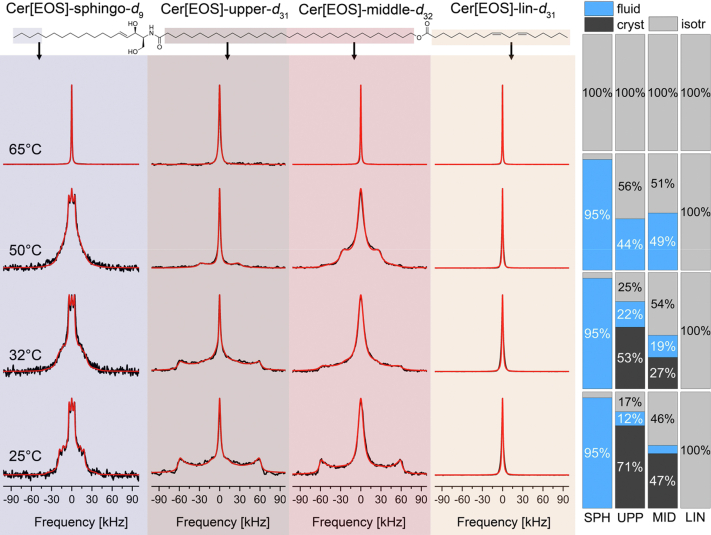
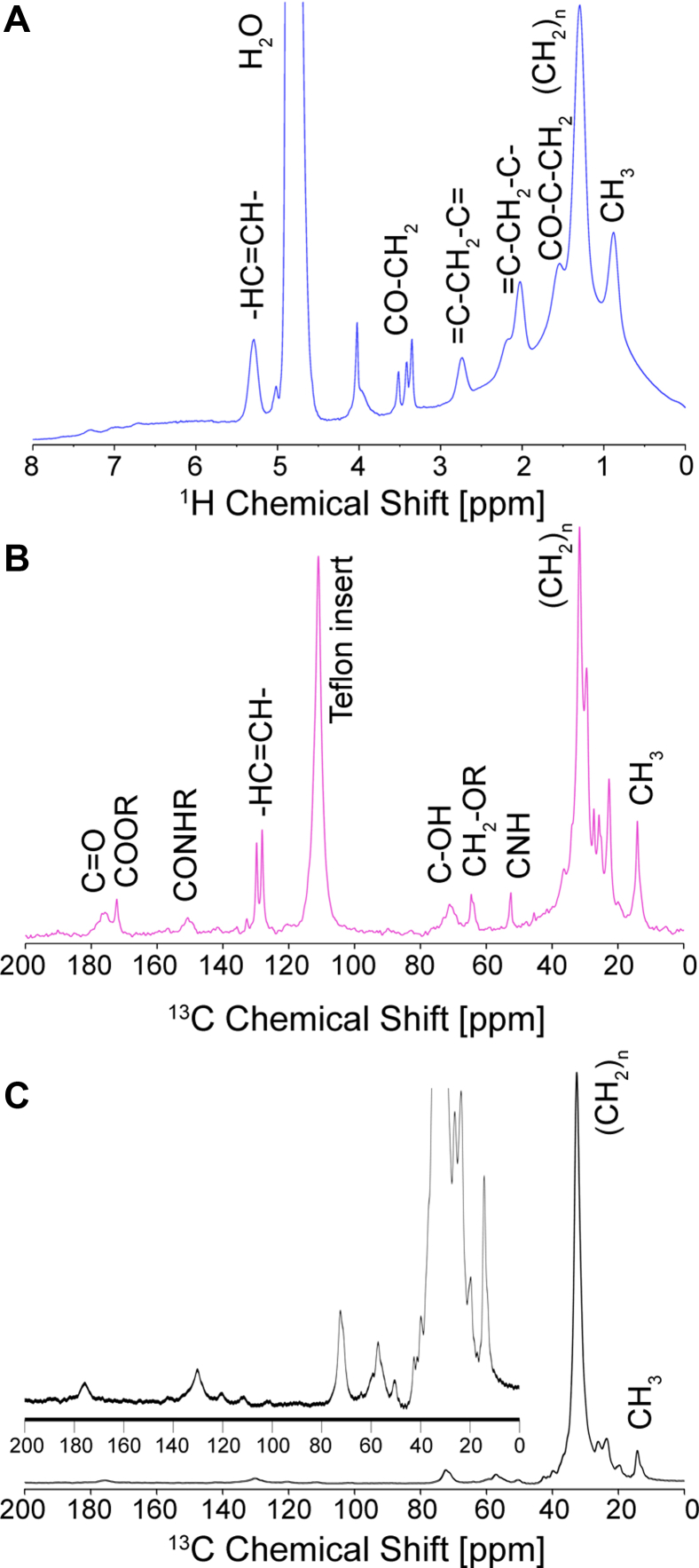
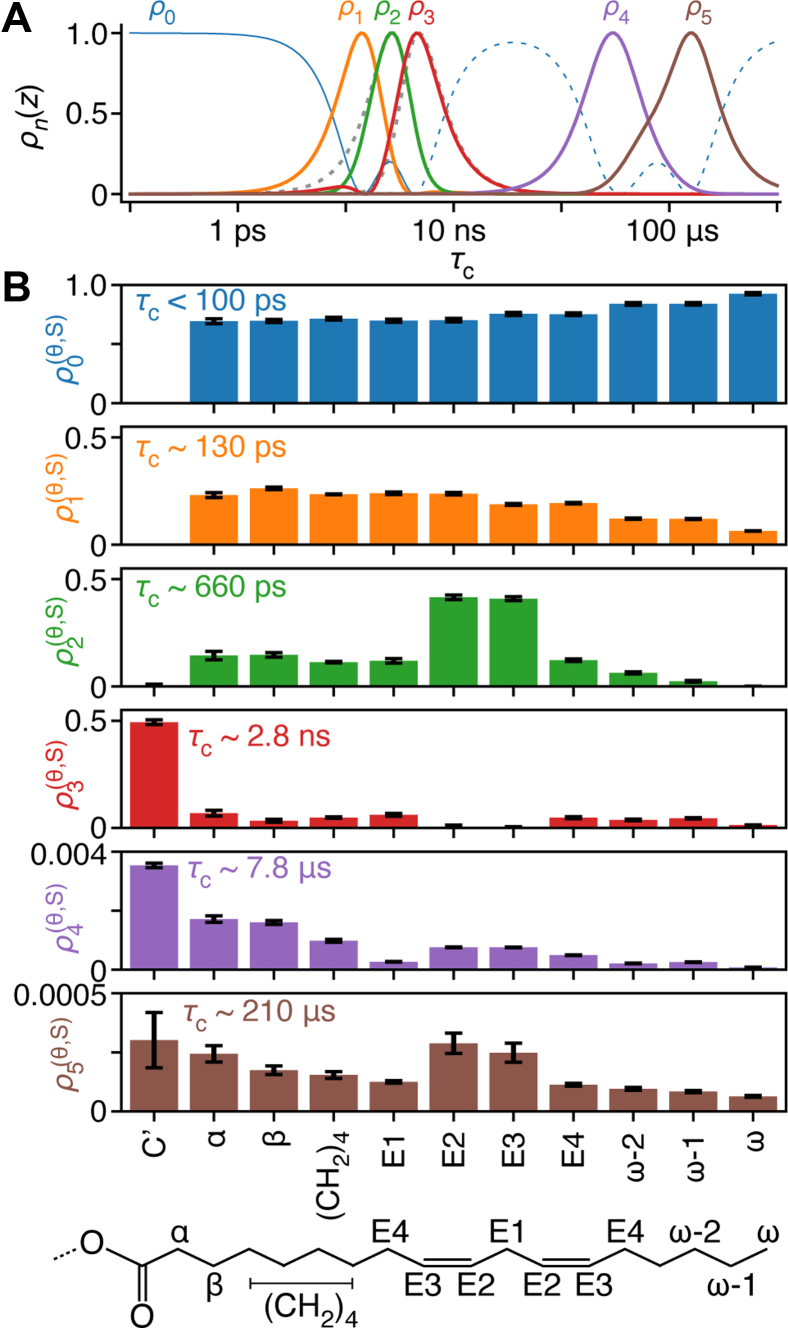
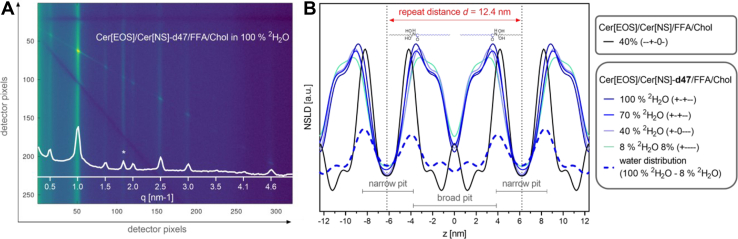
Omega-O-acyl ceramides such as 32-linoleoyloxydotriacontanoyl sphingosine (Cer[EOS]) are essential components of the lipid skin barrier, which protects our body from excessive water loss and the penetration of unwanted substances. These ceramides drive the lipid assembly to epidermal-specific long periodicity phase (LPP), structurally much different than conventional lipid bilayers. Here, we synthesized Cer[EOS] with selectively deuterated segments of the ultralong N-acyl chain or deuterated or C-labeled linoleic acid and studied their molecular behavior in a skin lipid model. Solid-state H NMR data revealed surprising molecular dynamics for the ultralong N-acyl chain of Cer[EOS] with increased isotropic motion toward the isotropic ester-bound linoleate. The sphingosine moiety of Cer[EOS] is also highly mobile at skin temperature, in stark contrast to the other LPP components, N-lignoceroyl sphingosine acyl, lignoceric acid, and cholesterol, which are predominantly rigid. The dynamics of the linoleic chain is quantitatively described by distributions of correlation times and using dynamic detector analysis. These NMR results along with neutron diffraction data suggest an LPP structure with alternating fluid (sphingosine chain-rich), rigid (acyl chain-rich), isotropic (linoleate-rich), rigid (acyl-chain rich), and fluid layers (sphingosine chain-rich). Such an arrangement of the skin barrier lipids with rigid layers separated with two different dynamic "fillings" i) agrees well with ultrastructural data, ii) satisfies the need for simultaneous rigidity (to ensure low permeability) and fluidity (to ensure elasticity, accommodate enzymes, or antimicrobial peptides), and iii) offers a straightforward way to remodel the lamellar body lipids into the final lipid barrier.
ω-O-酰基神经酰胺,如 32-亚油酰氧基三甘酰神经鞘氨醇(Cer[EOS]),是脂质皮肤屏障的重要组成部分,可防止身体过度失水和有害物质渗透。这些神经酰胺促使脂质组装成具有表皮特异性的长周期相(LPP),其结构与传统脂质双层有很大不同。在这里,我们合成了具有超长长酰基链选择性氘化部分或氘化或 C 标记亚油酸的 Cer[EOS],并在皮肤脂质模型中研究了它们的分子行为。固态 H NMR 数据显示,Cer[EOS]的超长长酰基链具有令人惊讶的分子动力学行为,各向同性运动增强,向各向同性酯结合的亚油酸方向移动。Cer[EOS]的神经鞘氨醇部分在皮肤温度下也具有高度的流动性,与其他 LPP 成分(N-植酰鞘氨醇酰基、植酸和胆固醇)形成鲜明对比,后者主要是刚性的。亚油酸链的动力学通过相关时间分布和使用动态探测器分析进行定量描述。这些 NMR 结果以及中子衍射数据表明,LPP 结构具有交替的流体(神经鞘氨醇链丰富)、刚性(酰基链丰富)、各向同性(亚油酸丰富)、刚性(酰基链丰富)和流体层(神经鞘氨醇链丰富)。这种皮肤屏障脂质的排列方式,刚性层用两种不同的动态“填充物”隔开:i)与超微结构数据吻合良好,ii)满足同时刚性(确保低渗透性)和流动性(确保弹性、容纳酶或抗菌肽)的需要,iii)为将板层体脂质重塑为最终脂质屏障提供了一种简单的方法。