Translational Biomarkers and Pharmacology, IPSEN Innovation, Les Ulis, France.
Early Development and Translational Sciences, IPSEN Bioscience, Cambridge, USA.
Sci Rep. 2023 Mar 22;13(1):4663. doi: 10.1038/s41598-023-31790-7.
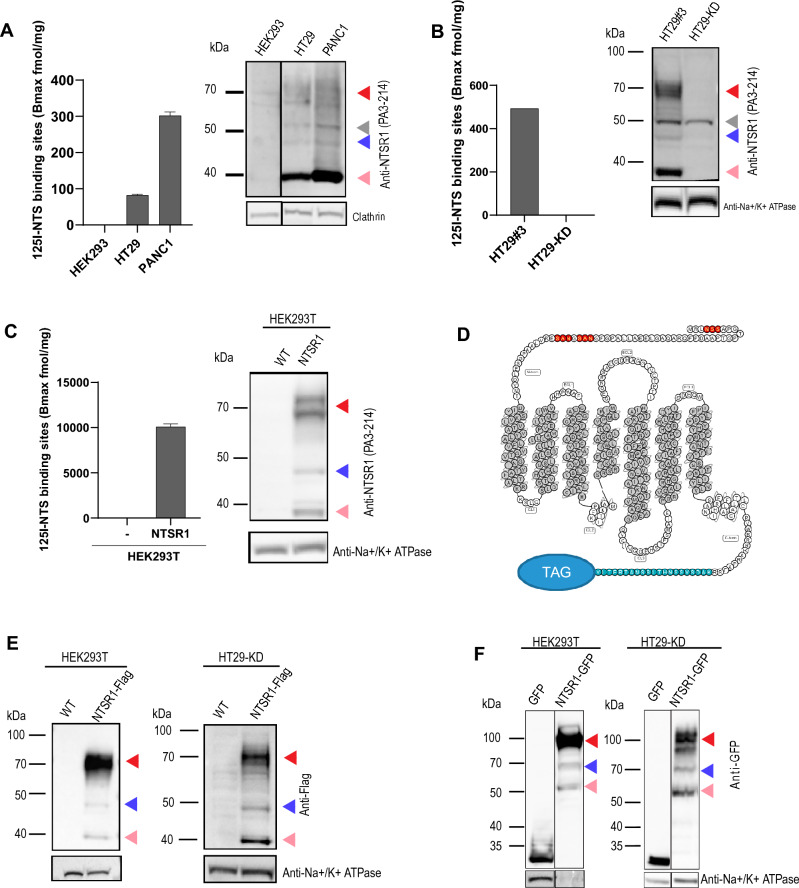
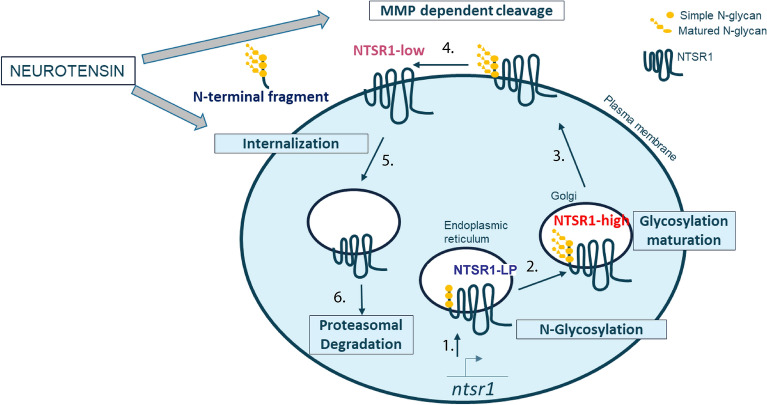
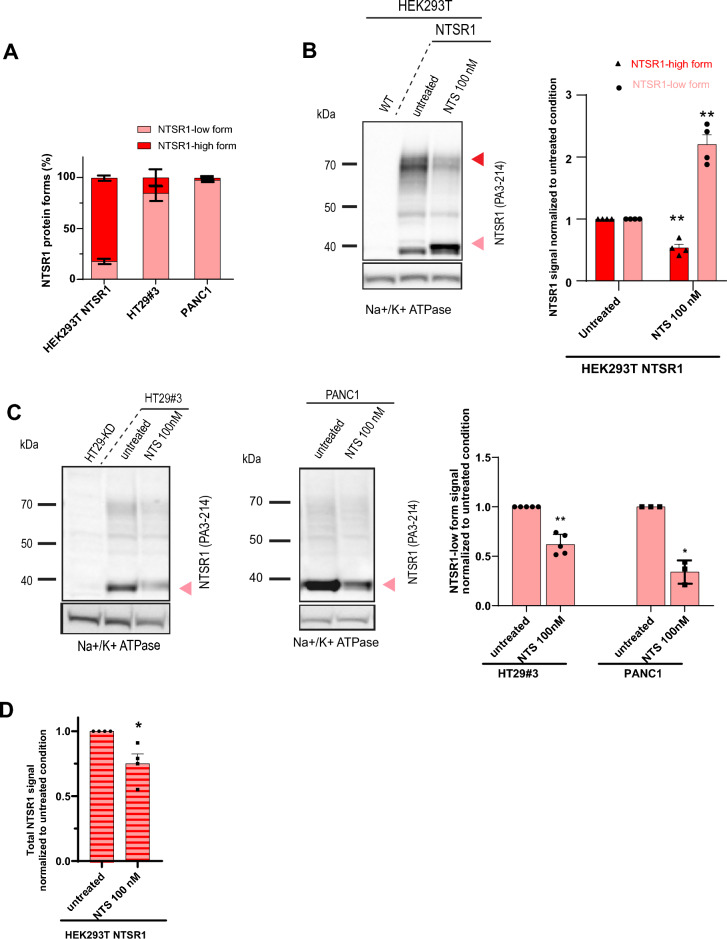
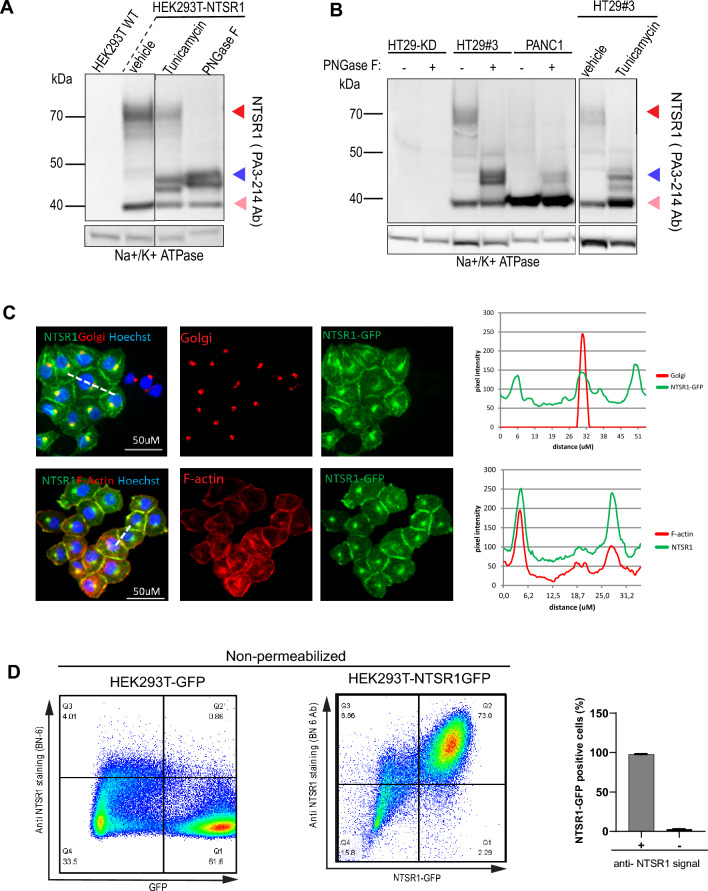
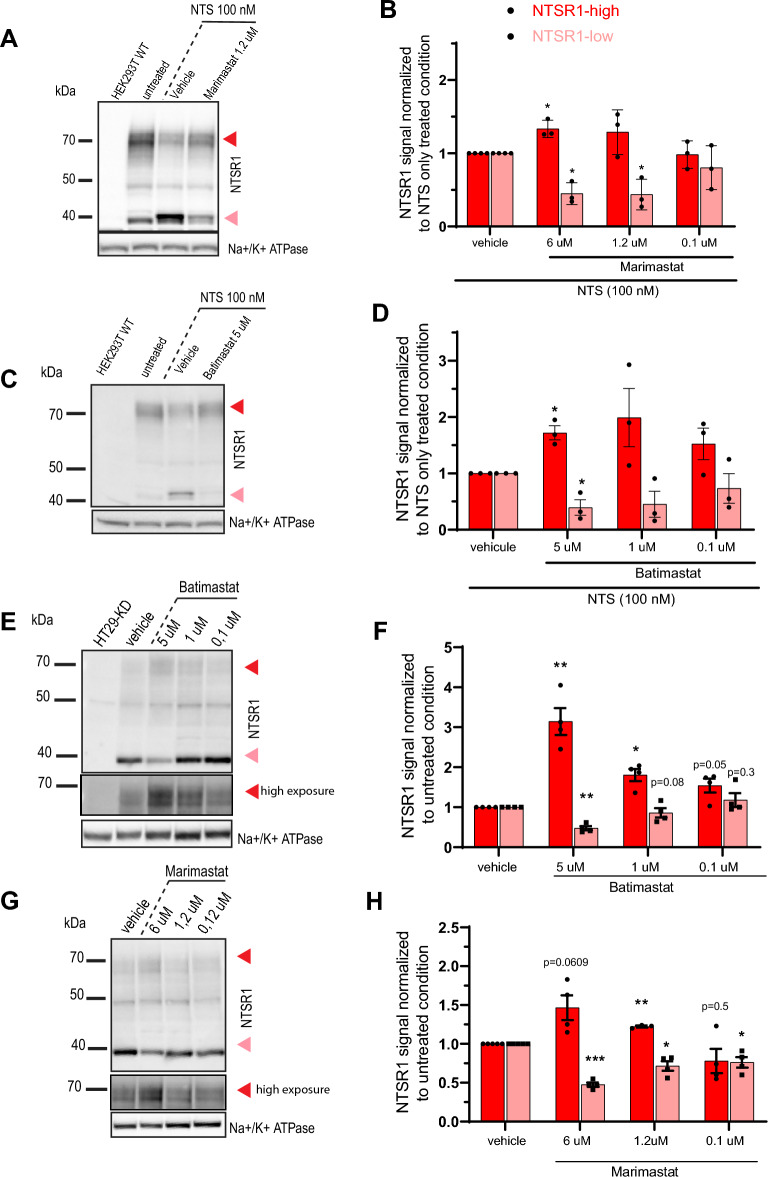
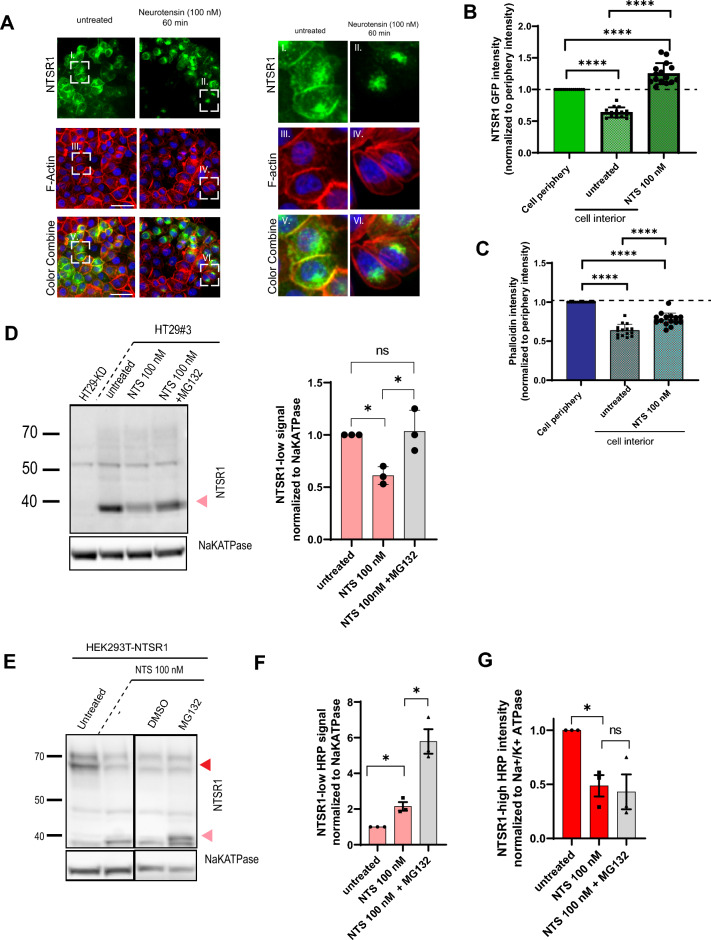
NTSR1 abnormal expression by cancer cells makes it a strategic target for antitumoral therapies, such as compounds that use NTSR1 binding probes to deliver cytotoxic agents to tumor cells. Success of these therapies relies on NTSR1 protein availability and accessibility; therefore, understanding the protein's biology is crucial. We studied NTSR1 protein in exogenously and endogenously expressing non-tumoral and tumoral cells. We found NTSR1 to be expressed as three distinct protein forms: the NTSR1-high form, a glycosylated protein; the NTSR1-low form, a N-terminally cleaved and de-glycosylated protein; and the NTSR1-LP protein with the MW size predicted by its NTSR1 amino acid sequence. We show that the NTSR1-high form is cleaved by MMPs to generate the NTSR1-low form, a process that is promoted by the Neurotensin (NTS) ligand. In addition, NTS induced the internalization of plasma membrane localized NTSR1 and degradation of NTSR1-low form via the proteasome. Importantly, we found NTSR1-low form to be the most abundant form in the tumoral cells and in PDAC Patient Derived Xenograft, demonstrating its physiopathological relevance. Altogether, our work provides important technical and experimental tools as well as new crucial insights into NTSR1 protein biology that are required to develop clinically relevant NTSR1 targeting anti-tumoral therapies.
癌细胞中 NTSR1 的异常表达使其成为抗肿瘤治疗的一个战略靶点,例如使用 NTSR1 结合探针将细胞毒性剂递送到肿瘤细胞的化合物。这些疗法的成功依赖于 NTSR1 蛋白的可用性和可及性;因此,了解蛋白质的生物学特性至关重要。我们研究了外源性和内源性表达非肿瘤和肿瘤细胞中的 NTSR1 蛋白。我们发现 NTSR1 表达为三种不同的蛋白形式:NTSR1-高形式,一种糖基化蛋白;NTSR1-低形式,一种 N 端切割和去糖基化的蛋白;以及 NTSR1-LP 蛋白,其分子量大小与 NTSR1 的氨基酸序列预测相符。我们表明,MMPs 可将 NTSR1-高形式切割生成 NTSR1-低形式,这一过程受到神经降压素 (NTS) 配体的促进。此外,NTS 通过蛋白酶体诱导质膜定位的 NTSR1 的内化和 NTSR1-低形式的降解。重要的是,我们发现 NTSR1-低形式在肿瘤细胞和 PDAC 患者来源异种移植中最为丰富,证明了其生理病理相关性。总之,我们的工作提供了重要的技术和实验工具,并对 NTSR1 蛋白生物学提供了新的重要见解,这对于开发临床相关的 NTSR1 靶向抗肿瘤治疗至关重要。