Institute of Social and Preventive Medicine, University of Bern, Bern, Switzerland.
Balik Scientist Program, Department of Science and Technology, Philippine Council for Health Research and Development, Taguig, Philippines.
Glob Health Sci Pract. 2022 Dec 21;10(6). doi: 10.9745/GHSP-D-22-00176.
The Philippines passed landmark legislation in 2019 on universal health coverage, including reforms in the development of its health workforce, an essential building block of responsive health care systems.
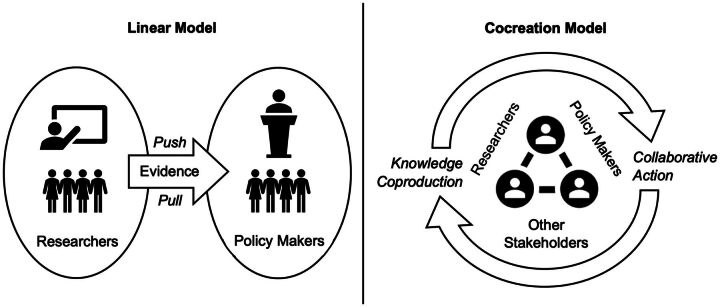
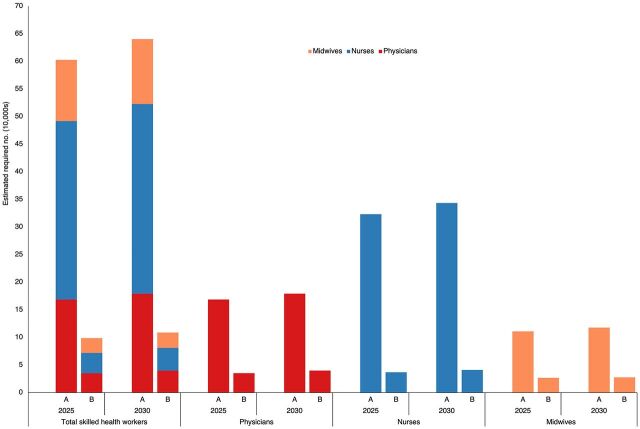
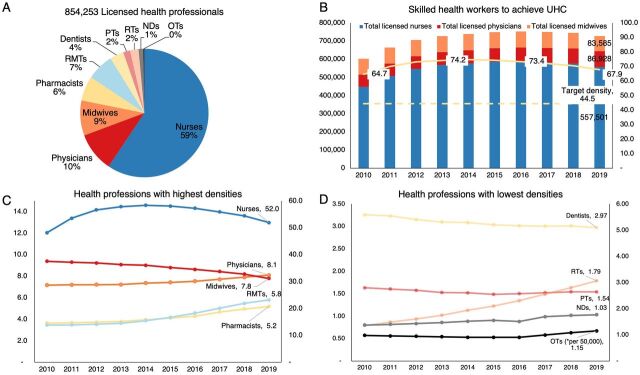
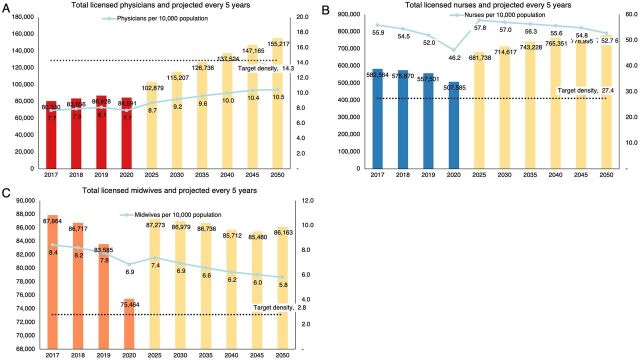
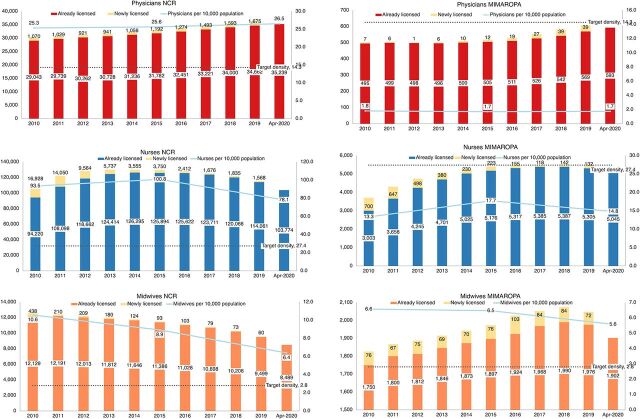
We based our planning process on a model of cocreation defined as sharing power and decision making to solve problems collaboratively and build consensus around action. Through cocreation with policy makers, researchers, and other stakeholders, we performed projection studies on 10 selected health professions and estimated the need for primary care at national and subnational levels, which was the most extensive health workforce projection carried out by the Philippine Department of Health to date. We determined health workforce requirements based on target densities recommended by the World Health Organization and a health needs approach that considered epidemiological and sociodemographic factors. In consultation with stakeholders, we interpreted our analysis to guide recommendations to address issues related to health workforce quantity, skill mix, and distribution. These included a broad range of proposals, including task shifting, expanding scholarships and deployment, reforming health professionals' education, and pursuing a whole-of-society approach, which together informed the National Human Resources for Health Master Plan.
Our cocreation model offers lessons for policy makers, program managers, and researchers in low- and middle-income countries who deal with health workforce challenges. Cocreation led to relationship building between policy makers and researchers who jointly performed the research and identified solutions through open communication and agile coordination. To shape future health care systems that are responsive both during normal times and during crises, cocreation would be essential for evidence-informed policy development and policy-relevant research.
菲律宾于 2019 年通过了具有里程碑意义的全民医保立法,包括对卫生人力发展进行改革,这是建立响应性医疗保健系统的重要基石。
我们的规划过程基于共创模式,该模式被定义为共享权力和决策权,以协作方式解决问题,并就行动达成共识。通过与政策制定者、研究人员和其他利益攸关方共创,我们对 10 个选定的卫生职业进行了预测研究,并在国家和次国家各级估计了对初级保健的需求,这是菲律宾卫生部迄今为止进行的最广泛的卫生人力预测。我们根据世界卫生组织推荐的目标密度和考虑到流行病学和社会人口因素的卫生需求方法来确定卫生人力需求。在与利益攸关方协商的基础上,我们对分析结果进行解释,以指导解决与卫生人力数量、技能组合和分布有关的问题的建议。这些建议包括广泛的提案,包括任务转移、扩大奖学金和部署、改革卫生专业人员教育以及采取全社会方法,这些共同为国家人力资源卫生总体规划提供了信息。
我们的共创模式为处理卫生人力挑战的决策者、方案管理人员和研究人员提供了经验教训。共创模式促进了决策者和研究人员之间的关系建设,他们共同进行研究,并通过开放沟通和灵活协调确定解决方案。为了塑造在正常时期和危机期间都具有响应能力的未来医疗保健系统,共创对于循证政策制定和政策相关研究至关重要。