Margolin Emmanuel, Schäfer Georgia, Allen Joel D, Gers Sophette, Woodward Jeremy, Sutherland Andrew D, Blumenthal Melissa, Meyers Ann, Shaw Megan L, Preiser Wolfgang, Strasser Richard, Crispin Max, Williamson Anna-Lise, Rybicki Edward P, Chapman Ros
Division of Medical Virology, Department of Pathology, Faculty of Health Sciences, University of Cape Town, Cape Town, South Africa.
Wellcome Trust Centre for Infectious Disease Research in Africa, University of Cape Town, Cape Town, South Africa.
Front Plant Sci. 2023 Mar 7;14:1146234. doi: 10.3389/fpls.2023.1146234. eCollection 2023.
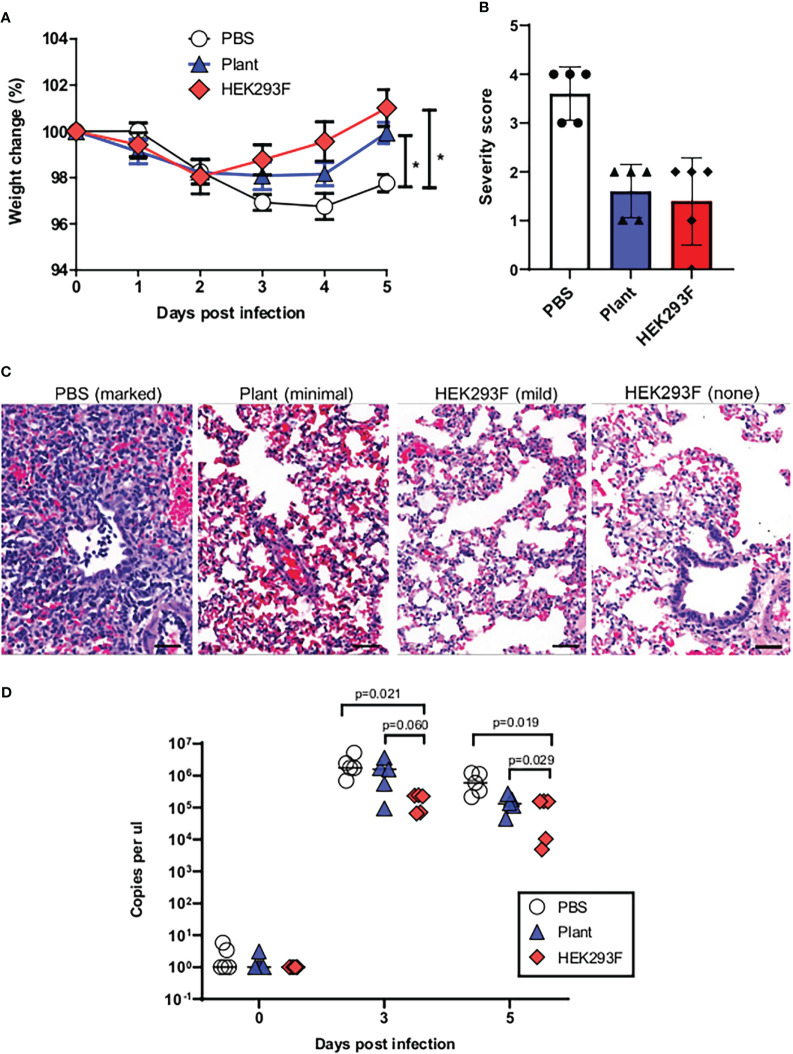
Molecular farming of vaccines has been heralded as a cheap, safe and scalable production platform. In reality, however, differences in the plant biosynthetic machinery, compared to mammalian cells, can complicate the production of viral glycoproteins. Remodelling the secretory pathway presents an opportunity to support key post-translational modifications, and to tailor aspects of glycosylation and glycosylation-directed folding. In this study, we applied an integrated host and glyco-engineering approach, NXS/T Generation™, to produce a SARS-CoV-2 prefusion spike trimer in as a model antigen from an emerging virus. The size exclusion-purified protein exhibited a characteristic prefusion structure when viewed by transmission electron microscopy, and this was indistinguishable from the equivalent mammalian cell-produced antigen. The plant-produced protein was decorated with under-processed oligomannose N-glycans and exhibited a site occupancy that was comparable to the equivalent protein produced in mammalian cell culture. Complex-type glycans were almost entirely absent from the plant-derived material, which contrasted against the predominantly mature, complex glycans that were observed on the mammalian cell culture-derived protein. The plant-derived antigen elicited neutralizing antibodies against both the matched Wuhan and heterologous Delta SARS-CoV-2 variants in immunized hamsters, although titres were lower than those induced by the comparator mammalian antigen. Animals vaccinated with the plant-derived antigen exhibited reduced viral loads following challenge, as well as significant protection from SARS-CoV-2 disease as evidenced by reduced lung pathology, lower viral loads and protection from weight loss. Nonetheless, animals immunized with the mammalian cell-culture-derived protein were better protected in this challenge model suggesting that more faithfully reproducing the native glycoprotein structure and associated glycosylation of the antigen may be desirable.
疫苗的分子农场已被誉为一种廉价、安全且可扩展的生产平台。然而,实际上,与哺乳动物细胞相比,植物生物合成机制的差异会使病毒糖蛋白的生产变得复杂。重塑分泌途径为支持关键的翻译后修饰以及调整糖基化和糖基化导向折叠的各个方面提供了机会。在本研究中,我们应用了一种整合的宿主和糖工程方法,即NXS/T Generation™,以在植物中生产严重急性呼吸综合征冠状病毒2(SARS-CoV-2)融合前刺突三聚体,作为一种新兴病毒的模型抗原。通过尺寸排阻纯化的蛋白质在透射电子显微镜下观察时呈现出特征性的融合前结构,这与同等的哺乳动物细胞产生的抗原无法区分。植物产生的蛋白质带有加工不足的寡甘露糖N-聚糖修饰,并且其位点占有率与在哺乳动物细胞培养中产生的同等蛋白质相当。植物来源的材料中几乎完全没有复合型聚糖,这与在哺乳动物细胞培养来源的蛋白质上观察到的主要为成熟的复合型聚糖形成对比。尽管效价低于由对照哺乳动物抗原诱导的效价,但植物来源的抗原在免疫的仓鼠中引发了针对匹配的武汉和异源德尔塔SARS-CoV-2变体的中和抗体。接种植物来源抗原的动物在受到攻击后病毒载量降低,并且如肺部病理学减轻、病毒载量降低以及防止体重减轻所证明的那样,对SARS-CoV-2疾病具有显著的保护作用。尽管如此,在这个攻击模型中,用哺乳动物细胞培养来源的蛋白质免疫的动物受到了更好的保护,这表明可能需要更忠实地再现抗原的天然糖蛋白结构和相关糖基化。