Bioproducts Research Unit, Agricultural Research Service, U.S. Department of Agriculture, Albany, California 94710, United States.
Berkeley Center for Green Chemistry, University of California, Berkeley, California 94720, United States.
Environ Sci Technol. 2023 Apr 4;57(13):5216-5230. doi: 10.1021/acs.est.2c08717. Epub 2023 Mar 24.
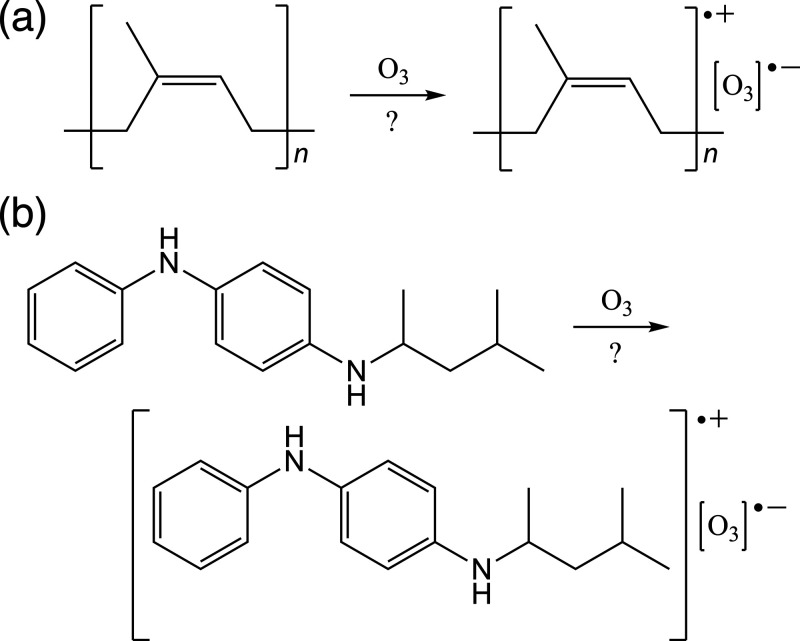
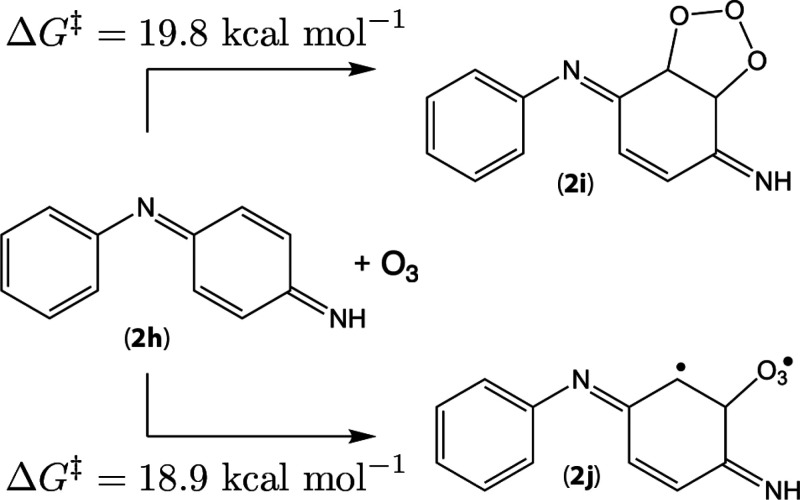
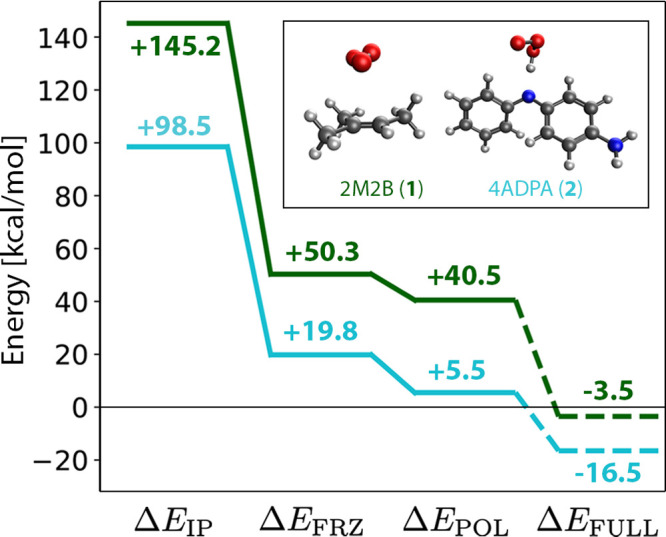
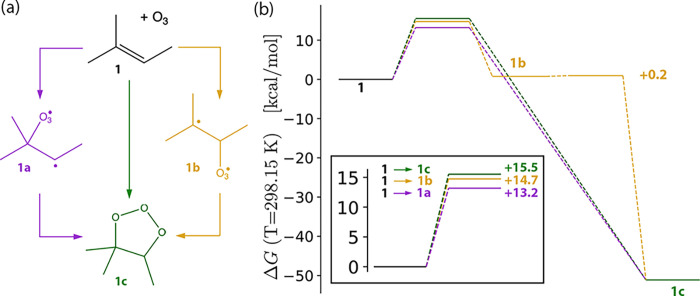
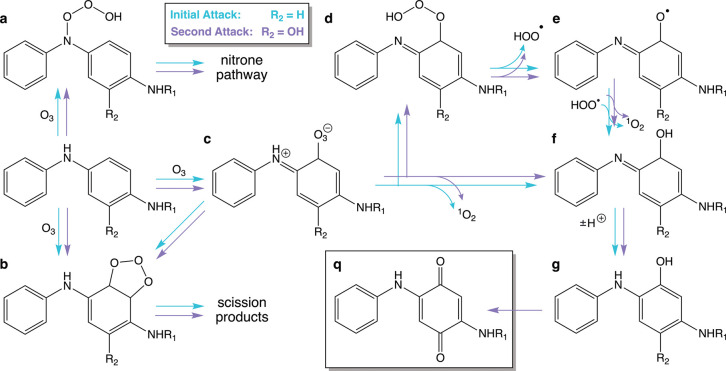
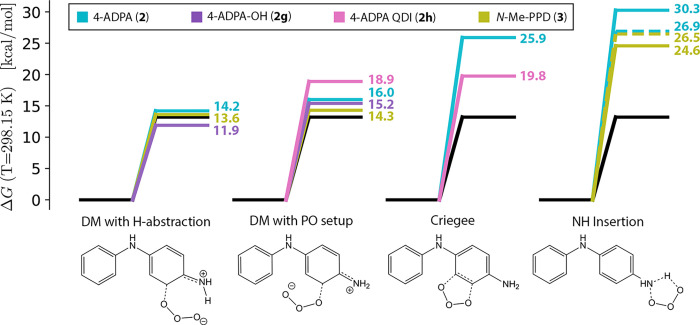
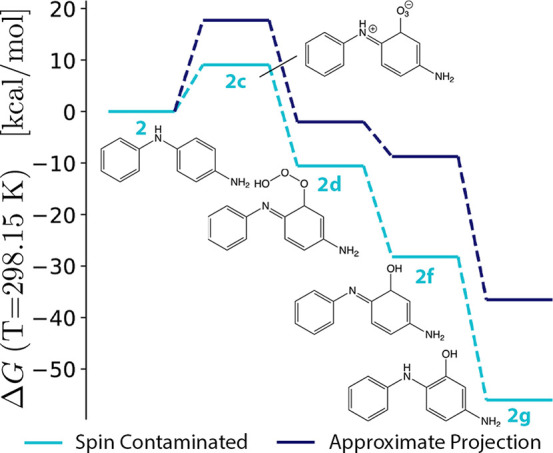
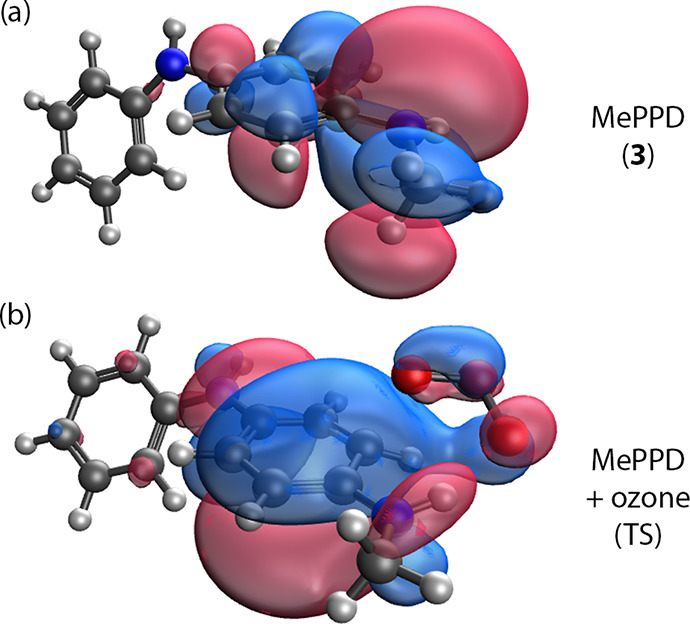
The discovery that the commercial rubber antidegradant 6PPD reacts with ozone (O) to produce a highly toxic quinone (6PPDQ) spurred a significant research effort into nontoxic alternatives. This work has been hampered by lack of a detailed understanding of the mechanism of protection that 6PPD affords rubber compounds against ozone. Herein, we report high-level density functional theory studies into early steps of rubber and PPD (-phenylenediamine) ozonation, identifying key steps that contribute to the antiozonant activity of PPDs. In this, we establish that our density functional theory approach can achieve chemical accuracy for many ozonation reactions, which are notoriously difficult to model. Using adiabatic energy decomposition analysis, we examine and dispel the notion that one-electron charge transfer initiates ozonation in these systems, as is sometimes argued. Instead, we find direct interaction between O and the PPD aromatic ring is kinetically accessible and that this motif is more significant than interactions with PPD nitrogens. The former pathway results in a hydroxylated PPD intermediate, which reacts further with O to afford 6PPD hydroquinone and, ultimately, 6PPDQ. This mechanism directly links the toxicity of 6PPDQ to the antiozonant function of 6PPD. These results have significant implications for development of alternative antiozonants, which are discussed.
商业橡胶防老剂 6PPD 与臭氧(O)反应生成高毒性醌(6PPDQ)的发现,促使人们大力研究非毒性替代品。由于缺乏对 6PPD 赋予橡胶化合物抗臭氧能力的保护机制的详细了解,这项工作受到了阻碍。在此,我们报告了高级密度泛函理论对橡胶和 PPD(-苯二胺)臭氧化的早期步骤的研究,确定了对 PPD 抗臭氧活性有贡献的关键步骤。在这方面,我们证明了我们的密度泛函理论方法可以实现许多臭氧化反应的化学准确性,这些反应通常很难建模。使用绝热能量分解分析,我们研究并驳斥了在这些系统中,单电子电荷转移引发臭氧化的观点,因为有时会这样认为。相反,我们发现 O 与 PPD 芳环之间的直接相互作用在动力学上是可及的,并且这种基序比与 PPD 氮的相互作用更为重要。前一种途径导致 PPD 被羟基化,然后进一步与 O 反应生成 6PPD 氢醌,最终生成 6PPDQ。这种机制将 6PPDQ 的毒性与 6PPD 的抗臭氧功能直接联系起来。这些结果对替代抗臭氧剂的开发具有重要意义,我们对此进行了讨论。