Freeman Matthew C, Delea Maryann G, Snyder Jedidiah S, Garn Joshua V, Belew Mulusew, Caruso Bethany A, Clasen Thomas F, Sclar Gloria D, Tesfaye Yihenew, Woreta Mulat, Zewudie Kassahun, Gobezayehu Abebe Gebremariam
Gangarosa Department of Environmental Health, Rollins School of Public Health, Emory University, Atlanta, Georgia, United States of America.
School of Community Health Sciences, University of Nevada, Reno, Nevada, United States of America.
PLOS Glob Public Health. 2022 Jan 7;2(1):e0000056. doi: 10.1371/journal.pgph.0000056. eCollection 2022.
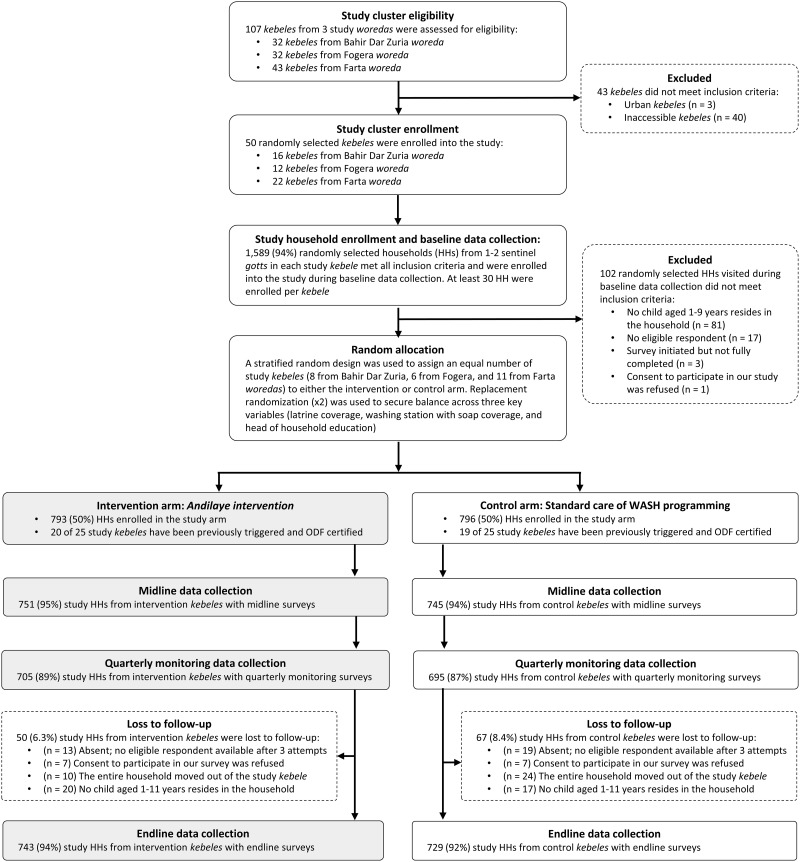
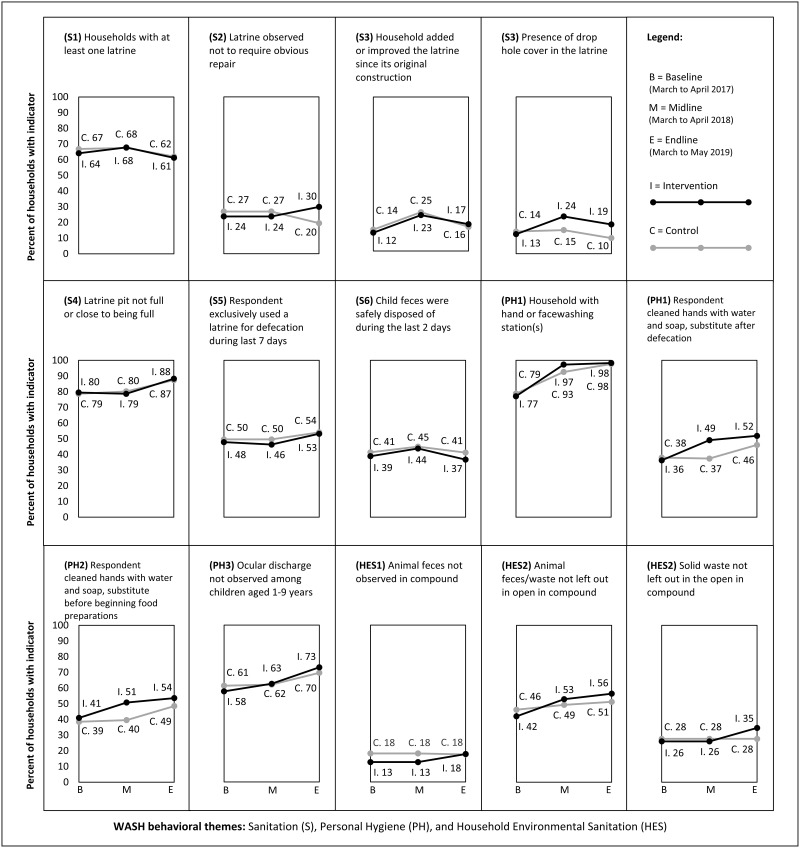
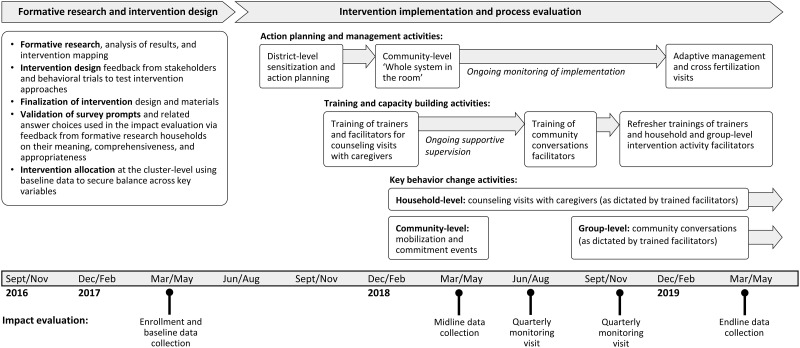
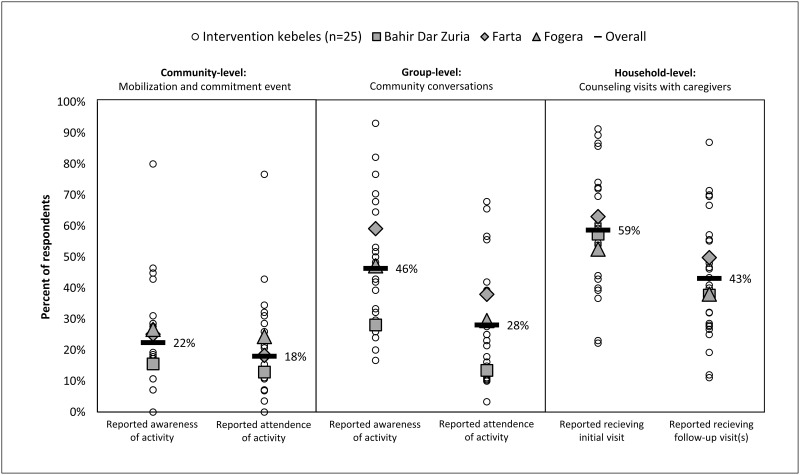
Behaviors related to water, sanitation, and hygiene (WASH) are key drivers of infectious disease transmission, and experiences of WASH are potential influencers of mental well-being. Important knowledge gaps exist related to the content and delivery of effective WASH programs and their associated health impacts, particularly within the contexts of government programs implemented at scale. We developed and tested a demand-side intervention called Andilaye, which aimed to change behaviors related to sanitation, personal hygiene, and household environmental sanitation. This theory-informed intervention was delivered through the existing Ethiopian Health Extension Programme (HEP). It was a multilevel intervention with a catalyzing event at the community level and behavior change activities at group and household levels. We randomly selected and assigned 50 kebeles (sub-districts) from three woredas (districts), half to receive the Andilaye intervention, and half the standard of care sanitation and hygiene programming (i.e., community-led total sanitation and hygiene [CLTSH]). We collected data on WASH access, behavioral outcomes, and mental well-being. A total of 1,589 households were enrolled into the study at baseline; 1,472 households (94%) participated in an endline assessment two years after baseline, and approximately 14 months after the initiation of a multi-level intervention. The intervention did not improve construction of latrines (prevalence ratio [PR]: 0.99; 95% CI: 0.82, 1.21) or handwashing stations with water (PR: 0.96; 95% CI: 0.72, 1.26), or the removal of animal feces from the compound (PR: 1.10; 95% CI: 0.95, 1.28). Nor did it impact anxiety (PR: 0.90; 95% CI: 0.72, 1.11), depression (PR: 0.83; 95% CI: 0.64, 1.07), emotional distress (PR: 0.86; 95% CI: 0.67, 1.09) or well-being (PR: 0.90; 95% CI: 0.74, 1.10) scores. We report limited impact of the intervention, as delivered, on changes in behavior and mental well-being. The effectiveness of the intervention was limited by poor intervention fidelity. While sanitation and hygiene improvements have been documented in Ethiopia, behavioral slippage, or regression to unimproved practices, in communities previously declared open defecation free is widespread. Evidence from this trial may help address knowledge gaps related to challenges associated with scalable alternatives to CLTSH and inform sanitation and hygiene programming and policy in Ethiopia and beyond. Trial registration: This trial was registered with clinicaltrials.gov (NCT03075436) on March 9, 2017.
与水、环境卫生和个人卫生(WASH)相关的行为是传染病传播的关键驱动因素,而WASH体验是心理健康的潜在影响因素。在有效WASH项目的内容、实施及其相关健康影响方面,尤其是在大规模实施的政府项目背景下,存在重要的知识空白。我们开发并测试了一种名为安迪拉耶(Andilaye)的需求侧干预措施,旨在改变与环境卫生、个人卫生和家庭环境卫生相关的行为。这种基于理论的干预措施是通过现有的埃塞俄比亚健康推广计划(HEP)实施的。它是一种多层次干预措施,在社区层面有一个催化事件,在群体和家庭层面有行为改变活动。我们从三个区随机选择并分配了50个乡(小区),一半接受安迪拉耶干预,另一半接受标准的环境卫生和个人卫生规划(即社区主导的全面环境卫生和个人卫生[CLTSH])。我们收集了关于WASH设施获取情况、行为结果和心理健康的数据。共有1589户家庭在基线时纳入研究;1472户家庭(94%)在基线后两年、多层次干预开始约14个月后参与了终期评估。该干预措施并未改善厕所建设(患病率比[PR]:0.99;95%置信区间:0.82,1.21)或有水洗手设施(PR:0.96;95%置信区间:0.72,1.26),也未改善从院子里清除动物粪便的情况(PR:1.10;95%置信区间:0.95,1.28)。它也未影响焦虑(PR:0.90;95%置信区间:0.72,1.11)、抑郁(PR:0.83;95%置信区间:0.64,1.07)、情绪困扰(PR:0.86;95%置信区间:0.67,1.09)或幸福感(PR:0.90;95%置信区间:0.74,1.10)得分。我们报告称,所实施的干预措施对行为和心理健康变化的影响有限。干预措施的有效性受到干预保真度差的限制。虽然埃塞俄比亚已记录到环境卫生和个人卫生有所改善,但在先前宣布无露天排便的社区中,行为滑坡或回归到未改善的做法很普遍。该试验的证据可能有助于填补与CLTSH可扩展替代方案相关挑战的知识空白,并为埃塞俄比亚及其他地区的环境卫生和个人卫生规划及政策提供信息。试验注册:该试验于2017年3月9日在clinicaltrials.gov(NCT03075436)注册。