Alemkere Getachew, Teshome Asres, Temesgen Gobezie, Abebe Getnet, Degefaw Yidnekachew, Tilahun Hiwot, Getahun Workineh, Girma Eshetu, Amogne Wondwossen
Department of Pharmacology and Clinical Pharmacy, School of Pharmacy, College of Health Sciences, Addis Ababa University, Addis Ababa, Ethiopia.
Department of Surgery, School of Medicine, College of Health Sciences, Addis Ababa University, Addis Ababa, Ethiopia.
PLOS Glob Public Health. 2023 Jan 17;3(1):e0001421. doi: 10.1371/journal.pgph.0001421. eCollection 2023.
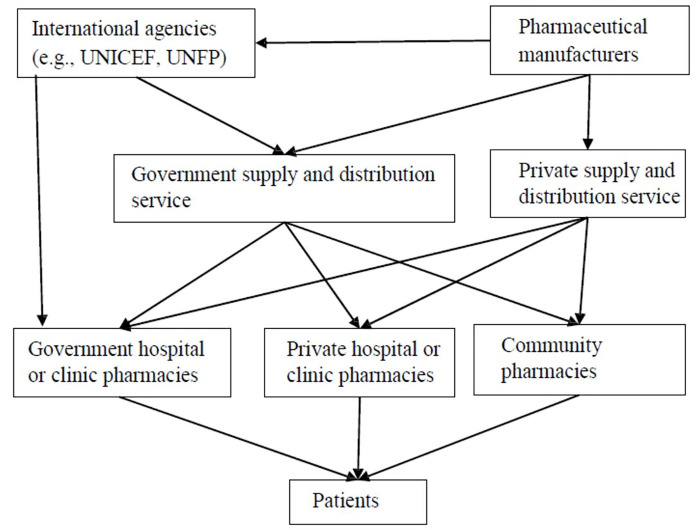
Healthcare systems in resource-limited nations have been challenged by the shortage of essential medicines. This study explores cefazolin access and uses history in the Ethiopian healthcare delivery system, for possible policy implications. An exploratory qualitative study was conducted from July to August 2021. Semi-structured questions and observation guides were used to extract necessary data from people, documents, and field visits to hospitals, government supply agencies, and pharmaceutical business firms. The data were transcribed, coded, organized into themes, and presented. Cefazoline is the recommended first-line surgical antibiotic prophylaxis (SAP) in the Ethiopian Standard Treatment Guideline (STG) and is included in the national Essential Medicine List (EML). However, it was not available for use in the Ethiopian pharmaceutical markets for years. While the shortage might stem from supply-demand mismatches, multiple unknown issues exist in the background of the shortage. This is evidenced by the removal of cefazolin from the recent government procurement list regardless of the recommendation set in the national EML and STG. This study found a historic shortage of cefazolin in Ethiopian healthcare settings. This implies that the antibiotic availability in the pull market may not reflect required usage at facilities for several reasons including the misalignment of national guidelines and national procurement processes, and miscommunication between pharmacies and clinicians at sites on drug availability. Changing the essential medicines list and/or procurement requests without active review of the supply chain system and prescribing practices at facilities can lead to the elimination of necessary antimicrobial agents from the national public health sector supply.
资源有限国家的医疗保健系统一直受到基本药物短缺的挑战。本研究探讨了头孢唑林在埃塞俄比亚医疗保健提供系统中的获取和使用历史,以获取可能的政策启示。2021年7月至8月进行了一项探索性定性研究。使用半结构化问题和观察指南从人员、文件以及对医院、政府供应机构和制药企业的实地考察中提取必要数据。对数据进行转录、编码、整理成主题并呈现。头孢唑林是埃塞俄比亚标准治疗指南(STG)中推荐的一线外科手术抗生素预防用药(SAP),并被列入国家基本药物清单(EML)。然而,多年来它在埃塞俄比亚药品市场上无法使用。虽然短缺可能源于供需不匹配,但在短缺的背后存在多个未知问题。这一点从最近政府采购清单中删除头孢唑林可以得到证明,尽管国家EML和STG中有相关推荐。本研究发现埃塞俄比亚医疗环境中存在头孢唑林长期短缺的情况。这意味着拉动市场中的抗生素可及性可能无法反映医疗机构的实际使用需求,原因包括国家指南与国家采购流程不一致,以及各地点药房与临床医生之间关于药品可及性的沟通不畅。在没有积极审查供应链系统和医疗机构处方做法的情况下更改基本药物清单和/或采购申请,可能会导致国家公共卫生部门供应中必要的抗菌药物被淘汰。