Adesoji Ayodele T, Mgbere Osaro, Darkoh Charles
Department of Microbiology, Federal University, Dutsin-Ma, Katsina State, Nigeria.
Disease Prevention and Control Division, Houston Health Department, Houston, Texas, United States of America.
PLOS Glob Public Health. 2023 Jan 24;3(1):e0000477. doi: 10.1371/journal.pgph.0000477. eCollection 2023.
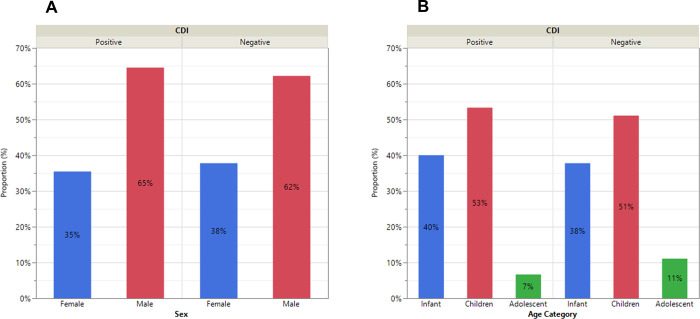
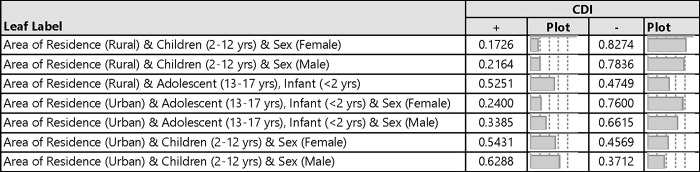
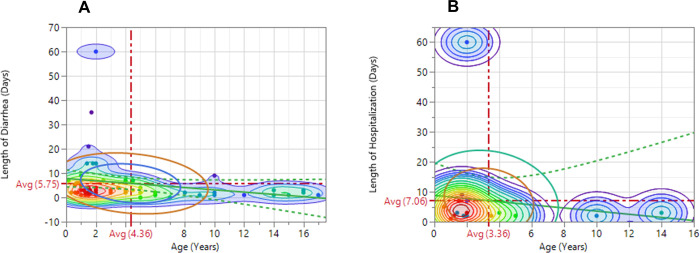
Clostridioides difficile infection (CDI) is a major cause of antibiotic-associated diarrhea and an unappreciated contributor to child mortality in low- and middle-income countries where the diagnosis may be difficult. There is little information about the prevalence of CDI among infants, children, and adolescents in Africa. Using a cross-sectional design, seventy-six samples were collected from pediatric patients presenting with diarrhea, including infants (≤ 2 years old), children (2-12 years), and adolescents (13 ≤17 years) from three hospitals between January and December 2019. Demographic data, medical history, and prior antibiotic use were recorded. Toxigenic culture and PCR were used to detect and validate the presence of C. difficile in the samples. Data obtained were analyzed using descriptive and inferential statistics. A total of 29 (38.7%), 39 (52.0%) and 7 (9.3%) samples were from infants, children, and adolescents, respectively. The average age of the patients was 4.4 years. Of these samples, 31 (41%) were positive for C. difficile by culture and were verified by PCR amplification of C. difficile-specific genes (tcdA and tcdB). The most positive cases were children (53.3%) and infants (40.0%) with the majority of them residing in urban areas. Forty-nine (66.2%) of the patients had no known antibiotics exposure, whereas 29.0% and 29.7% reported the use of over-the-counter antibiotics at 14 and 90 days, prior to the hospital visit, respectively. CDI is relatively common among children with diarrhea in Northern Nigeria. Therefore, for effective management and treatment, more attention should be given to testing for C. difficile as one of the causative agents of diarrhea.
艰难梭菌感染(CDI)是抗生素相关性腹泻的主要病因,在诊断可能存在困难的低收入和中等收入国家,它也是儿童死亡的一个未得到充分认识的因素。关于非洲婴儿、儿童和青少年中CDI患病率的信息很少。采用横断面设计,于2019年1月至12月期间从三家医院患有腹泻的儿科患者中收集了76份样本,这些患者包括婴儿(≤2岁)、儿童(2 - 12岁)和青少年(13≤17岁)。记录了人口统计学数据、病史和既往抗生素使用情况。采用产毒培养和聚合酶链反应(PCR)检测并验证样本中艰难梭菌的存在。对获得的数据进行描述性和推断性统计分析。分别有29份(38.7%)、39份(52.0%)和7份(9.3%)样本来自婴儿、儿童和青少年。患者的平均年龄为4.4岁。在这些样本中,31份(41%)经培养艰难梭菌呈阳性,并通过艰难梭菌特异性基因(tcdA和tcdB)的PCR扩增得到验证。阳性病例最多的是儿童(53.3%)和婴儿(40.0%),其中大多数居住在城市地区。49名(66.2%)患者没有已知的抗生素接触史,而分别有29.0%和29.7%的患者报告在就诊前14天和90天使用过非处方抗生素。在尼日利亚北部,CDI在腹泻儿童中相对常见。因此,为了进行有效的管理和治疗,应更加重视将艰难梭菌检测作为腹泻的致病因素之一。