School of Social Sciences, Universiti Sains Malaysia, 11800, Minden, Pulau Pinang, Malaysia.
J Relig Health. 2023 Aug;62(4):2933-2946. doi: 10.1007/s10943-023-01798-4. Epub 2023 Mar 24.
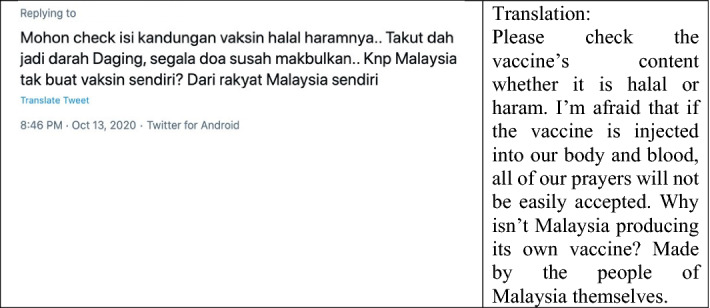
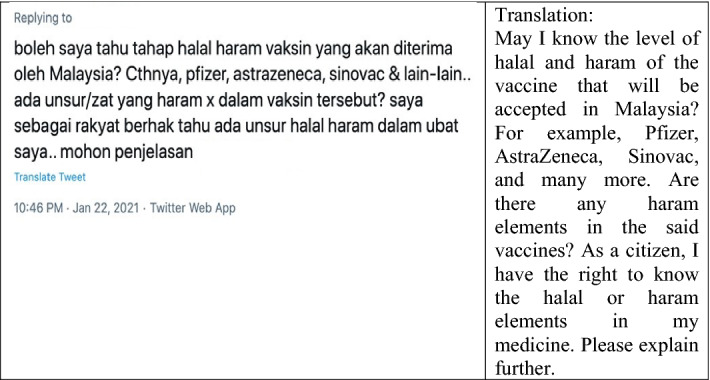
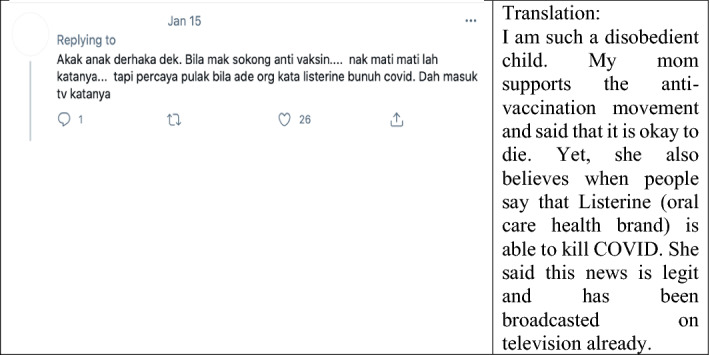
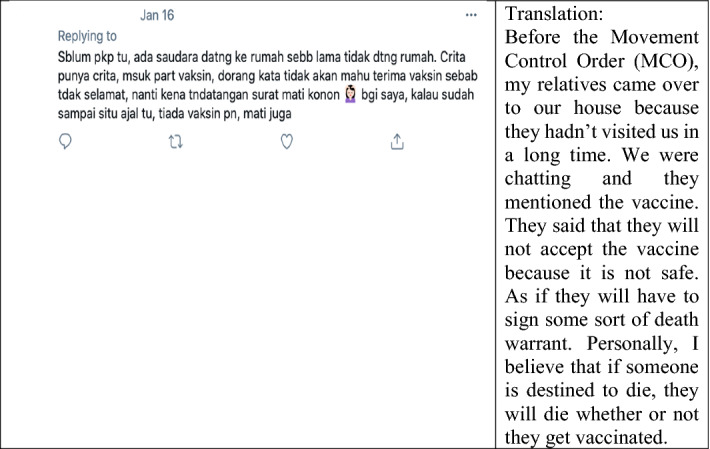
Vaccine hesitancy is gaining attention due to the increasing spread of the COVID-19 pandemic in Malaysia. Malaysia is a majority Muslim country and religion has a significant influence on the acceptance or rejection of vaccines. This is clearly seen through the disagreement over the halal status of vaccines. Social media has become a platform for discussion and dissemination of information and dis-information on vaccines. Thus, it has had a relatively significant influence on vaccine hesitancy among social media users. By analysing tweets from February 2020 to February 2021 using Twitter API, this paper highlights the discussion of COVID-19 vaccines' halal status on Twitter. This study focuses on the analysis of vaccination reluctancy among the Twitter users in Malaysia and found that the most prevalent theme from the discussion is the constructed religious narratives to justify scientifically misleading and false claims concerning vaccination represented on social media. This finding also calls for a deeper understanding of society's constructed knowledge concerning contemporary issues in the digital age on social media.
由于马来西亚 COVID-19 疫情的不断蔓延,疫苗犹豫情绪引起了人们的关注。马来西亚是一个穆斯林占多数的国家,宗教对疫苗的接受或拒绝有重大影响。这一点从人们对疫苗是否符合清真标准的分歧中可以明显看出。社交媒体已成为讨论和传播疫苗相关信息和错误信息的平台,因此,它对社交媒体用户中的疫苗犹豫情绪产生了相对重大的影响。本研究通过使用 Twitter API 分析 2020 年 2 月至 2021 年 2 月期间的推文,突出了 Twitter 上关于 COVID-19 疫苗清真标准的讨论。本研究重点分析了马来西亚推特用户中的疫苗犹豫情绪,发现讨论中最常见的主题是构建宗教叙事,以证明与社交媒体上的疫苗接种有关的科学误导性和虚假说法是合理的。这一发现也呼吁人们更深入地了解社交媒体上数字时代有关当代问题的社会构建知识。