Division of Pediatric Gastroenterology, Department of Pediatrics, Emory University School of Medicine and Children's Healthcare of Atlanta, 1760 Haygood Drive, W-427, Atlanta, GA, 30322, USA.
Department of Gynecology and Obstetrics, Emory University School of Medicine, Atlanta, GA, USA.
Clin Epigenetics. 2023 Mar 24;15(1):50. doi: 10.1186/s13148-023-01462-4.
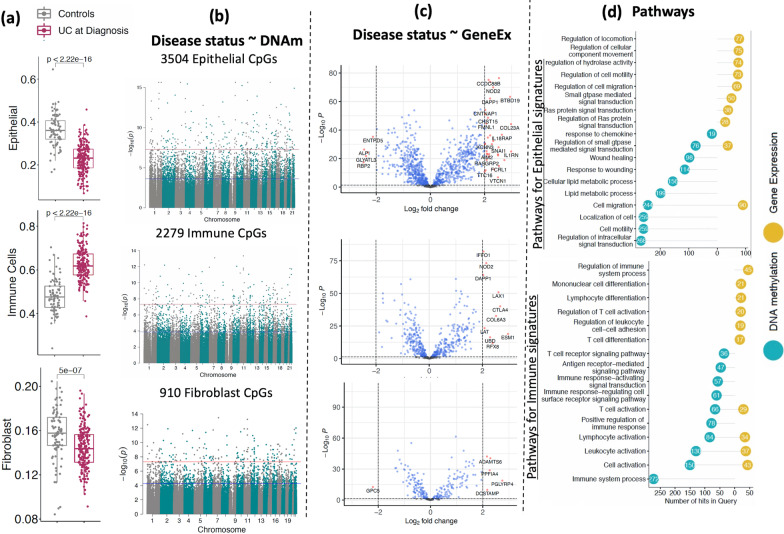
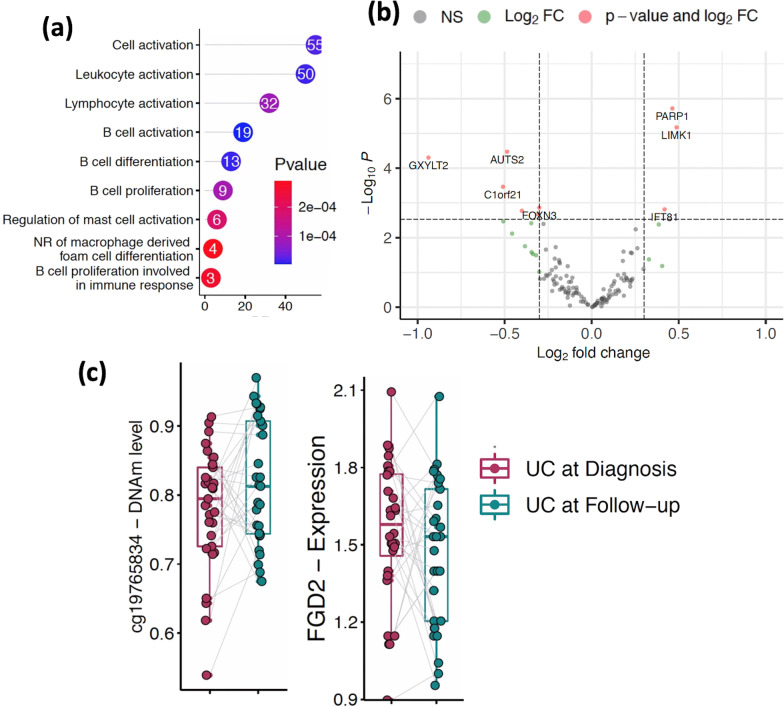
In peripheral blood, DNA methylation (DNAm) patterns in inflammatory bowel disease patients reflect inflammatory status rather than disease status. Here, we examined DNAm in diseased rectal mucosa from ulcerative colitis (UC) patients, focusing on constituent cell types with the goal of identifying therapeutic targets for UC other than the immune system. We profiled DNAm of rectal mucosal biopsies of pediatric UC at diagnosis (n = 211) and non-IBD control (n = 85) patients and performed epigenome-wide association studies (EWAS) of specific cell types to understand DNAm changes in epithelial, immune and fibroblast cells across disease states, course, and clinical outcomes. We also examined longitudinal analysis on follow-up samples (n = 73), and comparisons were made among patients with clinical outcomes including those undergoing colectomy versus those who did not. Additionally, we included RNA-seq from the same subjects to assess the impact of CpG sites on the transcription of nearby genes during the disease course.
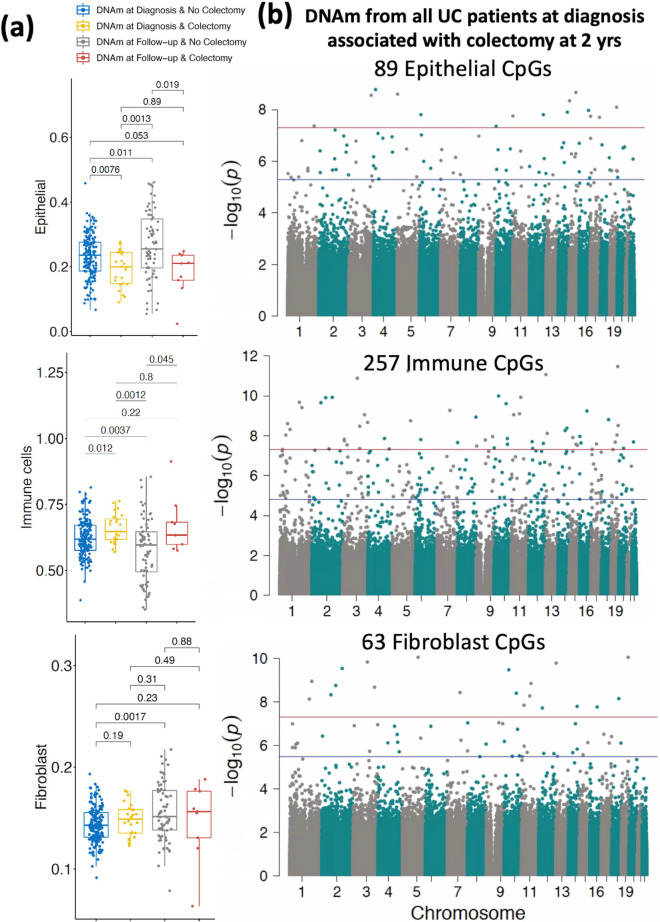
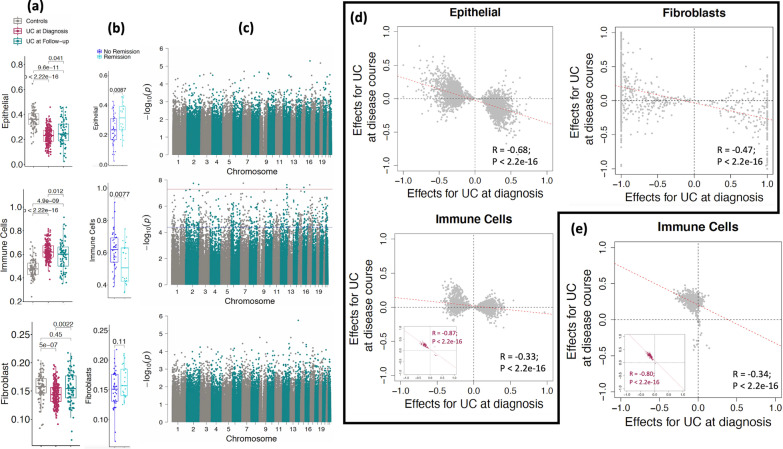
At diagnosis, UC rectal mucosa exhibited a lower proportion of epithelial cells and fibroblasts, and higher proportion of immune cells, in conjunction with variation in the DNAm pattern. While treatment had significant effects on the methylation signature of immune cells, its effects on fibroblasts and epithelial cells were attenuated. Individuals who required colectomy exhibited cell composition and DNAm patterns at follow-up more similar to disease onset than patients who did not require colectomy. Combining these results with gene expression profiles, we identify CpG sites whose methylation patterns are most consistent with a contribution to poor disease outcomes and could thus be potential therapeutic targets.
Cell-specific epigenetic changes in the rectal mucosa in UC are associated with disease severity and outcome. Current therapeutics may more effectively target the immune than the epithelial and fibroblast compartments.
在周围血液中,炎症性肠病患者的 DNA 甲基化(DNAm)模式反映的是炎症状态,而不是疾病状态。在这里,我们检查了溃疡性结肠炎(UC)患者病变直肠黏膜中的 DNAm,重点关注组成细胞类型,旨在确定除免疫系统以外的 UC 治疗靶点。我们对儿科 UC 患者诊断时的直肠黏膜活检(n=211)和非 IBD 对照(n=85)患者的 DNAm 进行了全基因组甲基化关联研究(EWAS),以了解疾病状态、病程和临床结局中上皮细胞、免疫细胞和成纤维细胞中 DNAm 的变化。我们还对随访样本(n=73)进行了纵向分析,并对具有临床结局的患者(包括接受结肠切除术的患者和未接受结肠切除术的患者)进行了比较。此外,我们还纳入了相同受试者的 RNA-seq 数据,以评估 CpG 位点在疾病过程中对附近基因转录的影响。
在诊断时,UC 直肠黏膜表现出上皮细胞和成纤维细胞比例较低,免疫细胞比例较高,同时 DNAm 模式也发生了变化。虽然治疗对免疫细胞的甲基化特征有显著影响,但对成纤维细胞和上皮细胞的影响较弱。需要结肠切除术的个体在随访时的细胞组成和 DNAm 模式与疾病发作时更为相似,而不需要结肠切除术的患者则不相似。将这些结果与基因表达谱相结合,我们确定了一些 CpG 位点,其甲基化模式与不良疾病结局最为一致,因此可能是潜在的治疗靶点。
UC 直肠黏膜中特定细胞的表观遗传变化与疾病严重程度和结局相关。目前的治疗方法可能更有效地靶向免疫细胞,而不是上皮细胞和成纤维细胞。