García Juan Enrique Puche, Guevara Marta Iturregui, García Etelvino Silva, Ruiz Raquel Campuzano, García Rafael Vázquez
Cardiology Department, Universitary Hospital "Puerta del Mar", Cádiz, Spain.
Endocrinology Department, Universitary Hospital from Jerez, Cádiz, Spain.
Cardiol Cardiovasc Med. 2022;6(4):353-363. doi: 10.26502/fccm.92920270. Epub 2022 Jul 7.
In early 2020, the SARS-CoV-2 pandemic caused an unprecedented overload for the health service. A decrease in admissions for Acute Coronary Syndrome (ACS) was reported during lockdown, although many aspects remain to be clarified. The main objective of this study was to evaluate the impact of the pandemic and of lockdown itself in this area.
We performed a retrospective observational study based on data from patients who visited the emergency department of a tertiary hospital with chest pain during 2018-2020, as well as those who were admitted for ACS. Personal details, date of admission, additional test results (laboratory and echocardiography), and therapy were recorded. Patients were divided into 3 groups: preCOVID (n=1,301), lockdown (n=45), and postlockdown (n=343).
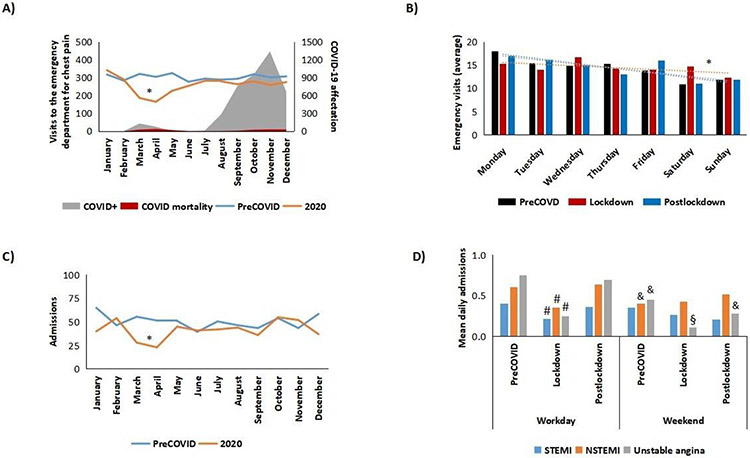
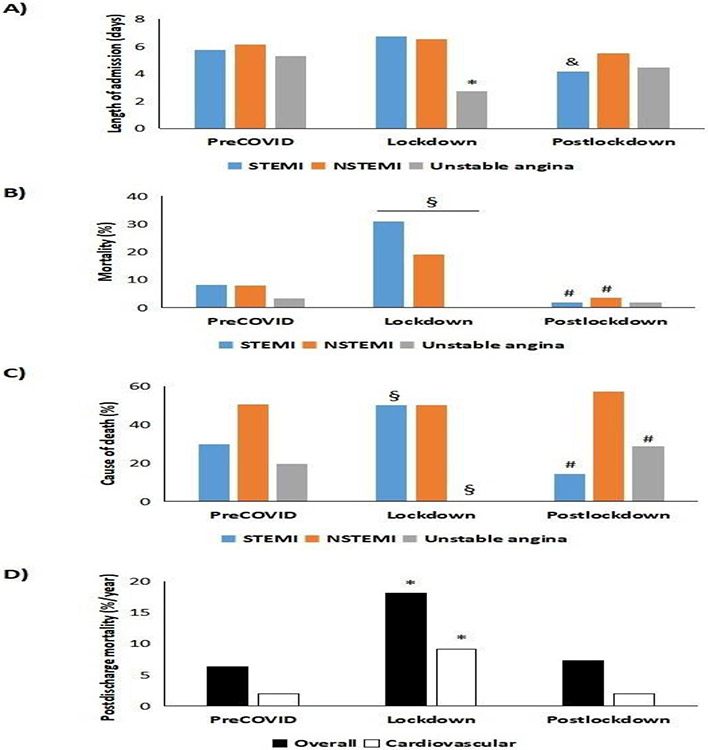
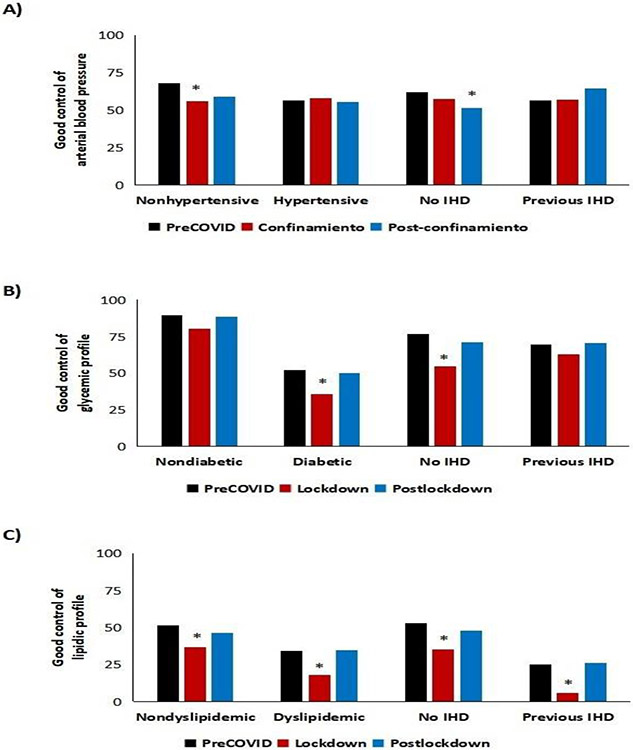
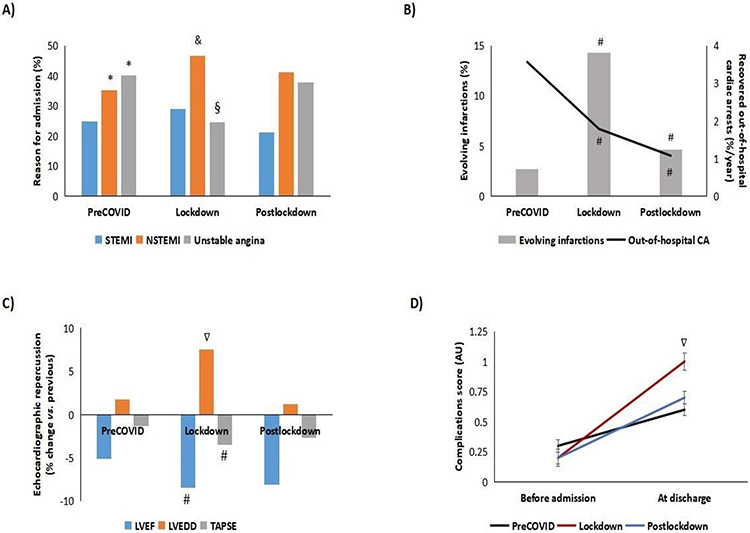
Fewer visits to the emergency department for chest pain and admissions for ACS were recorded during lockdown (48.6% and 51.1% respectively, p<0.05). Patients who were admitted during lockdown were characterized by poorer control of cardiovascular risk factors, visited later (more evolving infarctions: 2.7% vs. 14.3%, p<0.05), experienced more echocardiographic complications during admission, and had more than 3-fold mortality rates (both in-hospital and postdischarge).
The COVID-19 pandemic and lockdown itself had a negative effect on ischemic heart disease beyond SARS-CoV-2 infection.
2020年初,严重急性呼吸综合征冠状病毒2(SARS-CoV-2)大流行给医疗服务带来了前所未有的压力。据报道,封锁期间急性冠状动脉综合征(ACS)的入院人数有所下降,尽管许多方面仍有待阐明。本研究的主要目的是评估大流行及封锁本身对该领域的影响。
我们进行了一项回顾性观察研究,数据来源于2018年至2020年期间因胸痛前往三级医院急诊科就诊的患者以及因ACS入院的患者。记录了个人详细信息、入院日期、其他检查结果(实验室检查和超声心动图检查)以及治疗情况。患者分为3组:新冠疫情前(n = 1301)、封锁期间(n = 45)和封锁后(n = 343)。
封锁期间,因胸痛前往急诊科就诊的人数及ACS入院人数均有所减少(分别减少48.6%和51.1%,p<0.05)。封锁期间入院的患者具有心血管危险因素控制较差、就诊时间较晚(进展性梗死更多:2.7% 对14.3%,p<0.05)、入院期间超声心动图并发症更多以及院内和出院后死亡率高出3倍多的特点。
新型冠状病毒肺炎大流行及封锁本身对缺血性心脏病产生了负面影响,其影响超出了SARS-CoV-2感染本身。