Severa Martina, Rizzo Fabiana, Sinigaglia Alessandro, Ricci Daniela, Etna Marilena Paola, Cola Gaia, Landi Doriana, Buscarinu Maria Chiara, Valdarchi Catia, Ristori Giovanni, Riccetti Silvia, Piubelli Chiara, Palmerini Pierangela, Rosato Antonio, Gobbi Federico, Balducci Stefano, Marfia Girolama Alessandra, Salvetti Marco, Barzon Luisa, Coccia Eliana Marina
Department of Infectious Disease Istituto Superiore di Sanità Rome Italy.
Department of Molecular Medicine University of Padova Padua Italy.
Clin Transl Immunology. 2023 Mar 23;12(3):e1434. doi: 10.1002/cti2.1434. eCollection 2023.
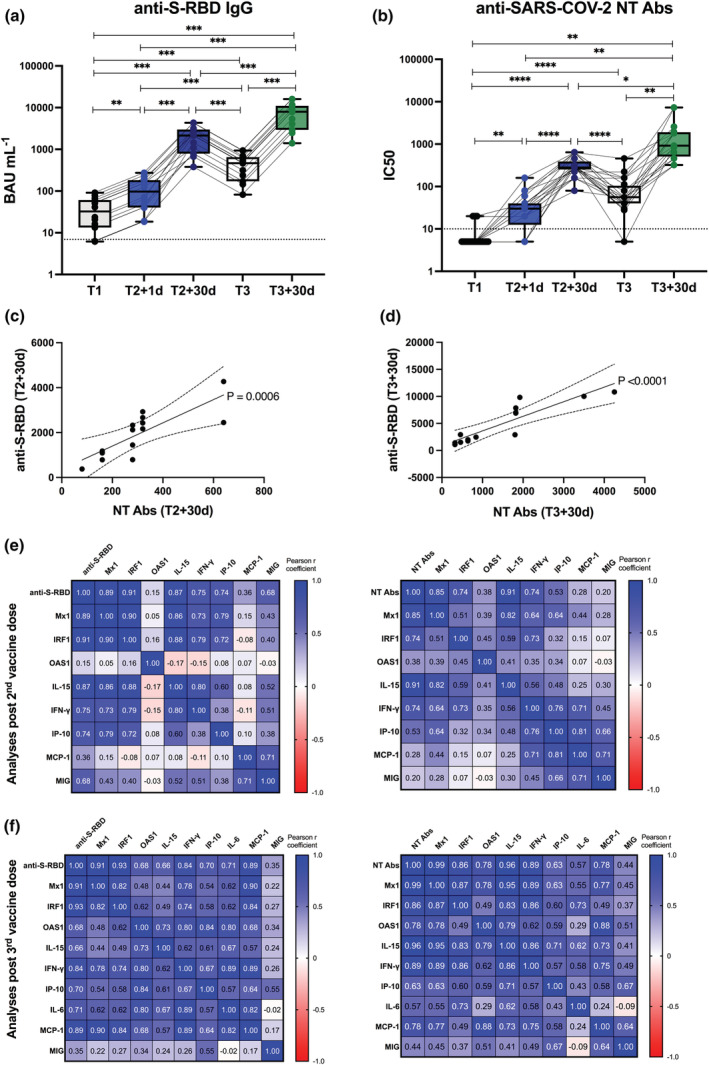
The very rapidly approved mRNA-based vaccines against SARS-CoV-2 spike glycoprotein, including Pfizer-BioNTech BNT162b2, are effective in protecting from severe coronavirus disease 2019 (COVID-19) in immunocompetent population. However, establishing the duration and identifying correlates of vaccine-induced protection will be crucial to optimise future immunisation strategies. Here, we studied in healthy vaccine recipients and people with multiple sclerosis (pwMS), undergoing different therapies, the regulation of innate immune response by mRNA vaccination in order to correlate it with the magnitude of vaccine-induced protective humoral responses.
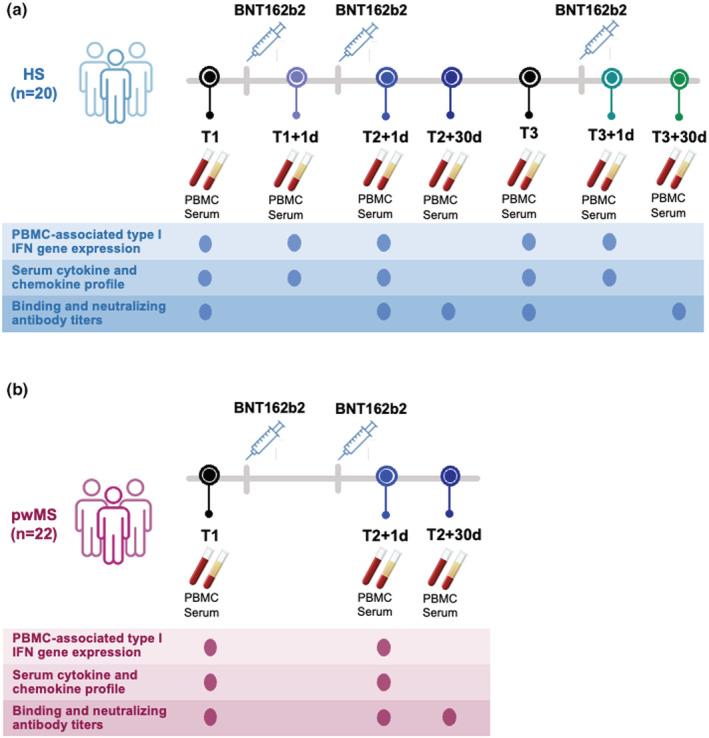
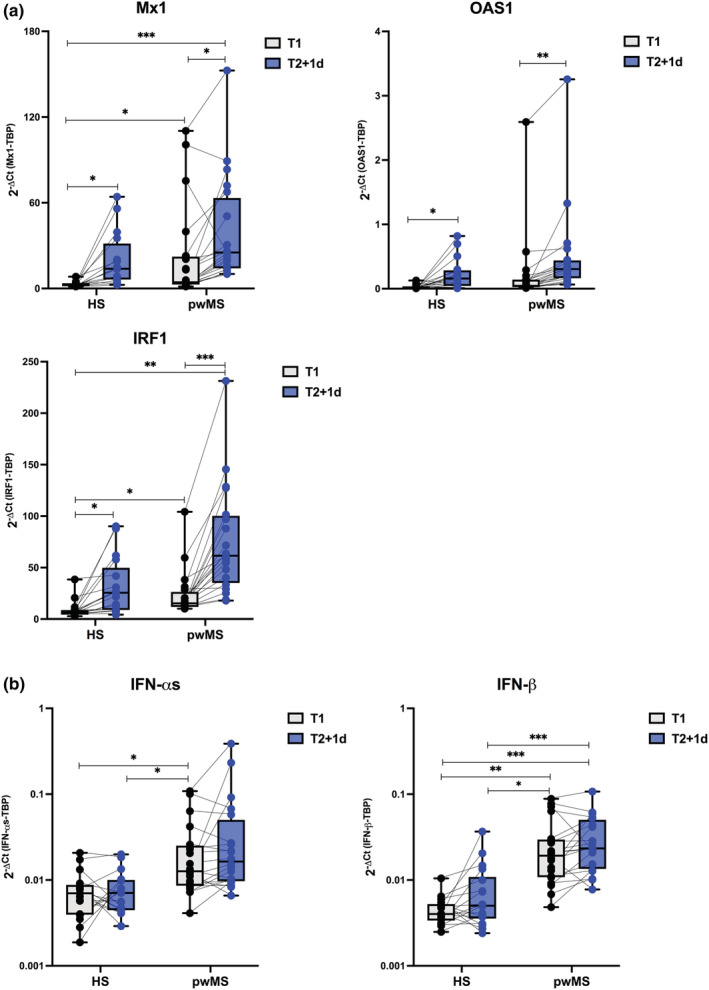
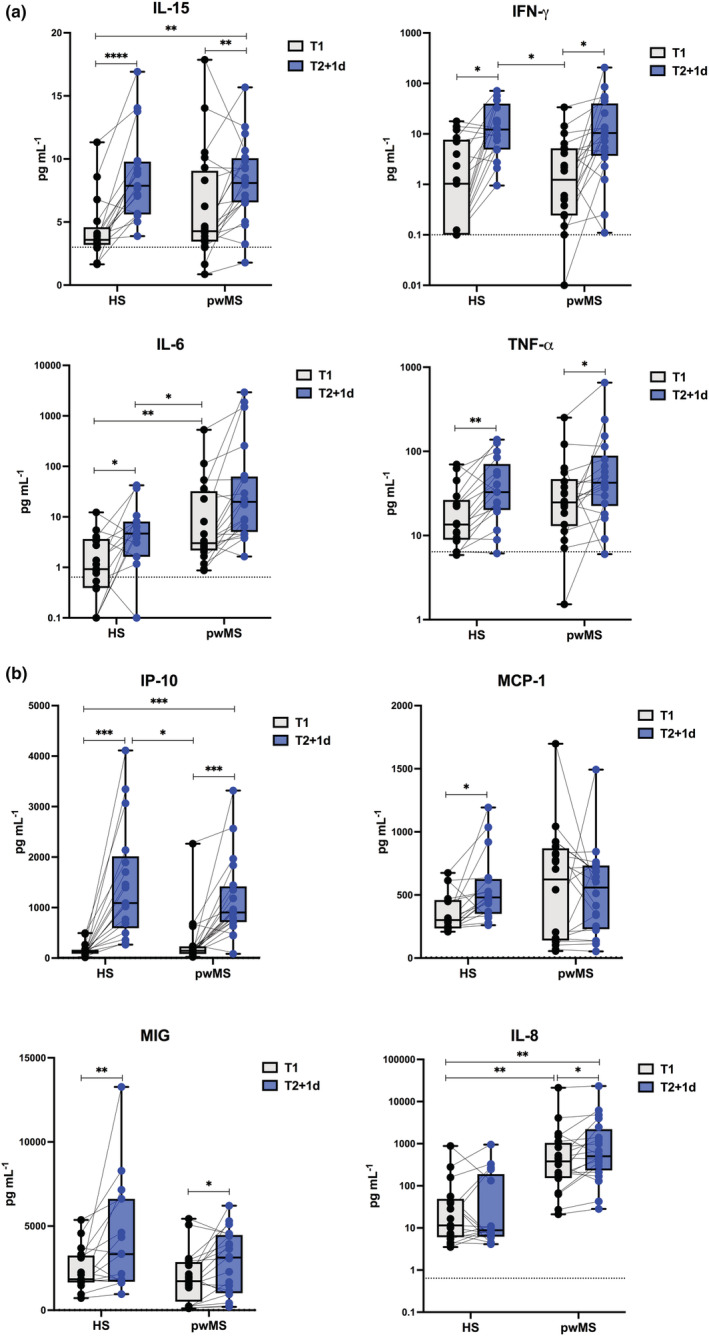
Healthy subjects ( = 20) and matched pwMS ( = 22) were longitudinally sampled before and after mRNA vaccination. Peripheral blood mononuclear cell (PBMC)-associated type I and II interferon (IFN)-inducible gene expression, serum innate cytokine/chemokine profile as well as binding and neutralising anti-SARS-COV-2 antibodies (Abs) were measured.
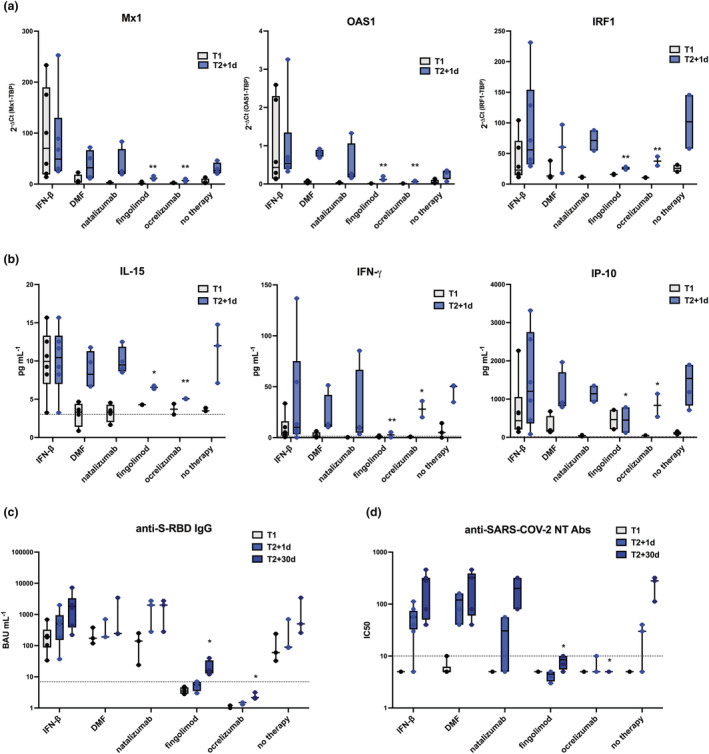
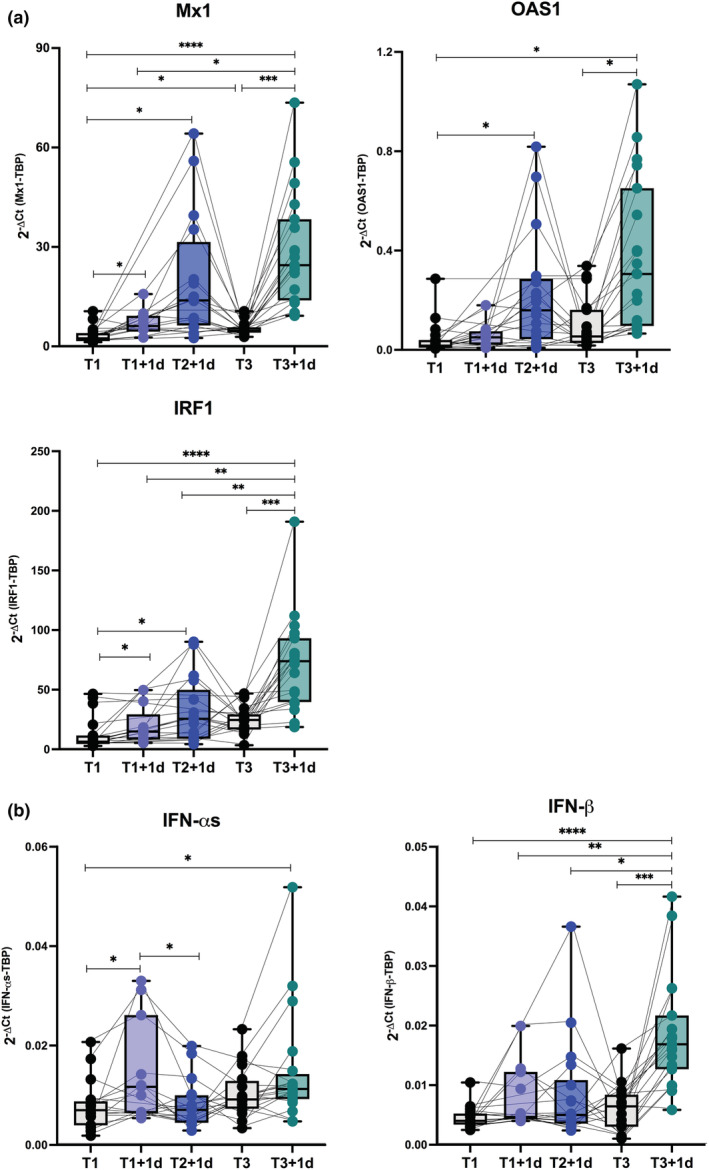
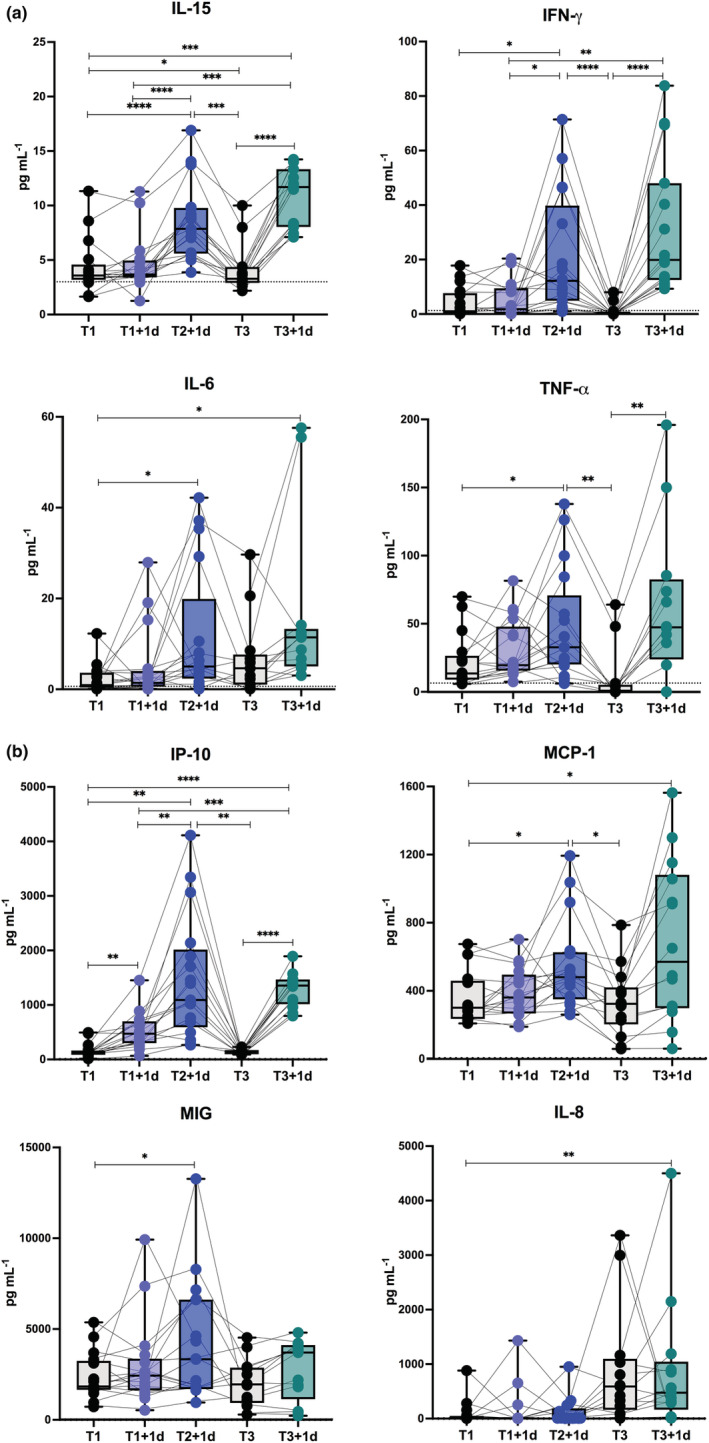
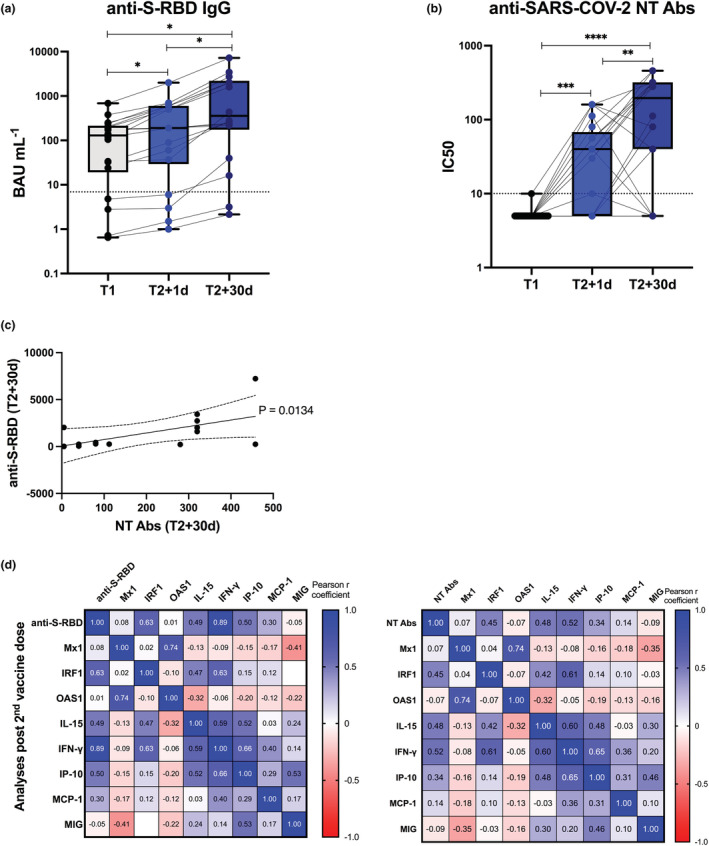
We identified an early immune module composed of the IFN-inducible genes Mx1, OAS1 and IRF1, the serum cytokines IL-15, IL-6, TNF-α and IFN-γ and the chemokines IP-10, MCP-1 and MIG, induced 1 day post second and third BNT162b2 vaccine doses, strongly correlating with magnitude of humoral response to vaccination in healthy and MS vaccinees. Moreover, induction of the early immune module was dramatically affected in pwMS treated with fingolimod and ocrelizumab, both groups unable to induce a protective humoral response to COVID-19 vaccine.
Overall, this study suggests that the vaccine-induced early regulation of innate immunity is mediated by IFN signalling, impacts on the magnitude of adaptive responses and it might be indicative of vaccine-induced humoral protection.
针对严重急性呼吸综合征冠状病毒2型(SARS-CoV-2)刺突糖蛋白的基于信使核糖核酸(mRNA)的疫苗,包括辉瑞-生物科技公司的BNT162b2,已迅速获批,在免疫功能正常人群中对预防2019冠状病毒病(COVID-19)重症有效。然而,确定疫苗诱导保护的持续时间并找出相关因素对于优化未来免疫策略至关重要。在此,我们研究了健康疫苗接种者和接受不同治疗的多发性硬化症患者(pwMS)中mRNA疫苗对先天免疫反应的调节作用,以便将其与疫苗诱导的保护性体液反应强度相关联。
对健康受试者(n = 20)和匹配的pwMS(n = 22)在mRNA疫苗接种前后进行纵向采样。检测外周血单个核细胞(PBMC)相关的I型和II型干扰素(IFN)诱导基因表达、血清先天细胞因子/趋化因子谱以及结合和中和抗SARS-CoV-2抗体(Abs)。
我们确定了一个早期免疫模块,其由IFN诱导基因Mx1、OAS1和IRF1、血清细胞因子白细胞介素-15(IL-15)、白细胞介素-6(IL-6)、肿瘤坏死因子-α(TNF-α)和IFN-γ以及趋化因子干扰素诱导蛋白10(IP-10)、单核细胞趋化蛋白-1(MCP-1)和γ干扰素诱导单核因子(MIG)组成,在第二次和第三次BNT162b2疫苗接种后1天诱导产生,与健康和MS疫苗接种者对疫苗的体液反应强度密切相关。此外,在用芬戈莫德和奥瑞珠单抗治疗的pwMS中,早期免疫模块的诱导受到显著影响,这两组均无法诱导出针对COVID-19疫苗的保护性体液反应。
总体而言,本研究表明疫苗诱导的先天免疫早期调节由IFN信号介导,影响适应性反应的强度,并且可能预示着疫苗诱导的体液保护作用。