Institut de Recherches Internationales Servier, Suresnes, France.
Department of Pharmaceutical Sciences, University at Buffalo, State University of New York, Buffalo, New York.
Cancer Res Commun. 2022 Nov 30;2(11):1532-1544. doi: 10.1158/2767-9764.CRC-22-0176. eCollection 2022 Nov.
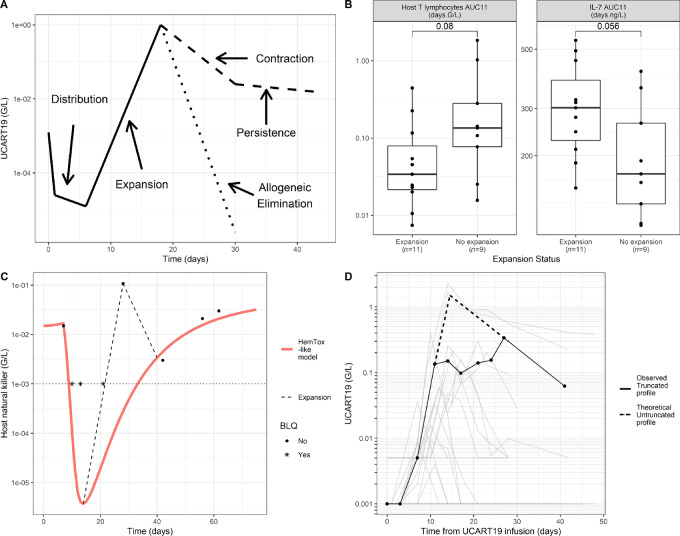
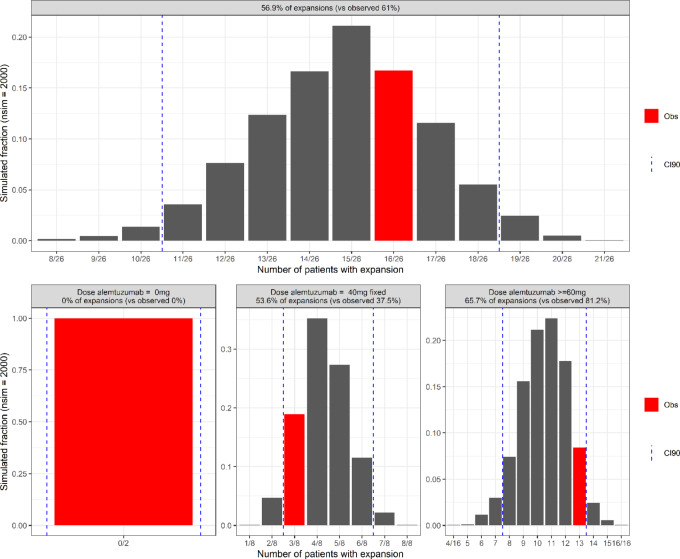
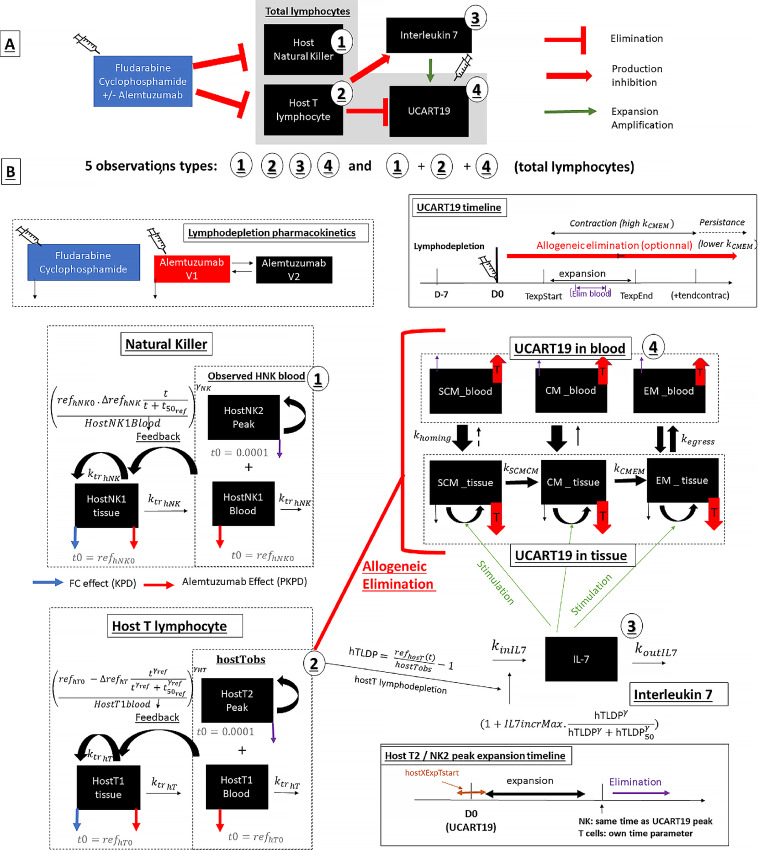
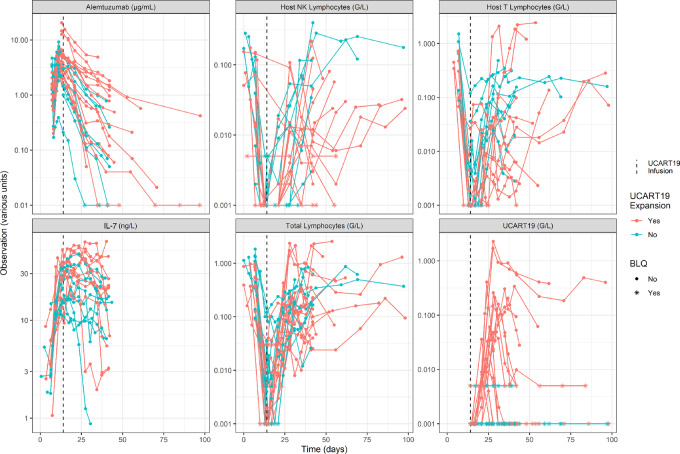
Chimeric antigen receptor (CAR)-T cell therapies have shown tremendous results against various hematologic cancers. Prior to cell infusion, a host preconditioning regimen is required to achieve lymphodepletion and improve CAR-T cell pharmacokinetic exposure, leading to greater chances of therapeutic success. To better understand and quantify the impact of the preconditioning regimen, we built a population-based mechanistic pharmacokinetic-pharmacodynamic model describing the complex interplay between lymphodepletion, host immune system, homeostatic cytokines, and pharmacokinetics of UCART19, an allogeneic product developed against CD19 B cells. Data were collected from a phase I clinical trial in adult relapsed/refractory B-cell acute lymphoblastic leukemia and revealed three different UCART19 temporal patterns: (i) expansion and persistence, (ii) transient expansion with subsequent rapid decline, and (iii) absence of observed expansion. On the basis of translational assumptions, the final model was able to capture this variability through the incorporation of IL-7 kinetics, which are thought to be increased owing to lymphodepletion, and through an elimination of UCART19 by host T cells, which is specific to the allogeneic context. Simulations from the final model recapitulated UCART19 expansion rates in the clinical trial, confirmed the need for alemtuzumab to observe UCART19 expansion (along with fludarabine cyclophosphamide), quantified the importance of allogeneic elimination, and suggested a high impact of multipotent memory T-cell subpopulations on UCART19 expansion and persistence. In addition to supporting the role of host cytokines and lymphocytes in CAR-T cell therapy, such a model could help optimizing the preconditioning regimens in future clinical trials.
A mathematical mechanistic pharmacokinetic/pharmacodynamic model supports and captures quantitatively the beneficial impact of lymphodepleting patients before the infusion of an allogeneic CAR-T cell product. Mediation through IL-7 increase and host T lymphocytes decrease is underlined, and the model can be further used to optimize CAR-T cell therapies lymphodepletion regimen.
嵌合抗原受体(CAR)-T 细胞疗法在治疗各种血液系统恶性肿瘤方面取得了巨大的成果。在细胞输注之前,需要宿主预处理方案来实现淋巴细胞耗竭并提高 CAR-T 细胞药代动力学暴露,从而增加治疗成功的机会。为了更好地理解和量化预处理方案的影响,我们构建了一个基于人群的机制药代动力学-药效学模型,该模型描述了淋巴细胞耗竭、宿主免疫系统、内稳态细胞因子和同种异体产品 UCART19 药代动力学之间的复杂相互作用,UCART19 是针对 CD19 B 细胞开发的产品。数据来自一项成人复发/难治性 B 细胞急性淋巴细胞白血病的 I 期临床试验,该试验揭示了 UCART19 的三种不同时间模式:(i)扩张和持续存在,(ii)短暂扩张随后迅速下降,以及(iii)无明显扩张。基于转化假设,最终模型能够通过纳入被认为由于淋巴细胞耗竭而增加的 IL-7 动力学以及通过宿主 T 细胞消除 UCART19 来捕捉这种变异性,而这是同种异体背景所特有的。最终模型的模拟结果再现了临床试验中 UCART19 的扩张率,证实了需要使用阿仑单抗来观察 UCART19 的扩张(与氟达拉滨环磷酰胺一起),量化了同种异体消除的重要性,并表明多能记忆 T 细胞亚群对 UCART19 的扩张和持续存在有很大影响。除了支持宿主细胞因子和淋巴细胞在 CAR-T 细胞治疗中的作用外,此类模型还可以帮助优化未来临床试验中的预处理方案。
一种数学机制药代动力学/药效学模型支持并定量捕获同种异体 CAR-T 细胞产品输注前耗竭患者的有益影响。强调了通过 IL-7 增加和宿主 T 淋巴细胞减少的介导作用,并且该模型可以进一步用于优化 CAR-T 细胞疗法的淋巴细胞耗竭方案。