Sebastian Thresia, Toseef Mohammad Usama, Kurtz Melanie, Frost Holly M
Department of Pediatrics, Denver Health and Hospital Authority, Denver, Colorado.
Department of Pediatrics, University of Colorado School of Medicine, Aurora, Colorado.
Antimicrob Steward Healthc Epidemiol. 2023 Mar 15;3(1):e49. doi: 10.1017/ash.2023.127. eCollection 2023.
Acute otitis media (AOM) is the most common indication for antibiotics in children. The associated organism can influence the likelihood of antibiotic benefit and optimal treatment. Nasopharyngeal polymerase chain reaction can effectively exclude the presence of organisms in middle-ear fluid. We explored the potential cost-effectiveness and reduction in antibiotics with nasopharyngeal rapid diagnostic testing (RDT) to direct AOM management.
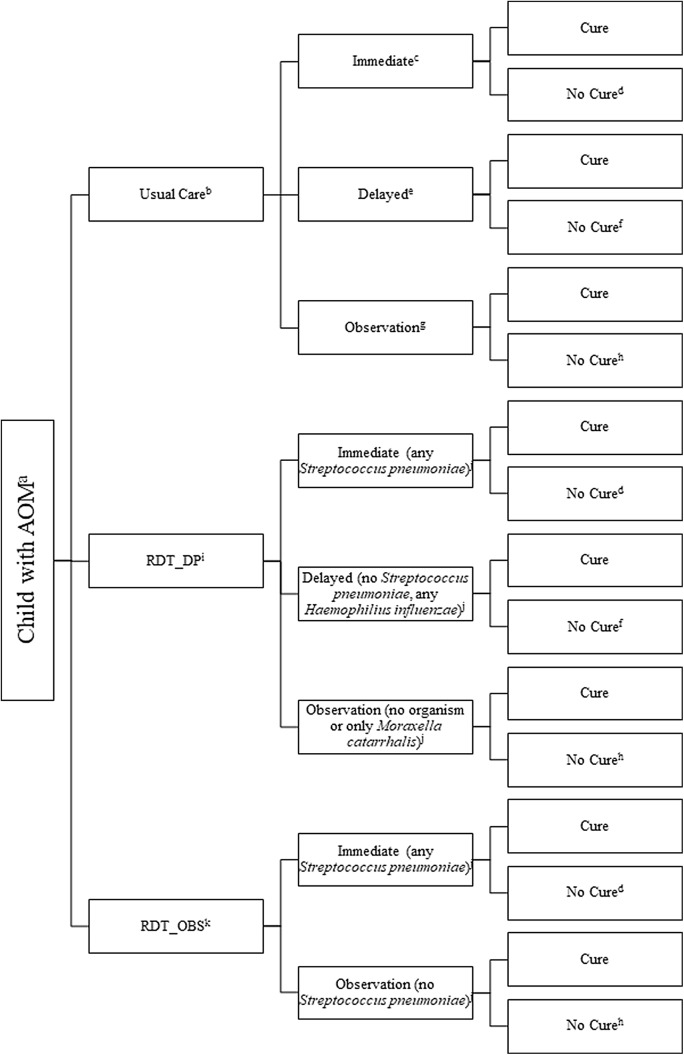
We developed 2 algorithms for AOM management based on nasopharyngeal bacterial otopathogens. The algorithms provide recommendations on prescribing strategy (ie, immediate, delayed, or observation) and antimicrobial agent. The primary outcome was the incremental cost-effectiveness ratio (ICER) expressed as cost per quality-adjusted life day (QALD) gained. We used a decision-analytic model to evaluate the cost-effectiveness of the RDT algorithms compared to usual care from a societal perspective and the potential reduction in annual antibiotics used.
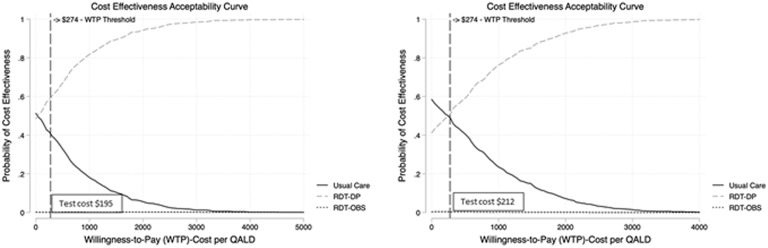
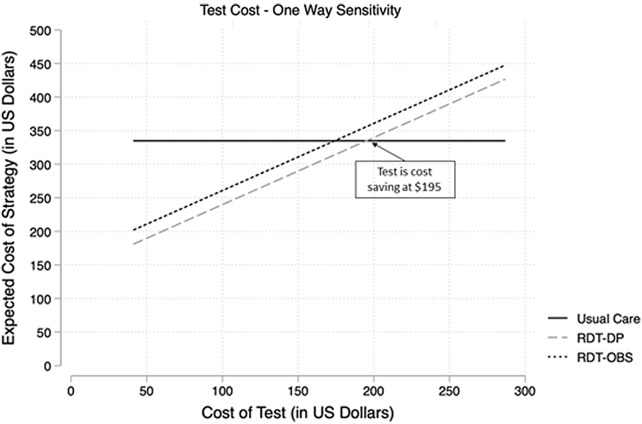
An RDT algorithm that used immediate prescribing, delayed prescribing, and observation based on pathogen (RDT-DP) had an ICER of $1,336.15 per QALD compared with usual care. At an RDT cost of $278.56, the ICER for RDT-DP exceeded the willingness to pay threshold; however, if the RDT cost was <$212.10, the ICER was below the threshold. The use of RDT was estimated to reduced annual antibiotic use, including broad-spectrum antimicrobial use, by 55.7% ($4.7 million for RDT vs $10.5 million for usual care).
The use of a nasopharyngeal RDT for AOM could be cost-effective and substantially reduce unnecessary antibiotic use. These iterative algorithms could be modified to guide management of AOM as pathogen epidemiology and resistance evolve.
急性中耳炎(AOM)是儿童使用抗生素最常见的指征。相关病原体可影响抗生素治疗获益的可能性及最佳治疗方案。鼻咽部聚合酶链反应可有效排除中耳积液中病原体的存在。我们探讨了采用鼻咽部快速诊断检测(RDT)指导AOM治疗的潜在成本效益及抗生素使用的减少情况。
我们基于鼻咽部细菌性耳病原体开发了2种AOM治疗算法。这些算法提供了关于处方策略(即立即、延迟或观察)及抗菌药物的建议。主要结局为增量成本效益比(ICER),以每获得的质量调整生命日(QALD)的成本表示。我们使用决策分析模型从社会角度评估RDT算法与常规治疗相比的成本效益,以及年度抗生素使用的潜在减少情况。
一种基于病原体采用立即处方、延迟处方和观察的RDT算法(RDT-DP)与常规治疗相比,ICER为每QALD 1336.15美元。在RDT成本为278.56美元时,RDT-DP的ICER超过了支付意愿阈值;然而,如果RDT成本低于212.10美元,ICER则低于该阈值。据估计,使用RDT可使年度抗生素使用量减少55.7%(RDT为470万美元,常规治疗为1050万美元),包括广谱抗菌药物的使用。
使用鼻咽部RDT治疗AOM可能具有成本效益,并可大幅减少不必要的抗生素使用。随着病原体流行病学和耐药性的演变,这些迭代算法可进行修改以指导AOM的治疗。