Univ Rennes, CNRS, IGDR (Institut de Genetique et Developpement de Rennes) - UMR 6290, F-35000 Rennes, France.
Cancer Res Commun. 2022 Dec 20;2(12):1669-1683. doi: 10.1158/2767-9764.CRC-22-0350. eCollection 2022 Dec.
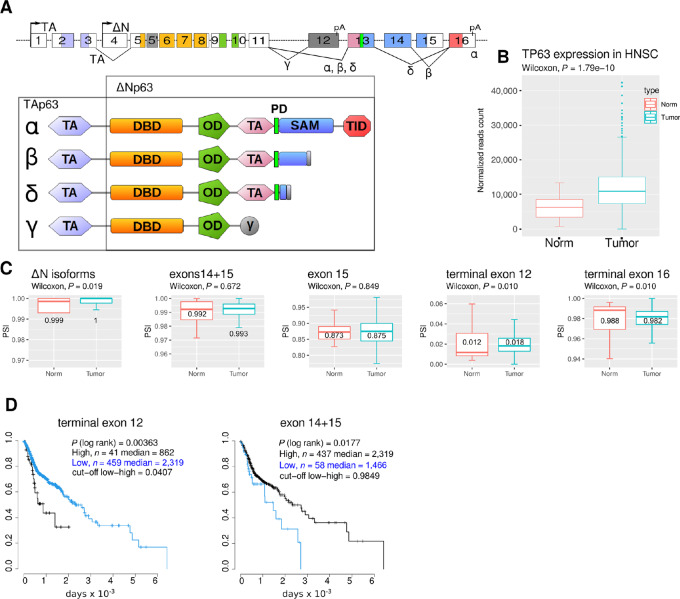
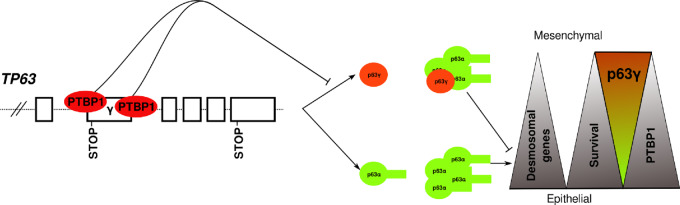
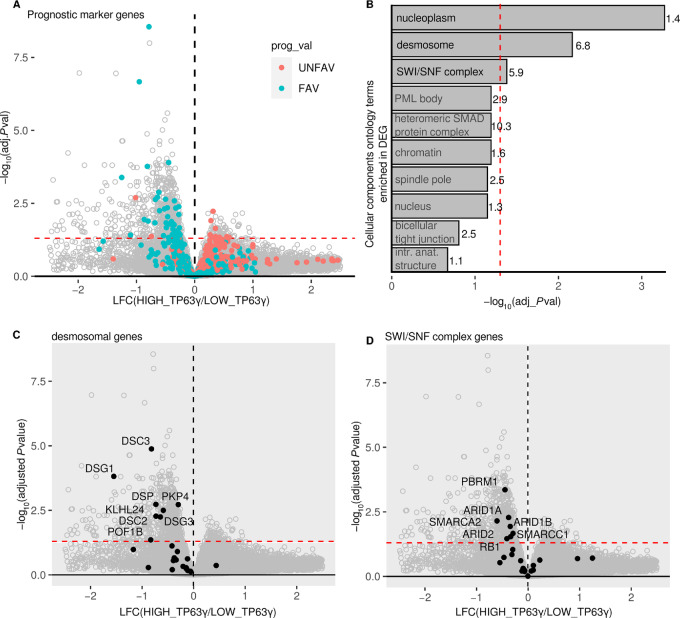
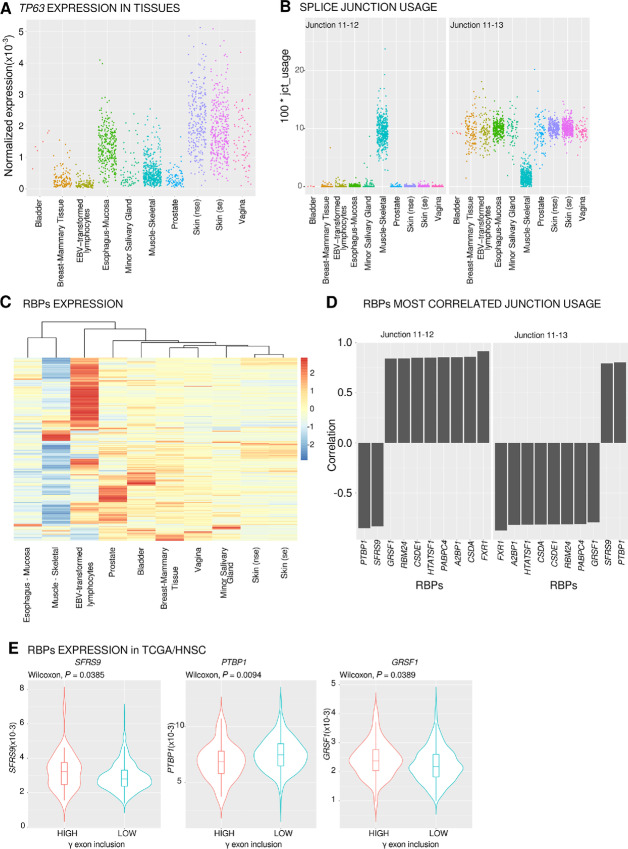
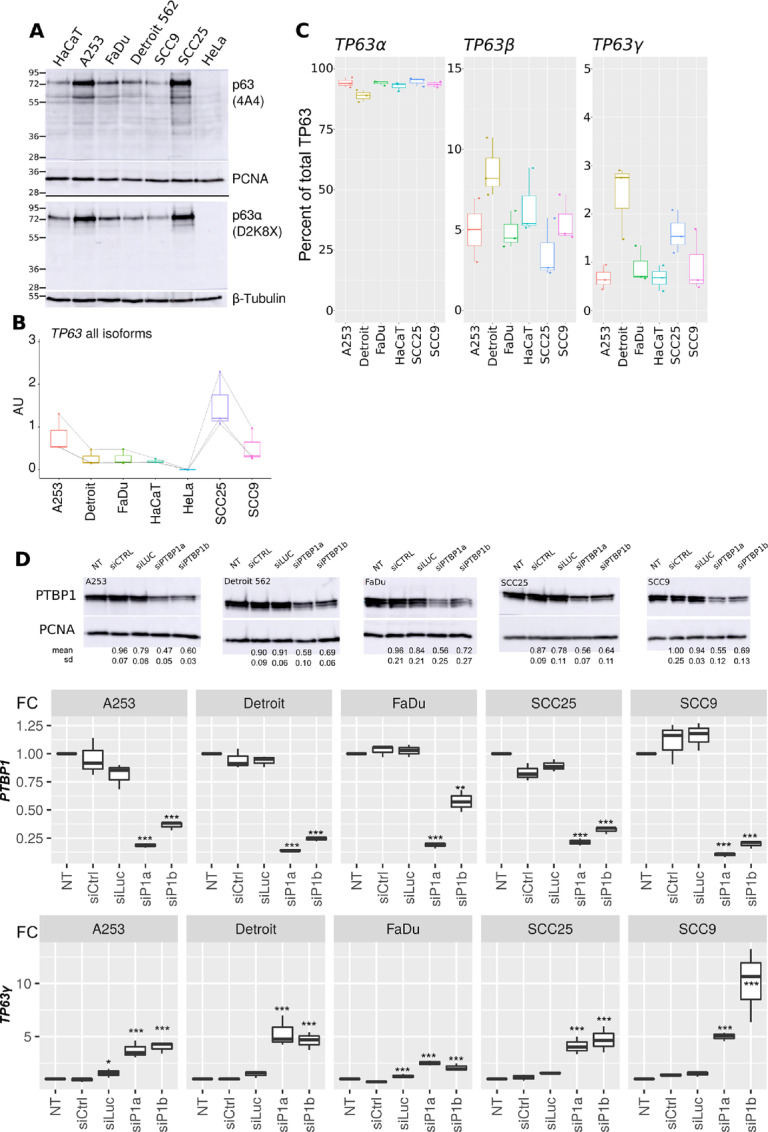
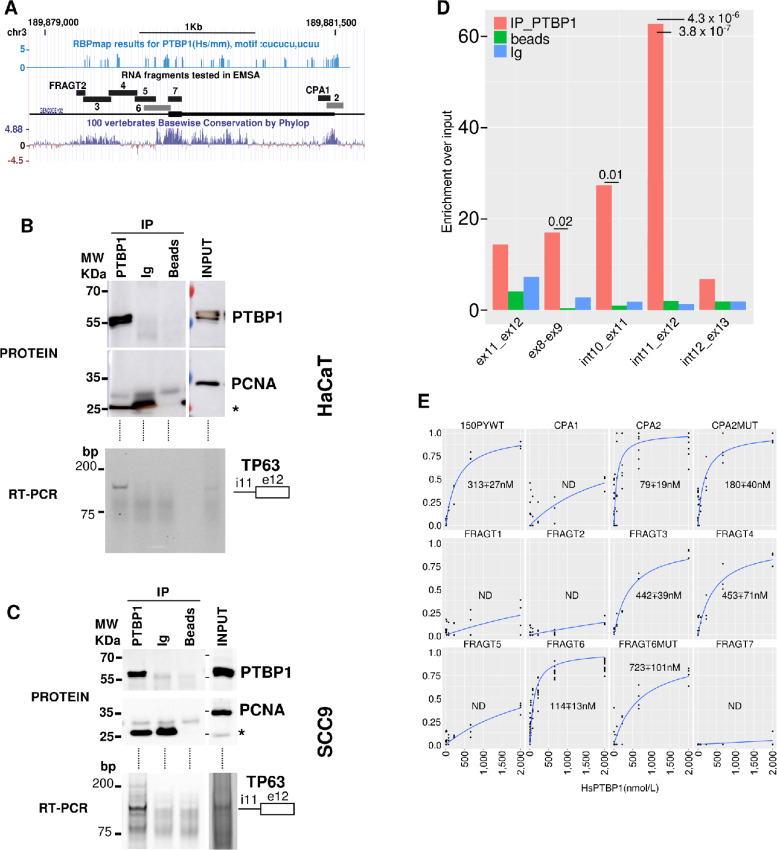
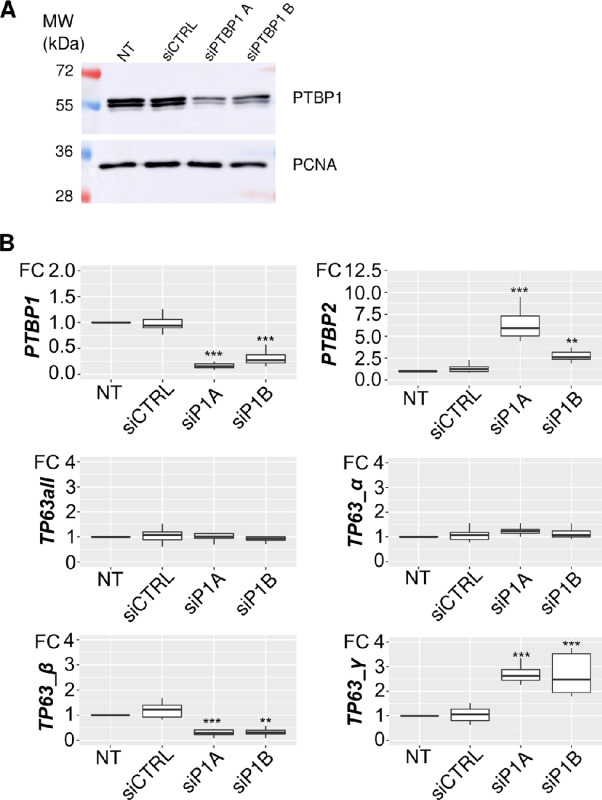
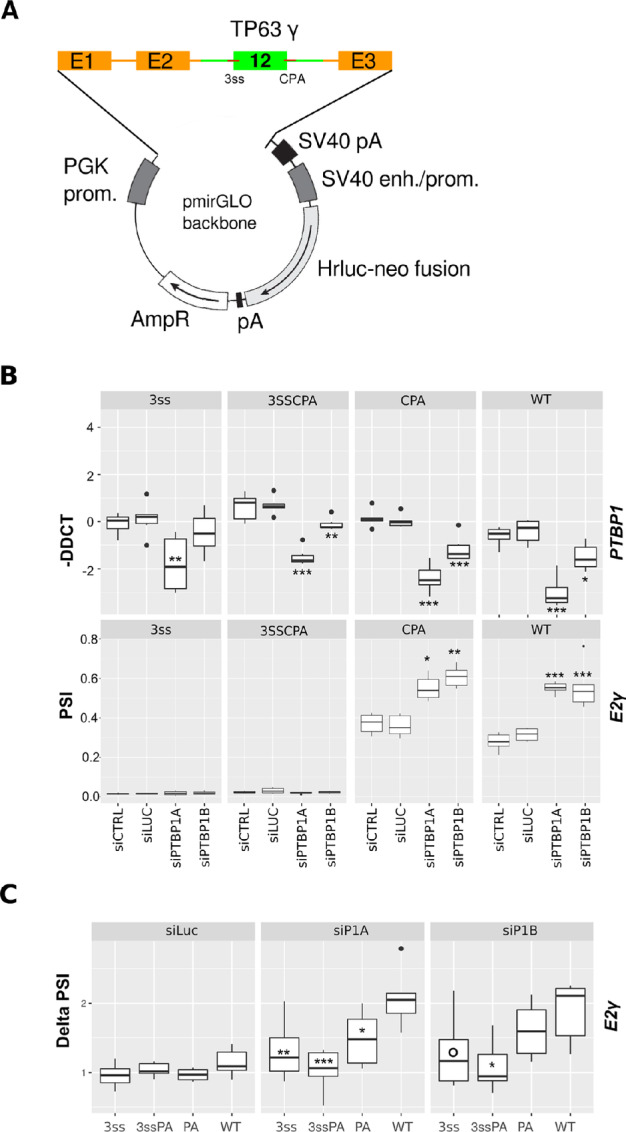
The gene encodes the p63 transcription factor. It is frequently amplified or overexpressed in squamous cell carcinomas. Owing to alternative splicing, p63 has multiple isoforms called α, β, γ, and δ. The regulatory functions of p63 are isoform specific. The α isoform inhibits the epithelial-to-mesenchymal transition (EMT) and controls apoptosis, while the γ isoform promotes EMT. Using The Cancer Genome Atlas data, we observed that a higher proportion of the isoform is a detrimental factor for the survival of patients with head and neck squamous cell carcinoma (HNSCC) and is accompanied by the downregulation of desmosomal genes. By a correlation-based approach, we investigated the regulation of the production of the isoform. According to our analysis of GTEx data, the expression of the RNA-binding protein PTBP1 (polypyrimidine tract binding protein 1) is negatively correlated with the abundance of in several tissues Accordingly, we demonstrated that PTBP1 depletion in HNSCC cell lines, keratinocyte or Xenopus embryos leads to an increase in isoform abundance. By RNA immunoprecipitation and interaction assays, we showed that PTBP1 directly binds to pre-mRNA in close proximity to the -specific exon. Intronic regions around the -specific exon were sufficient to elicit a PTBP1-dependent regulation of alternative splicing in a splice reporter minigene assay. Together, these results identify as an unfavorable prognostic marker in HNSCC, and identify PTBP1 as the first direct splicing regulator of production and a potential route toward isoform control.
Quantifying isoforms in patients' tumors could allow for the early detection of patients with HNSCC with an early loss in desmosomal gene expression and poor prognostic. The identification of PTBP1 as a transacting factor controlling production may allow to control expression.
该基因编码 p63 转录因子。它在鳞状细胞癌中经常扩增或过表达。由于选择性剪接,p63 具有多种异构体,称为α、β、γ和δ。p63 的调节功能具有异构体特异性。α 异构体抑制上皮-间充质转化(EMT)并控制细胞凋亡,而 γ 异构体促进 EMT。使用癌症基因组图谱数据,我们观察到较高比例的 异构体是头颈部鳞状细胞癌(HNSCC)患者生存的不利因素,并且伴随着桥粒基因的下调。通过基于相关性的方法,我们研究了 异构体产生的调节。根据我们对 GTEx 数据的分析,RNA 结合蛋白 PTBP1(多嘧啶 tract 结合蛋白 1)的表达与几种组织中 的丰度呈负相关。因此,我们证明了 HNSCC 细胞系、角质形成细胞或非洲爪蟾胚胎中 PTBP1 的耗竭导致 异构体丰度增加。通过 RNA 免疫沉淀和相互作用测定,我们表明 PTBP1 直接结合到靠近 -特异性外显子的 前 mRNA 上。-特异性外显子周围的内含子区域足以在剪接报告基因 minigene 测定中引发 PTBP1 依赖性选择性剪接调节。总之,这些结果将 鉴定为 HNSCC 的不利预后标志物,并将 PTBP1 鉴定为 产生的第一个直接剪接调节剂,以及控制 异构体的潜在途径。
在患者肿瘤中定量分析 异构体可以允许早期检测到具有早期桥粒基因表达丧失和不良预后的 HNSCC 患者。将 PTBP1 鉴定为控制 产生的反式作用因子可能允许控制 表达。