Department for Health Evidence, Radboud Univerity Medical Center, Nijmegen, The Netherlands.
Department of Urology, Radboud University Medical Center, Nijmegen, The Netherlands.
BMJ Open. 2023 Mar 27;13(3):e066909. doi: 10.1136/bmjopen-2022-066909.
The Renal cell cancer: Lifestyle, prognosis and quality of life (ReLife) study is set up to obtain insight into the association of patient and tumour characteristics, lifestyle habits and circulating biomarkers with body composition features in patients with localised renal cell cancer (RCC). Further, it aims to assess the association of body composition features, lifestyle habits and circulating biomarkers with clinical outcomes, including health-related quality of life.
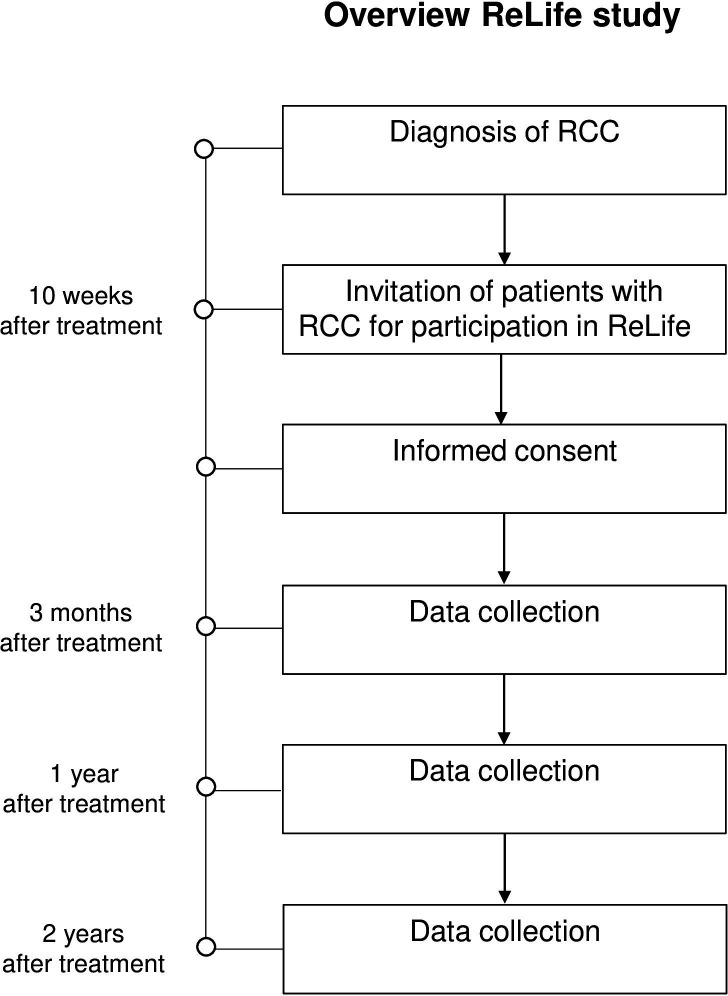
The ReLife study is a multicentre prospective cohort study involving 368 patients with newly diagnosed stages I-III RCC recruited from January 2018 to June 2021 from 18 hospitals in the Netherlands. At 3 months, 1 year and 2 years after treatment, participants fill out a general questionnaire and questionnaires about their lifestyle habits (eg, diet, physical activity, smoking and alcohol consumption), medical history and health-related quality of life. At all three time points, patients wear an accelerometer and have blood samples taken. CT scans for body composition analysis are being collected. Permission is asked for collection of tumour samples. Information about disease characteristics, treatment of the primary tumour and clinical outcomes is being collected from medical records by the Netherlands Cancer Registry.
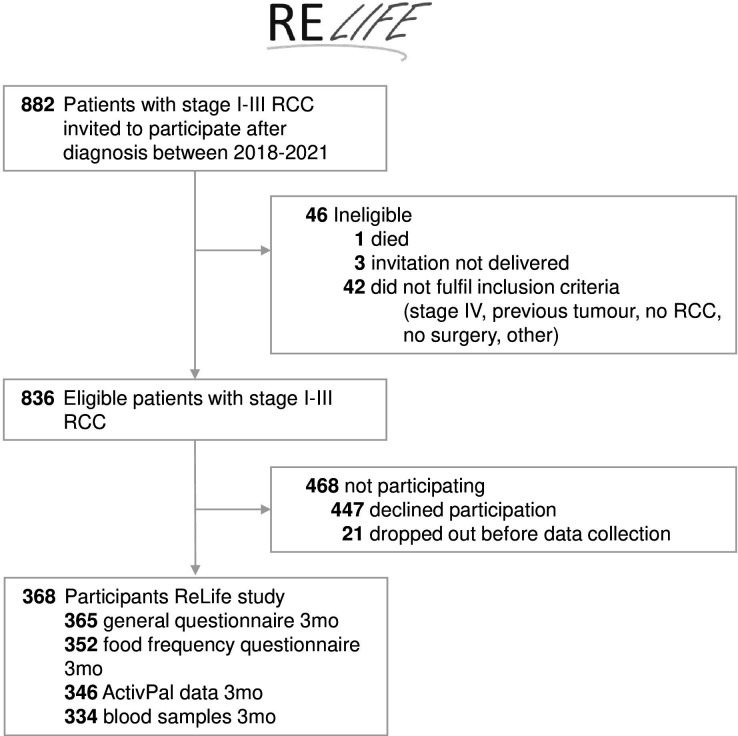
A total of 836 invited patients were eligible and 368 patients were willing to participate and were included (response rate 44%). The mean age of patients was 62.5±9.0 years and 70% was male. The majority had stage I (65%) disease and were treated with radical nephrectomy (57%). Data collection at 3 months and 1 years after treatment have been finalised.
Data collection at 2 years after treatment is expected to be finalised in June 2023 and longitudinal clinical data will continue to be collected. Results of studies based on this cohort are important to develop personalised evidence-based lifestyle advice for patients with localised RCC to enable them to get more control over their disease course.
肾癌:生活方式、预后和生活质量(ReLife)研究旨在深入了解患者和肿瘤特征、生活方式习惯和循环生物标志物与局部肾细胞癌(RCC)患者身体成分特征的关联。此外,它旨在评估身体成分特征、生活方式习惯和循环生物标志物与临床结果(包括健康相关生活质量)的关联。
ReLife 研究是一项多中心前瞻性队列研究,纳入了 2018 年 1 月至 2021 年 6 月期间从荷兰 18 家医院招募的 368 例新诊断的 I-III 期 RCC 患者。治疗后 3 个月、1 年和 2 年,参与者填写一般问卷和生活方式习惯问卷(例如,饮食、身体活动、吸烟和饮酒)、病史和健康相关生活质量问卷。在所有三个时间点,患者佩戴加速度计并采集血样。正在收集用于身体成分分析的 CT 扫描。采集肿瘤样本需获得同意。正在通过荷兰癌症登记处从病历中收集疾病特征、原发肿瘤治疗和临床结果的信息。
共邀请了 836 名符合条件的患者,其中 368 名患者愿意参与并被纳入(响应率为 44%)。患者的平均年龄为 62.5±9.0 岁,70%为男性。大多数患者为 I 期(65%)疾病,接受根治性肾切除术(57%)治疗。治疗后 3 个月和 1 年的数据收集已经完成。
预计将于 2023 年 6 月完成治疗后 2 年的数据收集,并将继续收集纵向临床数据。该队列研究的结果对于制定针对局部 RCC 患者的个性化循证生活方式建议非常重要,使他们能够更好地控制疾病进程。