Institut D'Investigacions Biomèdiques August Pi i Sunyer, Barcelona, Spain.
Julia McFarlane Diabetes Research Centre (JMDRC) and Department of Microbiology, Immunology and Infectious Diseases, Snyder Institute for Chronic Diseases and Hotchkiss Brain Institute, Cumming School of Medicine, University of Calgary, Calgary, AB, Canada.
Front Immunol. 2021 Jul 15;12:684240. doi: 10.3389/fimmu.2021.684240. eCollection 2021.
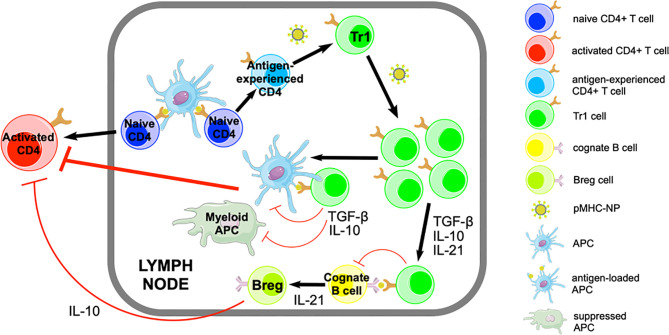
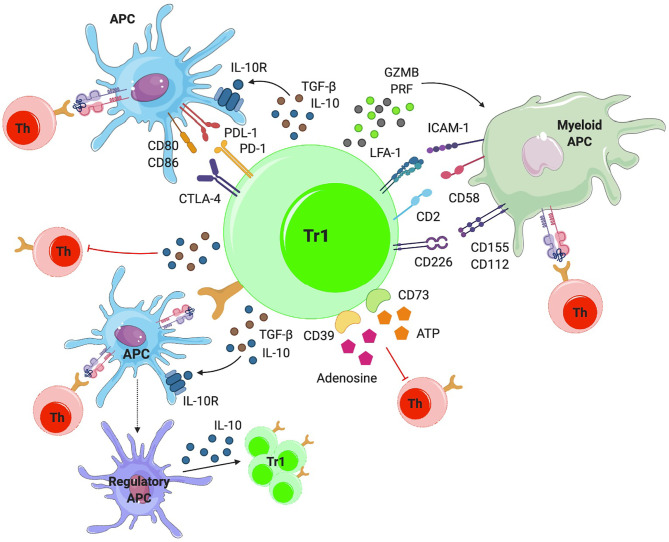
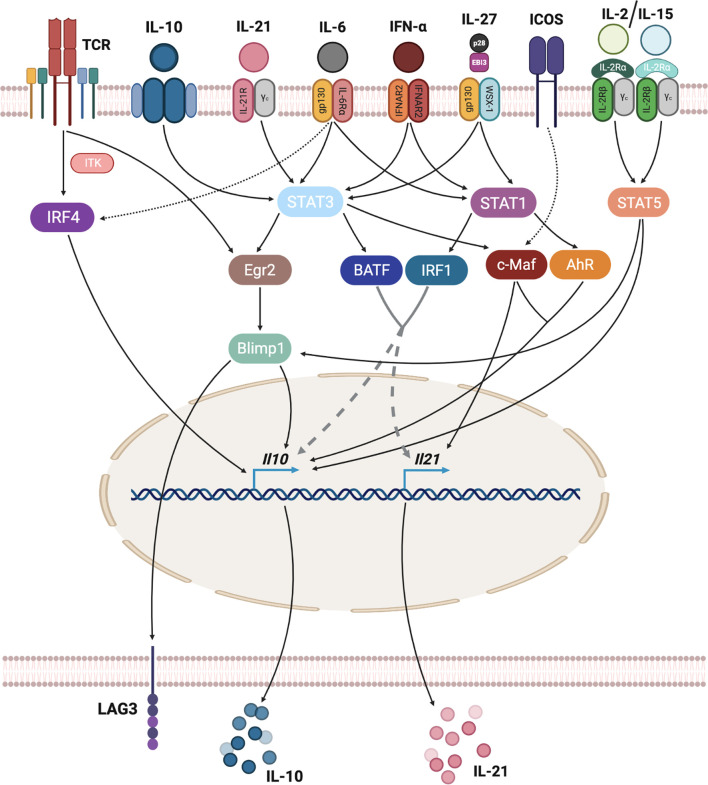
Systemic delivery of peptide-major histocompatibility complex (pMHC) class II-based nanomedicines can re-program cognate autoantigen-experienced CD4+ T cells into disease-suppressing T-regulatory type 1 (TR1)-like cells. In turn, these TR1-like cells trigger the formation of complex regulatory cell networks that can effectively suppress organ-specific autoimmunity without impairing normal immunity. In this review, we summarize our current understanding of the transcriptional, phenotypic and functional make up of TR1-like cells as described in the literature. The true identity and direct precursors of these cells remain unclear, in particular whether TR1-like cells comprise a single terminally-differentiated lymphocyte population with distinct transcriptional and epigenetic features, or a collection of phenotypically different subsets sharing key regulatory properties. We propose that detailed transcriptional and epigenetic characterization of homogeneous pools of TR1-like cells will unravel this conundrum.
系统递送基于肽-主要组织相容性复合体 (pMHC) Ⅱ类的纳米药物可以将同源自身抗原经验的 CD4+T 细胞重新编程为疾病抑制性 T 调节型 1(TR1)样细胞。反过来,这些 TR1 样细胞触发复杂的调节性细胞网络的形成,可有效抑制器官特异性自身免疫而不损害正常免疫。在这篇综述中,我们总结了我们对文献中描述的 TR1 样细胞的转录、表型和功能构成的现有认识。这些细胞的真实身份和直接前体尚不清楚,特别是 TR1 样细胞是否包括具有独特转录和表观遗传特征的单一终末分化淋巴细胞群体,还是具有关键调节特性的不同表型亚群的集合。我们提出,对 TR1 样细胞同质池进行详细的转录和表观遗传特征分析将解开这个难题。