Department of Histopathology, Ningbo Clinical Pathology Diagnosis Center, Ningbo, 315000, Zhejiang, China.
Department of Experimental Pathology, Ningbo Clinical Pathology Diagnosis Center, Ningbo, 315000, Zhejiang, China.
World J Surg Oncol. 2023 Mar 28;21(1):112. doi: 10.1186/s12957-023-02990-2.
Breast cancer is the most common tumor in women worldwide. Diabetes mellitus is a global chronic metabolic disease with increasing incidence. Diabetes mellitus has been reported to positively regulate the development of many tumors. However, the specific mechanism of hyperglycemic environment regulating breast cancer remains unclear. PFKFB3 (6-phosphofructose-2-kinase/fructose-2, 6-bisphosphatase 3) is a key regulatory factor of the glycolysis process in diabetes mellitus, as well as a promoter of breast cancer. So, we want to explore the potential link between PFKFB3 and the poor prognosis of breast cancer patients with hyperglycemia in this study.
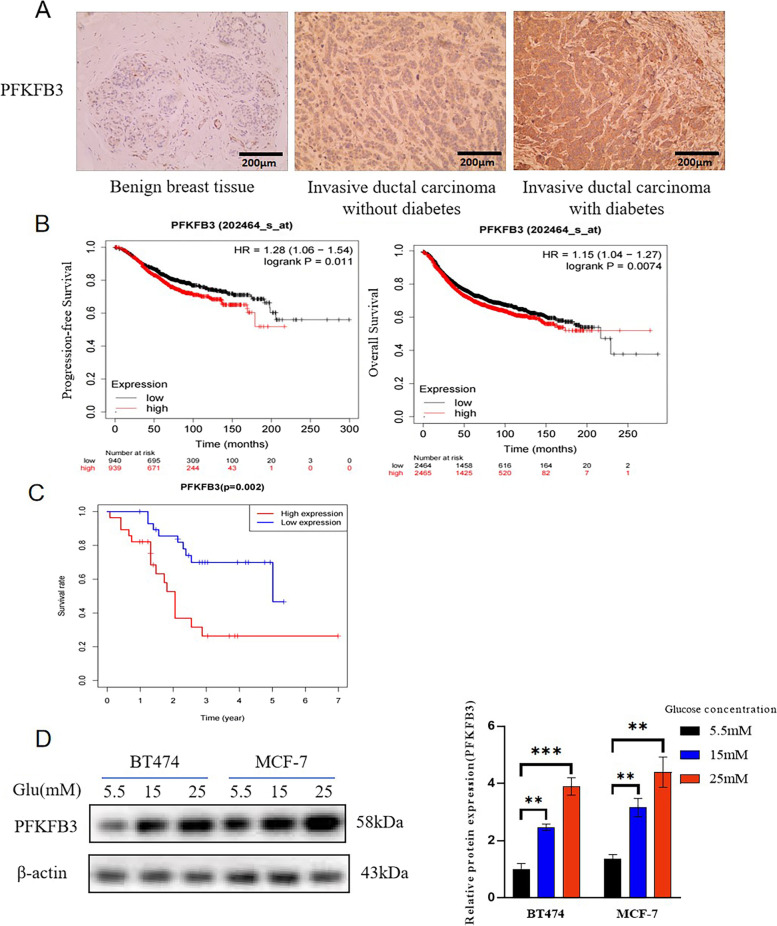
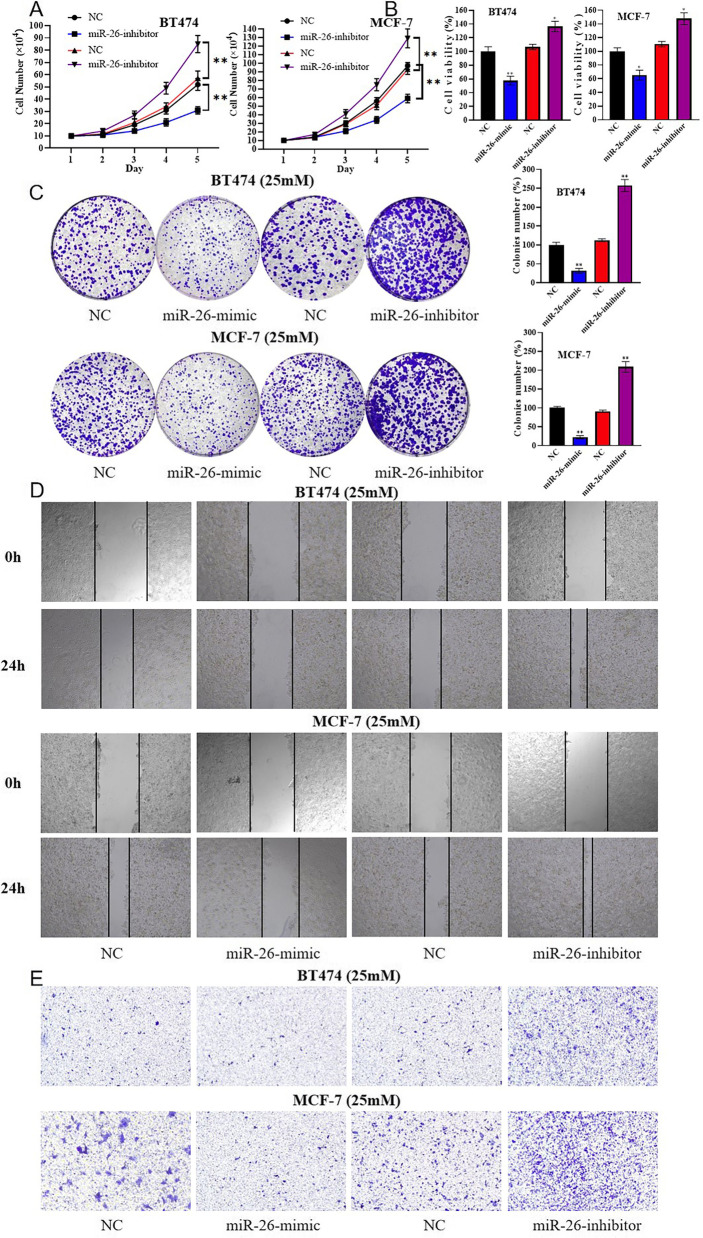
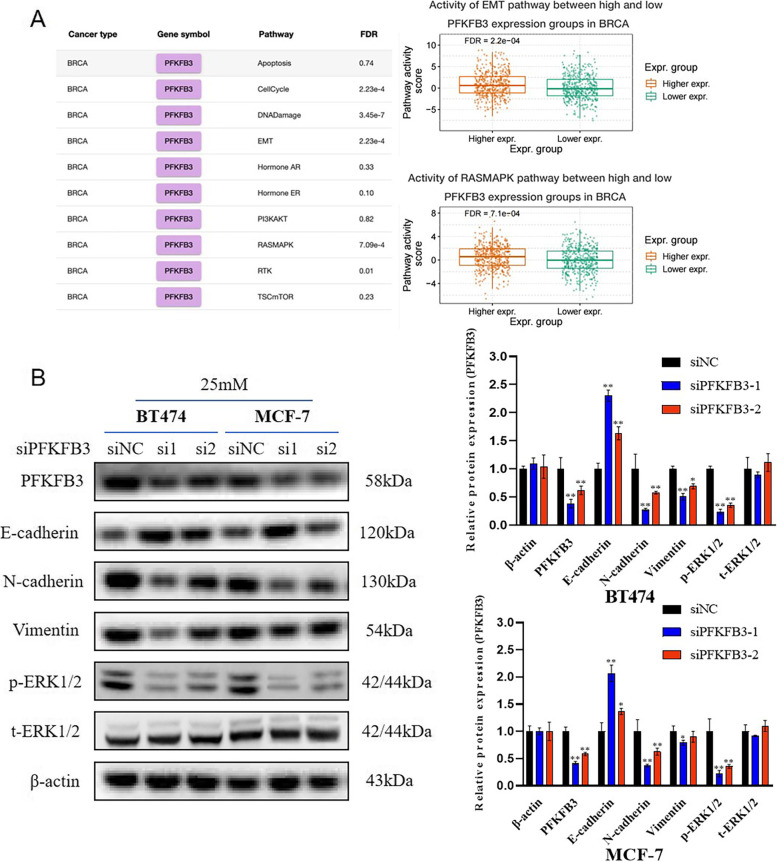
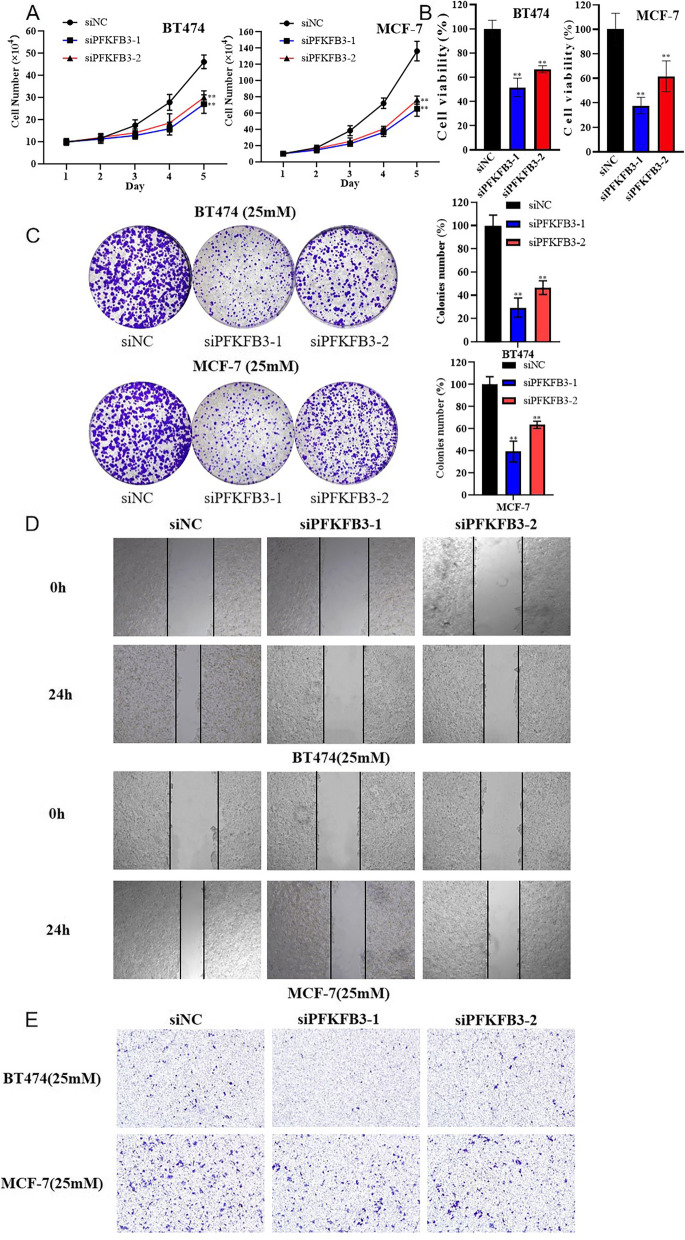
Cell culture was utilized to construct different-glucose breast cancer cell lines. Immunohistochemistry was adopted to analyze the protein level of PFKFB3 in benign breast tissues, invasive ductal carcinoma with diabetes and invasive ductal carcinoma without diabetes. The Kaplan-Meier plotter database and GEO database (GSE61304) was adopted to analyze the survival of breast cancer patients with different PFKFB3 expression. Western blot was adopted to analyze the protein level of PFKFB3, epithelial-mesenchymal transition (EMT)-related protein and extracellular regulated protein kinases (ERK) in breast cancer cells. Gene Set Cancer Analysis (GSCA) was utilized to investigate the potential downstream signaling pathways of PFKFB3. TargetScan and OncomiR were utilized to explore the potential mechanism of PFKFB3 overexpression by hyperglycemia. Transfections (including siRNAs and miRNA transfection premiers) was utilized to restrain or mimic the expression of the corresponding RNA. Cell functional assays (including cell counting, MTT, colony formation, wound-healing, and cell migration assays) were utilized to explore the proliferation and migration of breast cancer cells.
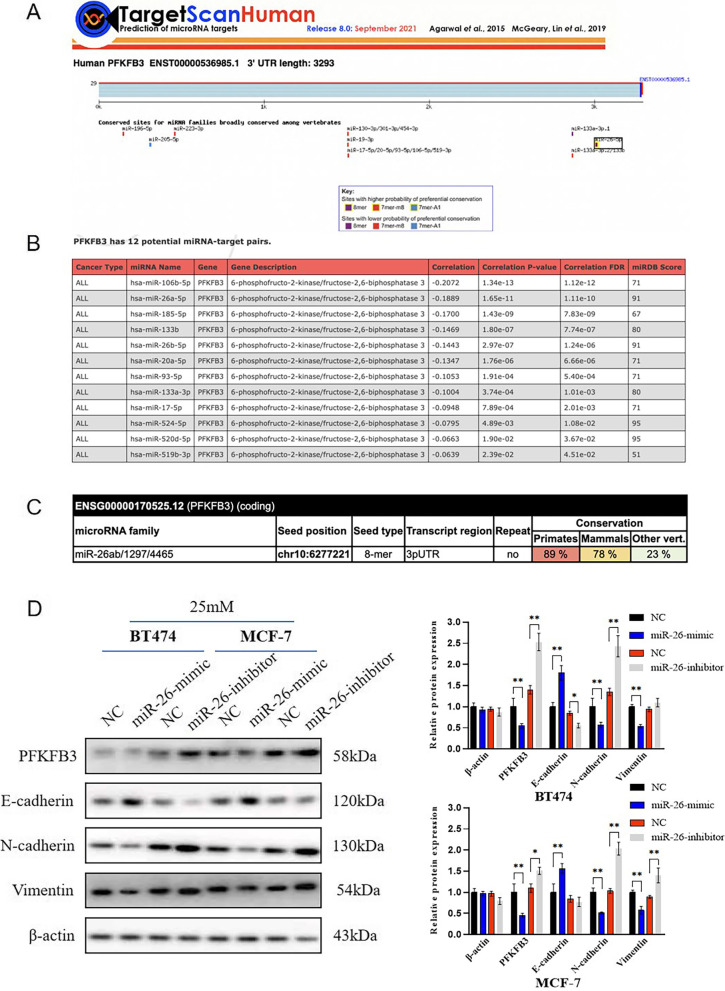
In this study, we demonstrated that the expression of PFKFB3 in breast cancer complicated with hyperglycemia was higher than that in breast cancer with euglycemia through cell experiment in vitro and histological experiment. PFKFB3 overexpression decreased the survival period of breast cancer patients and was correlated with a number of clinicopathological parameters of breast cancer complicated with diabetes. PFKFB3 promoted the proliferation and migration of breast cancer in a hyperglycemic environment and might be regulated by miR-26. In addition, PFKFB3 stimulated epithelial-mesenchymal transition of breast cancer in a hyperglycemic environment. In terms of downstream mechanism exploration, we predicted and verified the cancer-promoting effect of PFKFB3 in breast cancer complicated with hyperglycemia through RAS/MAPK pathway.
In conclusion, PFKFB3 could be overexpressed by hyperglycemia and might be a potential therapeutic target for breast cancer complicated with diabetes.
乳腺癌是全球女性最常见的肿瘤。糖尿病是一种全球慢性代谢性疾病,发病率呈上升趋势。有报道称,糖尿病可正向调节许多肿瘤的发展。然而,高血糖环境调节乳腺癌的确切机制尚不清楚。PFKFB3(6-磷酸果糖-2-激酶/果糖-2,6-二磷酸酶 3)是糖尿病中糖酵解过程的关键调节因子,也是乳腺癌的促进因子。因此,我们希望在这项研究中探讨高血糖状态下 PFKFB3 与乳腺癌患者不良预后之间的潜在联系。
通过细胞培养构建不同葡萄糖浓度的乳腺癌细胞系。采用免疫组织化学法分析良性乳腺组织、伴糖尿病浸润性导管癌和不伴糖尿病浸润性导管癌中 PFKFB3 的蛋白水平。采用 Kaplan-Meier plotter 数据库和 GEO 数据库(GSE61304)分析不同 PFKFB3 表达的乳腺癌患者的生存情况。采用 Western blot 分析乳腺癌细胞中 PFKFB3、上皮-间充质转化(EMT)相关蛋白和细胞外调节蛋白激酶(ERK)的蛋白水平。采用基因集癌症分析(GSCA)探讨 PFKFB3 的潜在下游信号通路。采用 TargetScan 和 OncomiR 探讨高血糖引起的 PFKFB3 过表达的潜在机制。采用转染(包括 siRNA 和 miRNA 转染引物)抑制或模拟相应 RNA 的表达。采用细胞功能测定(包括细胞计数、MTT、集落形成、划痕愈合和细胞迁移测定)探讨乳腺癌细胞的增殖和迁移。
本研究通过体外细胞实验和组织学实验证实,伴高血糖的乳腺癌中 PFKFB3 的表达高于伴血糖正常的乳腺癌。PFKFB3 过表达降低了乳腺癌患者的生存时间,与伴糖尿病乳腺癌的多个临床病理参数相关。在高血糖环境下,PFKFB3 促进乳腺癌的增殖和迁移,可能受 miR-26 调控。此外,PFKFB3 在高血糖环境下刺激乳腺癌的上皮-间充质转化。在下游机制探索方面,我们通过 RAS/MAPK 通路预测并验证了高血糖伴乳腺癌中 PFKFB3 的致癌作用。
总之,高血糖可使 PFKFB3 过表达,可能成为伴糖尿病乳腺癌的潜在治疗靶点。