Department of Reproductive Medicine, Affiliated Hospital of Weifang Medical University, Weifang, Shandong Province, P. R. China.
Department of Pathology, Affiliated Hospital of Weifang Medical University, Weifang, Shandong Province, P. R. China.
Clin Transl Med. 2021 Apr;11(4):e400. doi: 10.1002/ctm2.400.
Breast cancer (BC) is one of the most common female malignancies in the world. Chemotherapeutic resistance is the major cause of BC therapy failure, leading to tumor recurrence and metastasis. Studies have illustrated the close relationship between glycolysis and BC progression and drug resistance. The key glycolysis regulator, PFKFB3 makes a difference during BC progression and drug resistance. However, the mechanism remains to be unknown.
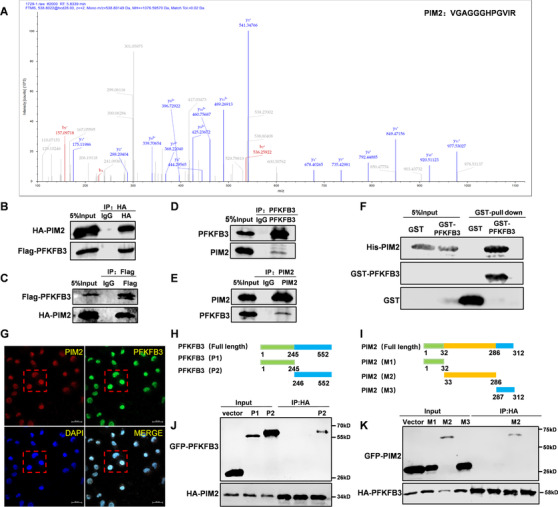
Mass spectrometry analyses were used to found that PIM2 was a potential new binding protein of PFKFB3. Co-immunoprecipitated and western blot were used to verify the interaction between PIM2 and PFKFB3 in BC and the molecular mechanism by which PIM2 phosphorylates PFKFB3 in regulating the protein function. PFKFB3 mutant forms were used to demonstrate the need for PFKFB3 in BC drug resistance.
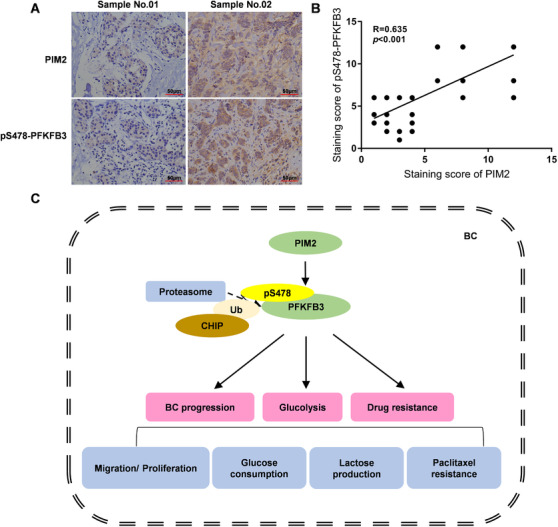
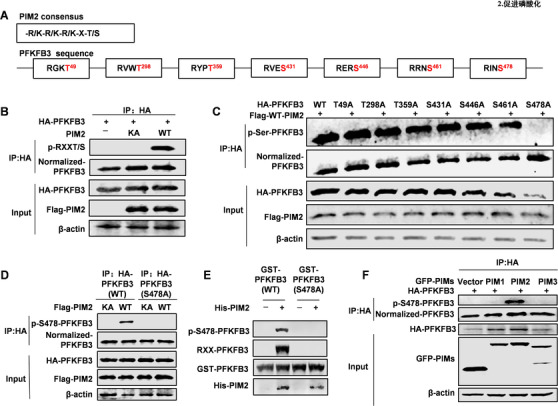
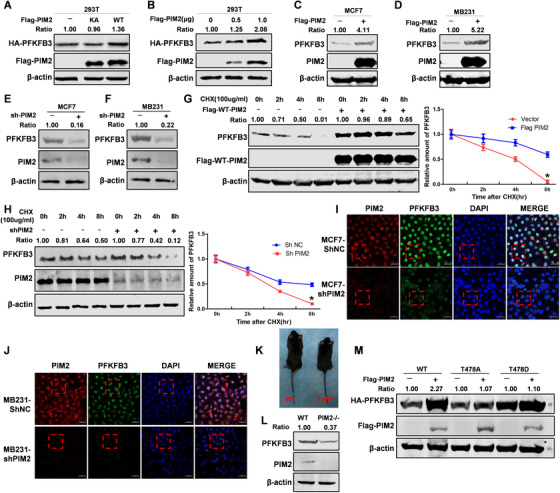
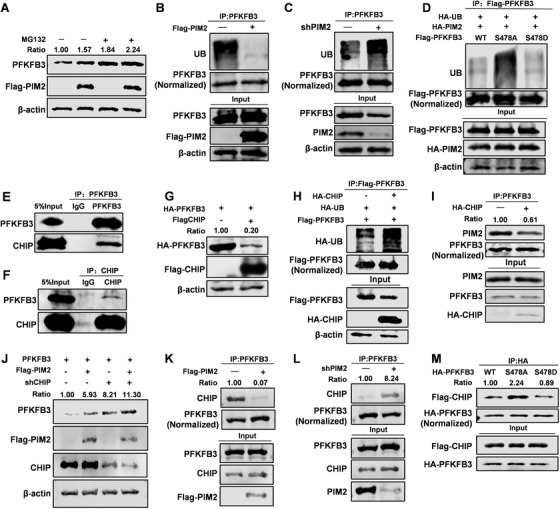
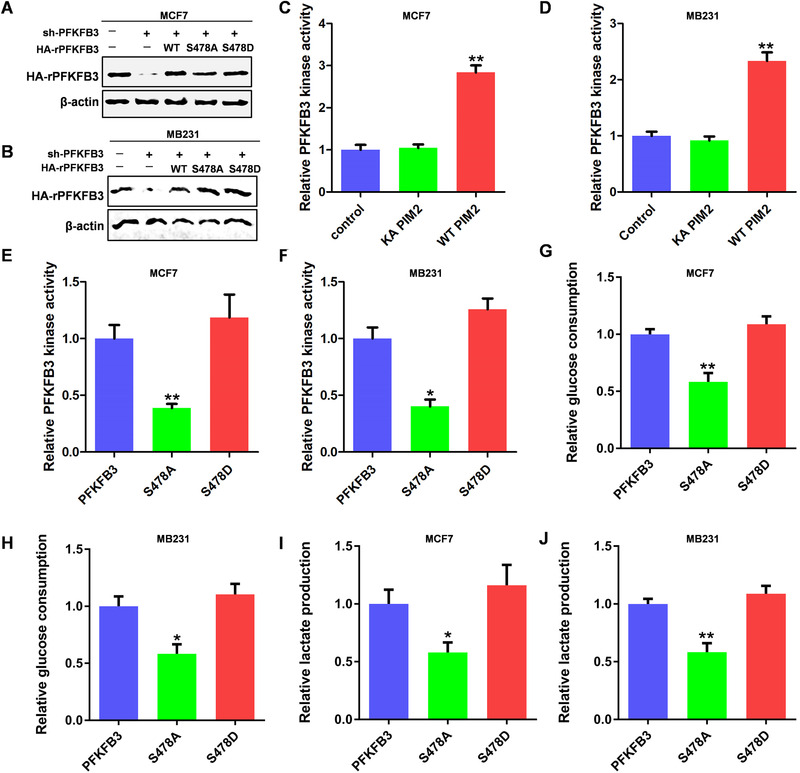
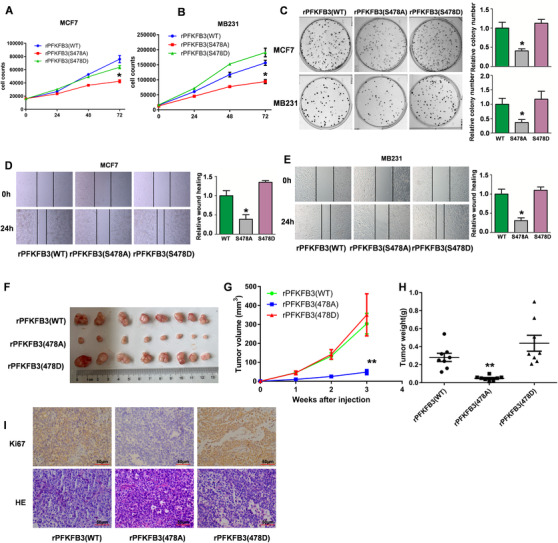
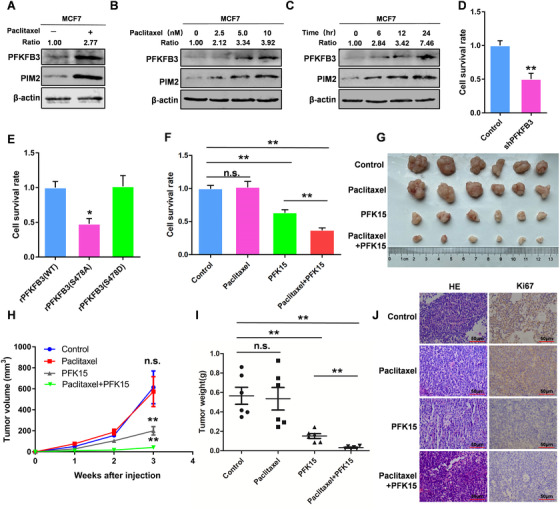
We identified that PIM2 is a new binding protein of PFKFB3. We used biochemical methods to determine that PIM2 can directly bind and change the phosphorylation of PFKFB3 at Ser478 to enhance PFKFB3 protein stability through the ubiquitin-proteasome pathway. Importantly, phosphorylation of PFKFB3 at Ser478 promoted glycolysis, BC cell growth, and paclitaxel resistance together with PIM2 in vitro and in vivo.
Our study demonstrates that PIM2 mediates PFKFB3 phosphorylation thus regulates glycolysis and paclitaxel resistance to promote tumor progression in BC and provides preclinical evidence for targeting PFKFB3 as a new strategy in BC treatment to battle paclitaxel resistance.
乳腺癌(BC)是世界上最常见的女性恶性肿瘤之一。化疗耐药是 BC 治疗失败的主要原因,导致肿瘤复发和转移。研究表明,糖酵解与 BC 进展和耐药性密切相关。关键的糖酵解调节剂 PFKFB3 在 BC 进展和耐药性中起着重要作用。然而,其机制尚不清楚。
采用质谱分析发现 PIM2 是 PFKFB3 的一个潜在新结合蛋白。共免疫沉淀和 Western blot 用于验证 PIM2 和 PFKFB3 在 BC 中的相互作用以及 PIM2 通过磷酸化 PFKFB3 调节蛋白功能的分子机制。使用 PFKFB3 突变体形式来证明 PFKFB3 在 BC 耐药性中的必要性。
我们鉴定出 PIM2 是 PFKFB3 的一个新结合蛋白。我们使用生化方法确定 PIM2 可以直接结合并改变 PFKFB3 在 Ser478 处的磷酸化,通过泛素-蛋白酶体途径增强 PFKFB3 蛋白稳定性。重要的是,PFKFB3 在 Ser478 处的磷酸化与 PIM2 一起共同促进了体外和体内的糖酵解、BC 细胞生长和紫杉醇耐药性。
我们的研究表明,PIM2 介导 PFKFB3 磷酸化,从而调节糖酵解和紫杉醇耐药性,促进 BC 中的肿瘤进展,并为靶向 PFKFB3 作为治疗 BC 以对抗紫杉醇耐药性的新策略提供了临床前证据。