Koseki Kazunori, Takahashi Kazushi, Yamamoto Satoshi, Yoshikawa Kenichi, Abe Atsushi, Mutsuzaki Hirotaka
Department of Physical Therapy, Ibaraki Prefectural University of Health Sciences Hospital, 4733 Ami, Inashiki-gun, Ibaraki 300-0331, Japan.
Department of Physical Therapy, Ibaraki Prefectural University of Health Sciences, 4669-2 Ami, Inashiki-gun, Ibaraki 300-0394, Japan.
J Funct Morphol Kinesiol. 2023 Feb 27;8(1):31. doi: 10.3390/jfmk8010031.
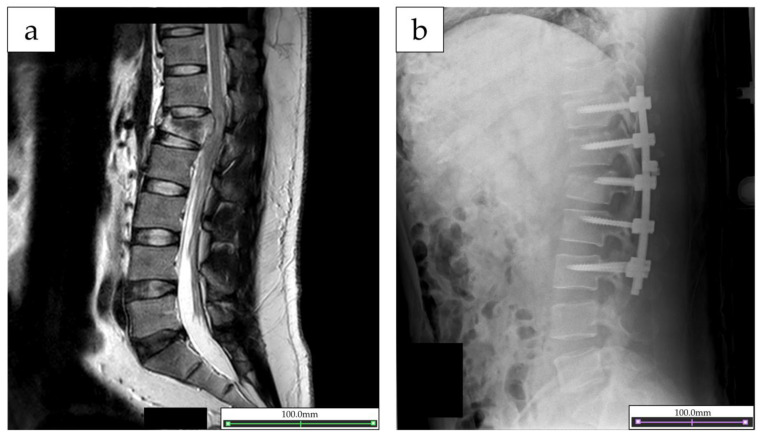
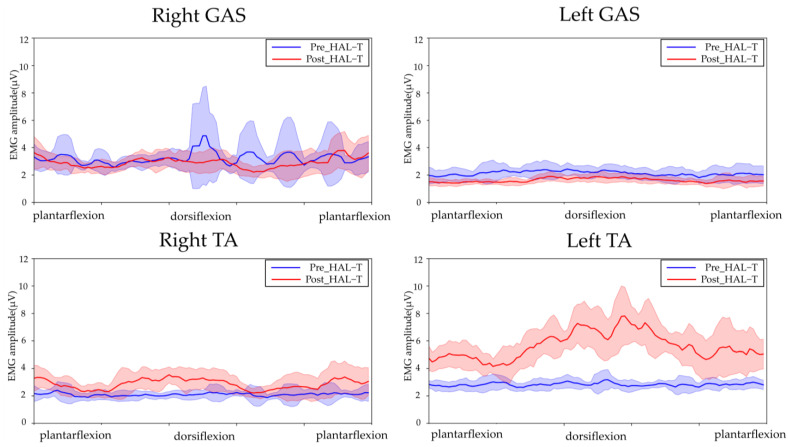
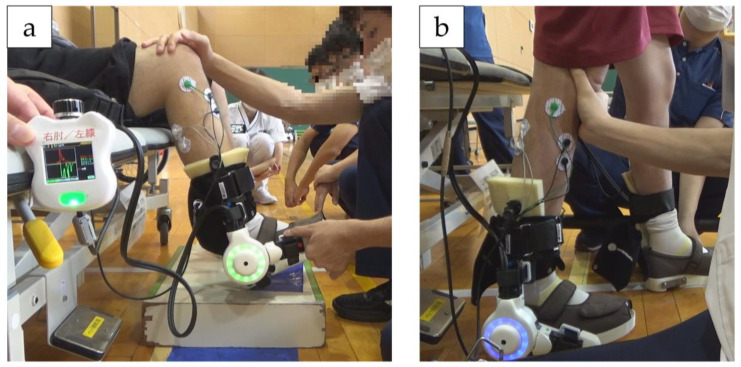
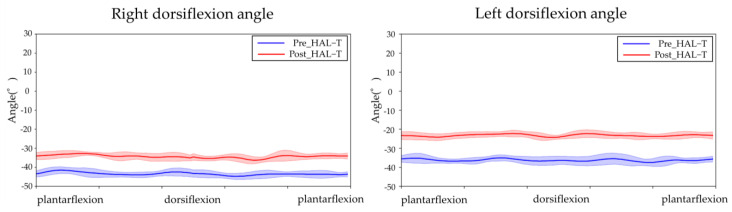
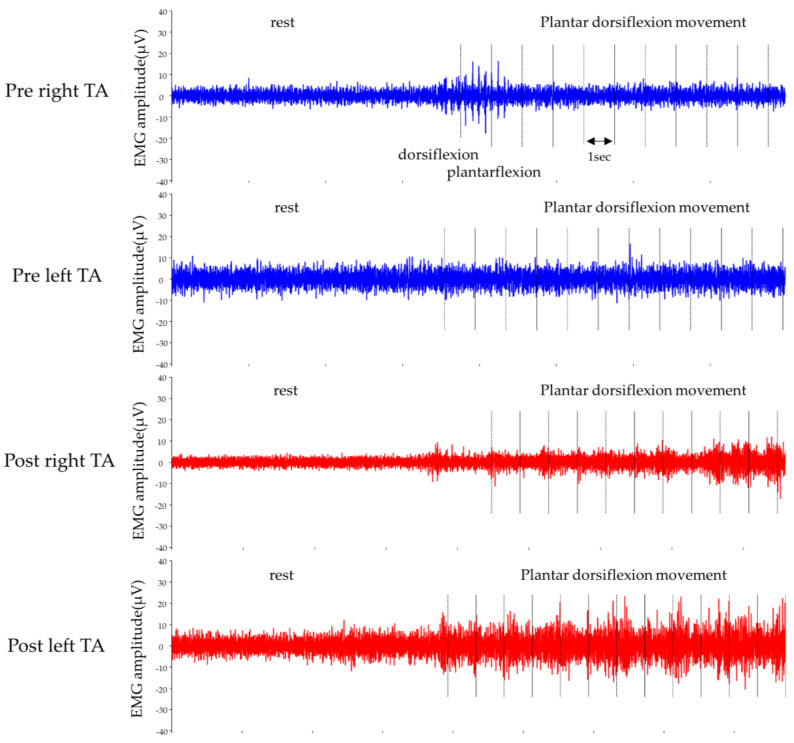
Rehabilitation interventions are crucial in promoting neuroplasticity after spinal cord injury (SCI). We provided rehabilitation with a single-joint hybrid assistive limb (HAL-SJ) ankle joint unit (HAL-T) in a patient with incomplete SCI. The patient had incomplete paraplegia and SCI (neurological injury height: L1, ASIA Impairment Scale: C, ASIA motor score (R/L) L4:0/0, S1:1/0) following a rupture fracture of the first lumbar vertebra. The HAL-T consisted of a combination of ankle plantar dorsiflexion exercises in the sitting position, knee flexion, and extension exercises in the standing position, and stepping exercises in the standing position with HAL assistance. The plantar dorsiflexion angles of the left and right ankle joints and electromyograms of the tibialis anterior and gastrocnemius muscles were measured and compared using a three-dimensional motion analyzer and surface electromyography before and after HAL-T intervention. Phasic electromyographic activity was developed in the left tibialis anterior muscle during plantar dorsiflexion of the ankle joint after the intervention. No changes were observed in the left and right ankle joint angles. We experienced a case in which intervention using HAL-SJ induced muscle potentials in a patient with a spinal cord injury who was unable to perform voluntary ankle movements due to severe motor-sensory dysfunction.
康复干预对于促进脊髓损伤(SCI)后的神经可塑性至关重要。我们为一名不完全性SCI患者提供了使用单关节混合辅助肢体(HAL-SJ)踝关节单元(HAL-T)的康复治疗。该患者在第一腰椎爆裂骨折后出现不完全性截瘫和SCI(神经损伤平面:L1,美国脊髓损伤协会(ASIA)损伤分级:C级,ASIA运动评分(右/左)L4:0/0,S1:1/0)。HAL-T包括坐位时踝关节背屈练习、站立位时膝关节屈伸练习以及在HAL辅助下的站立位踏步练习。在HAL-T干预前后,使用三维运动分析仪和表面肌电图测量并比较了左右踝关节的背屈角度以及胫前肌和腓肠肌的肌电图。干预后,踝关节背屈时左侧胫前肌出现了阶段性肌电活动。左右踝关节角度未见变化。我们遇到了这样一个病例,即对于一名因严重运动感觉功能障碍而无法自主进行踝关节运动的脊髓损伤患者,使用HAL-SJ进行干预可诱发肌肉电位。