School of Life Course and Population Sciences, King's College London, London, United Kingdom.
NIHR Applied Research Collaboration (ARC) South London, London, United Kingdom.
PLoS Med. 2023 Mar 28;20(3):e1004200. doi: 10.1371/journal.pmed.1004200. eCollection 2023 Mar.
Depression is the most frequent psychiatric condition after stroke and is associated with negative health outcomes. We aim to undertake a systematic review and meta-analysis of the prevalence and natural history of depression after stroke.
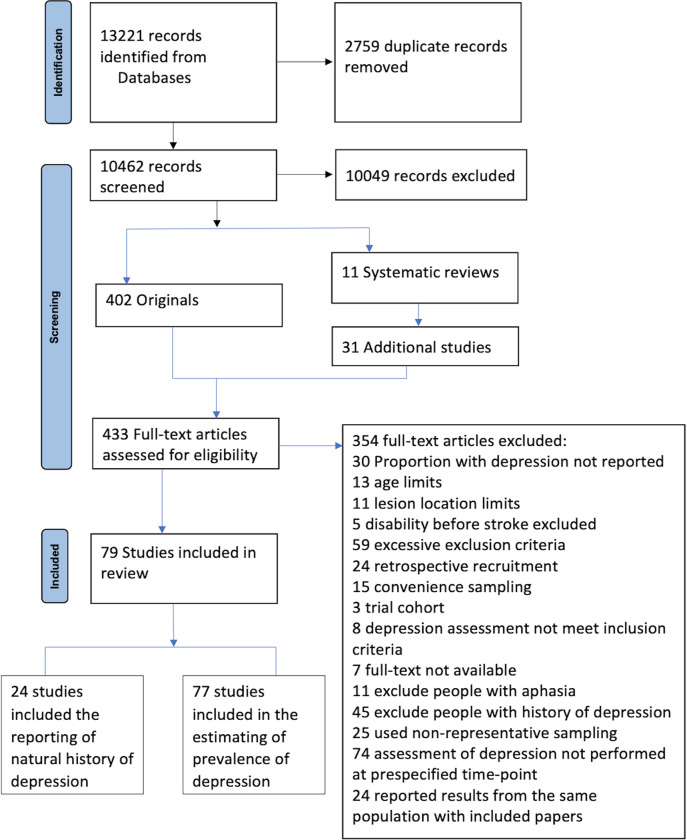
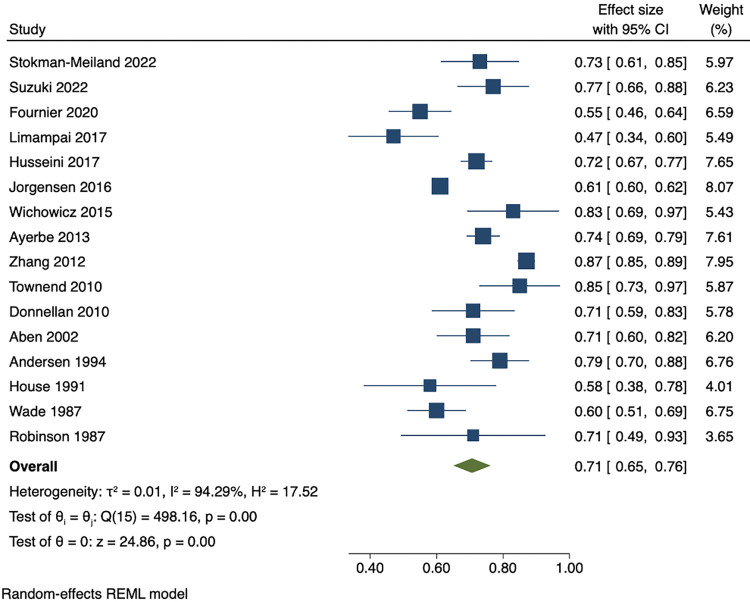
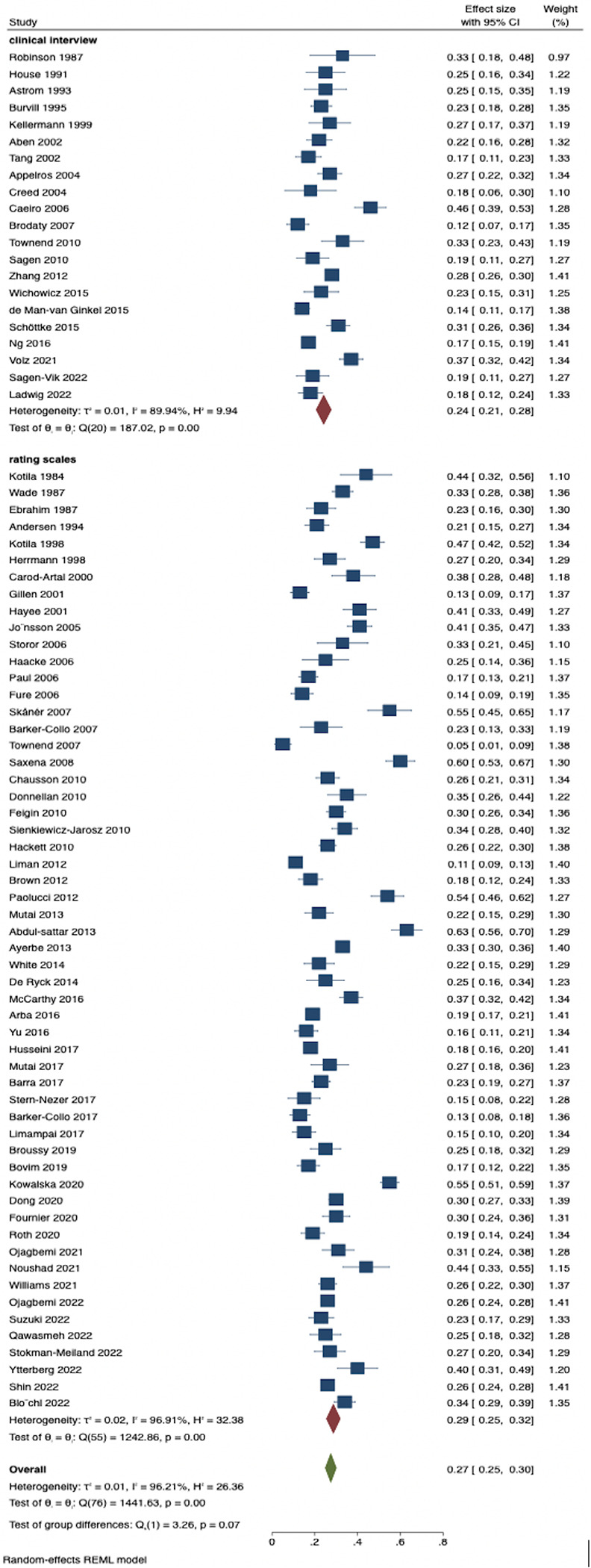
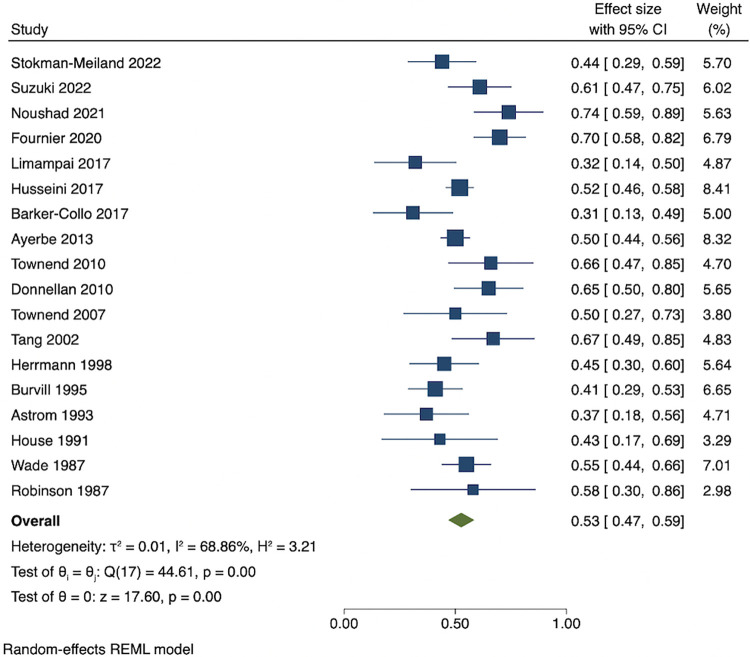
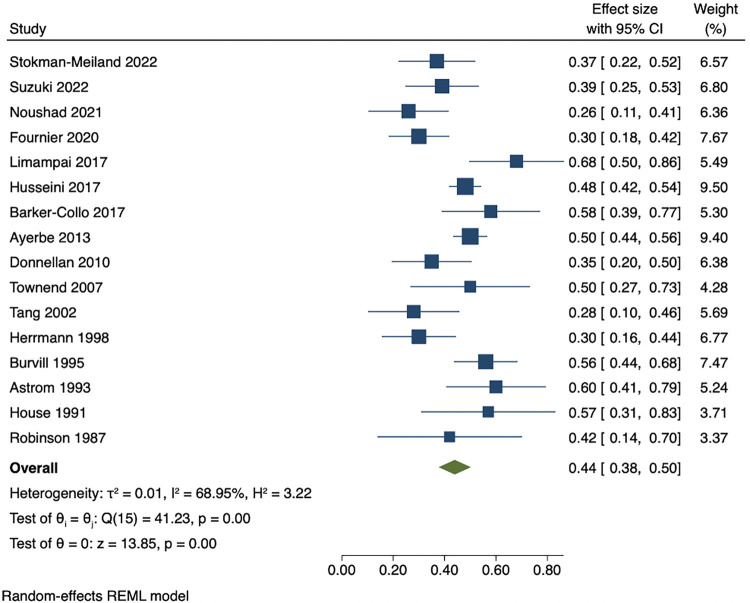
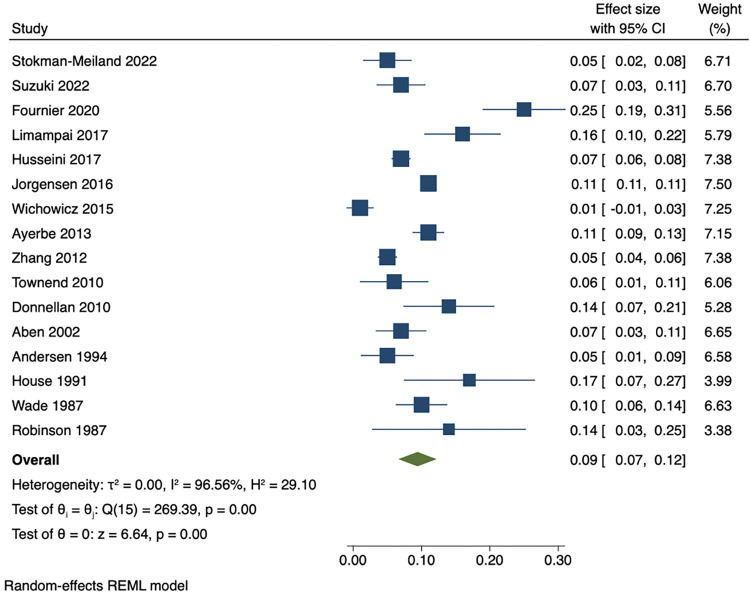
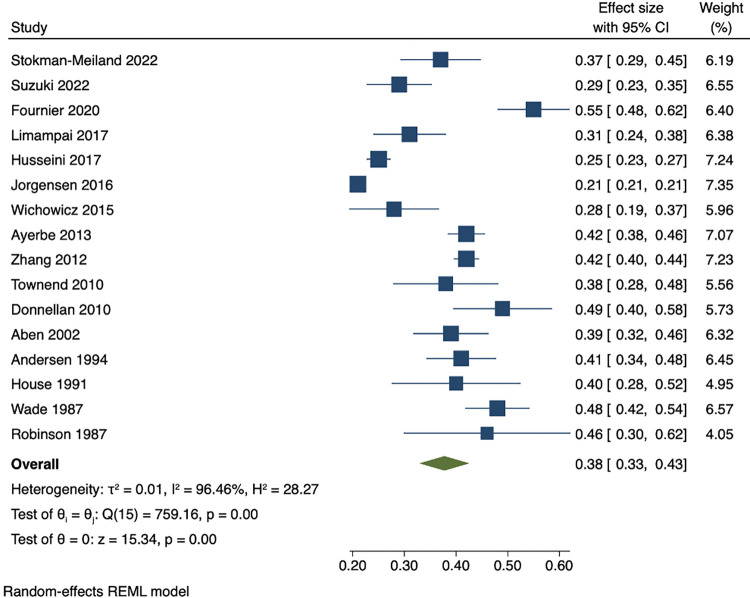
Studies published up to 4 November 2022 on Medline, Embase, PsycINFO, and Web of Science Core Collection were searched. We included studies of adults with stroke, where depression was assessed at a prespecified time point. Studies excluding people with aphasia and history of depression are excluded. Critical Appraisal Skills Programme(CASP) cohort study tool was used to assess risk of bias. A total of 77 studies were included in the pooled estimates of the prevalence of poststroke depression (PSD). The overall prevalence of depression was 27% (95% CI 25 to 30). Prevalence of depression was 24% (95% CI 21 to 28) by clinical interview and 29% (95% CI 25 to 32) by rating scales. Twenty-four studies with more than one assessment time point reported the natural history of PSD. Among people who were depressed within 3 months of stroke, 53% (95% CI 47 to 59) experienced persistent depression, while 44% (95% CI 38 to 50) recovered. The incidence of later depression (3 to 12 months after stroke) was 9% (95% CI 7 to 12). The cumulative incidence during 1 year after stroke was 38% (95% CI 33 to 43), and the majority (71% (95% CI 65 to 76)) of depression had onset within 3 months after stroke. The main limitation of the present study is that excluding people in source studies with severe impairments may produce imprecise estimates of the prevalence of PSD.
In this study, we observed that stroke survivors with early-onset depression (within 3 months after stroke) are at high risks for remaining depressed and make up two-thirds of the incident cases during 1 year after stroke. This highlights the need for ongoing clinical monitoring of patients depressed shortly after stroke.
PROSPERO CRD42022314146.
抑郁症是中风后最常见的精神疾病,与不良健康结局相关。我们旨在对中风后抑郁症的患病率和自然病程进行系统评价和荟萃分析。
截至 2022 年 11 月 4 日,检索了 Medline、Embase、PsycINFO 和 Web of Science Core Collection 上发表的研究。我们纳入了评估特定时间点中风后抑郁的成年人研究。排除了患有失语症和抑郁症病史的人。使用批判性评估技能计划(CASP)队列研究工具评估偏倚风险。共纳入 77 项研究,用于评估中风后抑郁(PSD)患病率的汇总估计值。抑郁症的总体患病率为 27%(95%CI 25%至 30%)。通过临床访谈的抑郁患病率为 24%(95%CI 21%至 28%),通过评分量表的抑郁患病率为 29%(95%CI 25%至 32%)。24 项具有多个评估时间点的研究报告了 PSD 的自然病程。在中风后 3 个月内抑郁的人群中,53%(95%CI 47%至 59%)经历持续性抑郁,而 44%(95%CI 38%至 50%)康复。随后(中风后 3 至 12 个月)的抑郁发生率为 9%(95%CI 7%至 12%)。中风后 1 年内的累积发病率为 38%(95%CI 33%至 43%),大多数(71%(95%CI 65%至 76%))抑郁发生在中风后 3 个月内。本研究的主要局限性在于,排除来源研究中严重受损的人群可能会对 PSD 的患病率产生不精确的估计。
在这项研究中,我们观察到,早期发病(中风后 3 个月内)的中风幸存者发生持续性抑郁的风险较高,并且占中风后 1 年内发病的三分之二。这凸显了对中风后不久即出现抑郁的患者进行持续临床监测的必要性。
PROSPERO CRD42022314146。