Zanini Giada, Selleri Valentina, Malerba Mara, Solodka Kateryna, Sinigaglia Giorgia, Nasi Milena, Mattioli Anna Vittoria, Pinti Marcello
Department of Life Sciences, University of Modena and Reggio Emilia, 41125 Modena, Italy.
Istituto Nazionale per le Ricerche Cardiovascolari, 40126 Bologna, Italy.
Antioxidants (Basel). 2023 Feb 28;12(3):598. doi: 10.3390/antiox12030598.
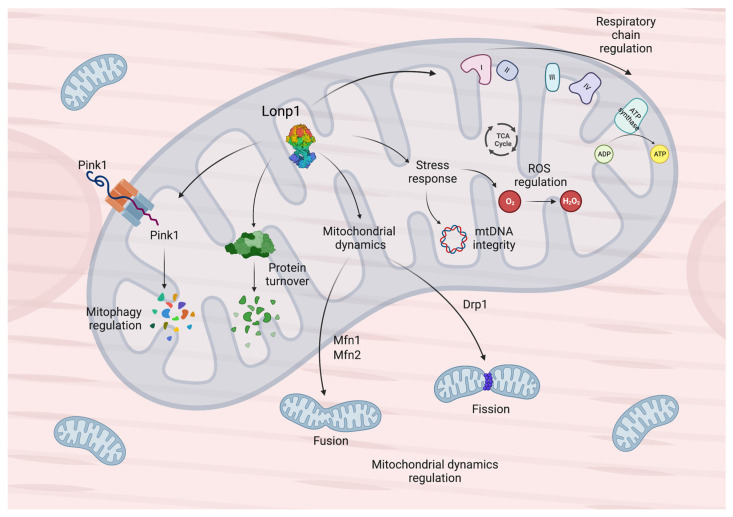
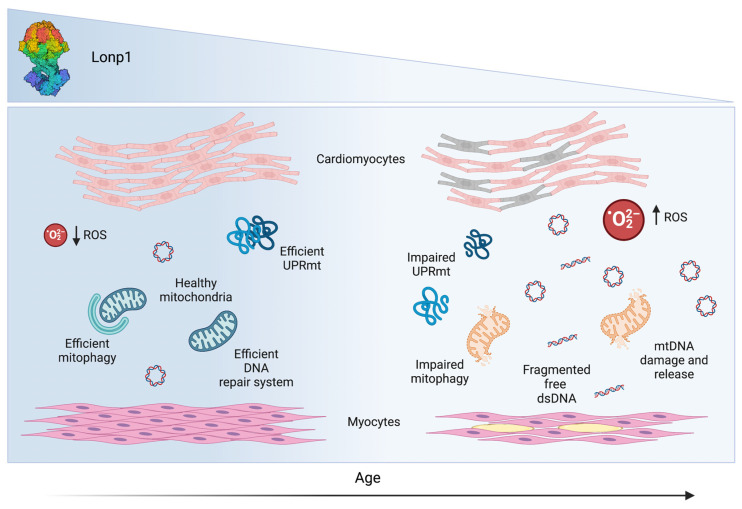
The mitochondrial protease Lonp1 is a multifunctional enzyme that regulates crucial mitochondrial functions, including the degradation of oxidized proteins, folding of imported proteins and maintenance the correct number of copies of mitochondrial DNA. A series of recent studies has put Lonp1 at the center of the stage in the homeostasis of cardiomyocytes and muscle skeletal cells. During heart development, Lonp1 allows the metabolic shift from anaerobic glycolysis to mitochondrial oxidative phosphorylation. Knock out of Lonp1 arrests heart development and determines cardiomyocyte apoptosis. In adults, Lonp1 acts as a cardioprotective protein, as its upregulation mitigates cardiac injury by preventing the oxidative damage of proteins and lipids, and by preserving mitochondrial redox balance. In skeletal muscle, Lonp1 is crucial for cell development, as it mediates the activation of PINK1/Parkin pathway needed for proper myoblast differentiation. Skeletal muscle-specific ablation of Lonp1 in mice causes reduced muscle fiber size and strength due to the accumulation of mitochondrial-retained protein in muscle. Lonp1 expression and activity decline with age in different tissues, including skeletal muscle, and are associated with a functional decline and structural impairment of muscle fibers. Aerobic exercise increases unfolded protein response markers including Lonp1 in the skeletal muscle of aged animals and is associated with muscle functional recovery. Finally, mutations of Lonp1 cause a syndrome named CODAS (Cerebral, Ocular, Dental, Auricular, and Skeletal anomalies) characterized by the impaired development of multiple organs and tissues, including myocytes. CODAS patients show hypotonia and ptosis, indicative of skeletal muscle reduced performance. Overall, this body of observations points Lonp1 as a crucial regulator of mitochondrial functions in the heart and in skeletal muscle.
线粒体蛋白酶Lonp1是一种多功能酶,可调节关键的线粒体功能,包括氧化蛋白质的降解、输入蛋白质的折叠以及维持线粒体DNA的正确拷贝数。最近的一系列研究使Lonp1成为心肌细胞和骨骼肌细胞内稳态的核心。在心脏发育过程中,Lonp1使代谢从无氧糖酵解转变为线粒体氧化磷酸化。敲除Lonp1会阻止心脏发育并导致心肌细胞凋亡。在成年人中,Lonp1作为一种心脏保护蛋白发挥作用,因为其上调可通过防止蛋白质和脂质的氧化损伤以及维持线粒体氧化还原平衡来减轻心脏损伤。在骨骼肌中,Lonp1对细胞发育至关重要,因为它介导成肌细胞正常分化所需的PINK1/帕金通路的激活。小鼠骨骼肌特异性敲除Lonp1会导致肌纤维大小和力量减小,这是由于肌肉中线粒体保留蛋白的积累所致。在包括骨骼肌在内的不同组织中,Lonp1的表达和活性会随着年龄的增长而下降,并且与肌纤维的功能衰退和结构损伤有关。有氧运动可增加老年动物骨骼肌中包括Lonp1在内的未折叠蛋白反应标志物,并与肌肉功能恢复有关。最后,Lonp1的突变会导致一种名为CODAS(脑、眼、牙、耳和骨骼异常)的综合征,其特征是包括心肌细胞在内的多个器官和组织发育受损。CODAS患者表现出肌张力减退和上睑下垂,这表明骨骼肌性能下降。总体而言,这些观察结果表明Lonp1是心脏和骨骼肌中线粒体功能的关键调节因子。