Longhitano Elisa, Muscolino Paola, Lo Re Claudia, Ferrara Serena Ausilia, Cernaro Valeria, Gembillo Guido, Tessitore Dalila, Speranza Desirèe, Figura Francesco, Santarpia Mariacarmela, Silvestris Nicola, Santoro Domenico, Franchina Tindara
Unit of Nephrology and Dialysis, Department of Clinical and Experimental Medicine, A.O.U. "G. Martino", University of Messina, 98125 Messina, Italy.
Medical Oncology Unit, Department of Human Pathology "G. Barresi", University of Messina, 98125 Messina, Italy.
Cancers (Basel). 2023 Mar 21;15(6):1891. doi: 10.3390/cancers15061891.
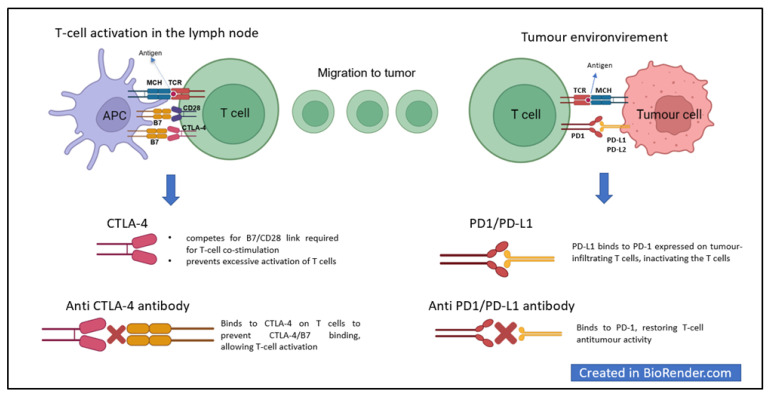
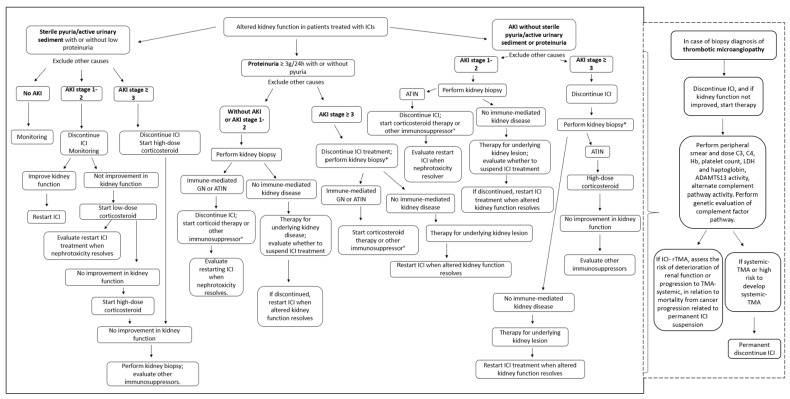
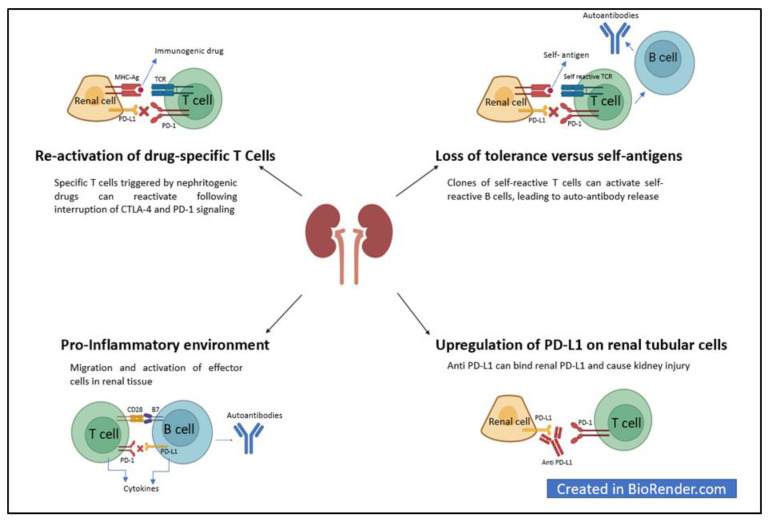
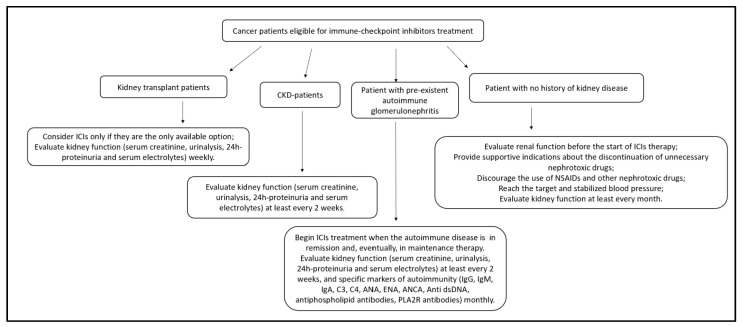
Immunity plays a crucial role in fighting cancer, but tumours can evade the immune system and proliferate and metastasize. Enhancing immune responses is a new challenge in anticancer therapies. In this context, efficacy data are accumulating on immune checkpoint inhibitors and adjuvant therapies for various types of advanced-stage solid tumours. Unfortunately, immune-related adverse events are common. Although infrequent, renal toxicity may occur via several mechanisms and may require temporary or permanent drug suspension, renal biopsy, and/or immunosuppressive treatment. This short review aims to provide a practical approach to the multidisciplinary management of cancer patients with renal toxicity during treatment with immune checkpoint inhibitors.
免疫在对抗癌症中起着至关重要的作用,但肿瘤能够逃避免疫系统并增殖和转移。增强免疫反应是抗癌治疗中的一项新挑战。在此背景下,关于免疫检查点抑制剂和针对各种晚期实体瘤的辅助治疗的疗效数据正在不断积累。不幸的是,免疫相关不良事件很常见。虽然不常见,但肾毒性可能通过多种机制发生,可能需要暂时或永久停药、肾活检和/或免疫抑制治疗。这篇简短的综述旨在提供一种实用方法,用于对接受免疫检查点抑制剂治疗期间出现肾毒性的癌症患者进行多学科管理。