State Key Laboratory of Livestock and Poultry Breeding, Guangdong Key Laboratory of Animal Breeding and Nutrition, Institute of Animal Science, Guangdong Academy of Agricultural Sciences, Guangzhou 510640, China.
Guangdong Polytechnic of Science and Trade, Guangzhou 510430, China.
Genes (Basel). 2023 Mar 8;14(3):671. doi: 10.3390/genes14030671.
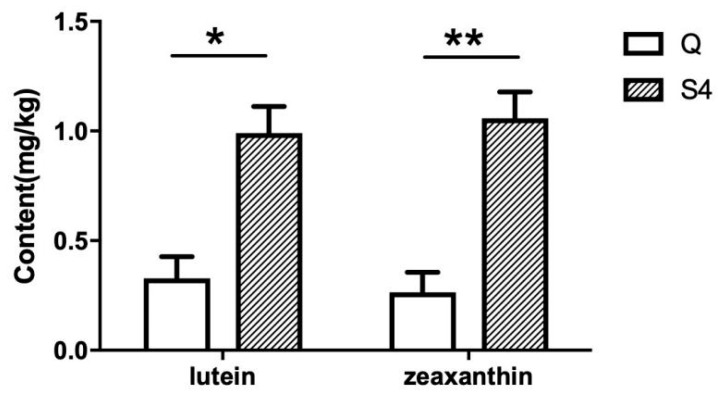
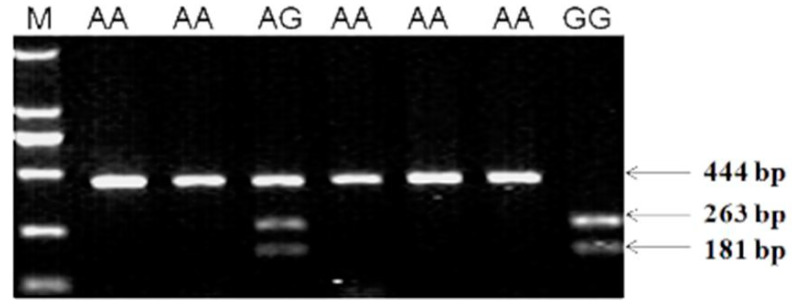
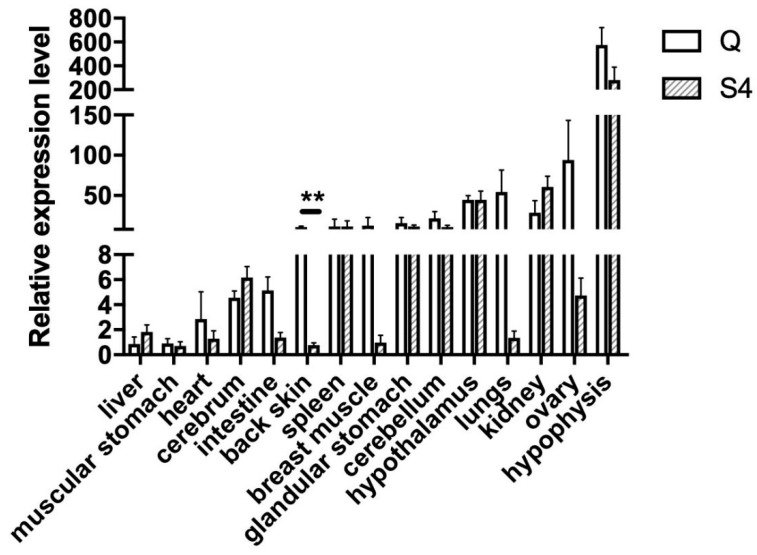
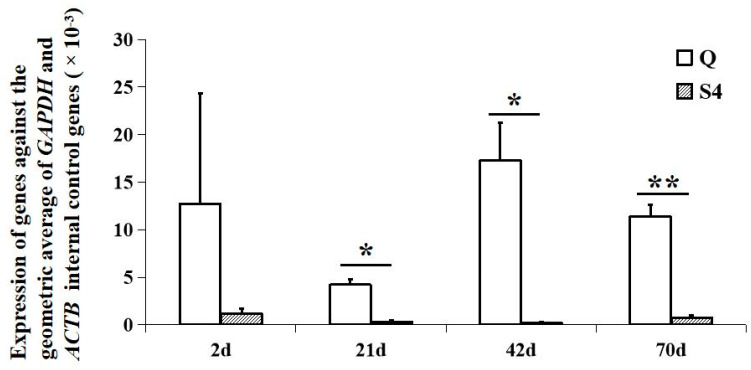
Carotenoid consumption decreases the risk of cancer, osteoporosis, or neurodegenerative diseases through interrupting the formation of free radicals. The deposition of carotenoids in chicken skin makes the skin color turn from white into yellow. The enzyme β-carotene oxygenase 2 (BCO2) plays a key role during the degradation process of carotenoids in skin. How the affects the skin color of the chicken and whether it is the key factor that results in the phenotypic difference between yellow- and white-skin chickens are still unclear. In this research, the measurement of the concentration of carotenoids in chicken skin by HPLC showed that the carotenoid concentration in chickens with a yellow skin was significantly higher than that in white-skin chickens. Moreover, there were significant differences in gene expression in the back skin between yellow- and white-skin chickens. Scanning the SNPs in gene revealed a G/A mutation in exon 6 of the gene in white and yellow skin chicken. Generally, one SNP c.890A>G was found to be associated with the chicken skin color and may be used as a genetic marker in breeding for yellow skin in Chinese indigenous chickens.
类胡萝卜素的摄入可以通过中断自由基的形成,降低癌症、骨质疏松或神经退行性疾病的风险。类胡萝卜素在鸡皮中的沉积会使皮肤颜色从白色变为黄色。β-胡萝卜素加氧酶 2(BCO2)在皮肤中类胡萝卜素的降解过程中发挥关键作用。该基因如何影响鸡的肤色,以及它是否是导致黄皮鸡和白皮鸡表型差异的关键因素尚不清楚。在这项研究中,通过 HPLC 测量鸡皮中的类胡萝卜素浓度表明,黄皮鸡的类胡萝卜素浓度明显高于白皮鸡。此外,黄皮鸡和白皮鸡背部皮肤之间的基因表达存在显著差异。扫描基因中的 SNPs 发现,白皮鸡和黄皮鸡基因的外显子 6 中存在 G/A 突变。一般来说,发现一个 SNP c.890A>G 与鸡的皮肤颜色有关,可作为中国本土鸡黄色皮肤选育的遗传标记。