
在从低温到节能室温条件下,使用 TiCl 催化剂对生物基可再生烯烃β-蒎烯进行高效阳离子聚合。
Highly Efficient Cationic Polymerization of β-Pinene, a Bio-Based, Renewable Olefin, with TiCl Catalyst from Cryogenic to Energy-Saving Room Temperature Conditions.
机构信息
Polymer Chemistry and Physics Research Group, Institute of Materials and Environmental Chemistry, Research Centre for Natural Sciences, Magyar Tudósok Krt 2, H-1117 Budapest, Hungary.
出版信息
Int J Mol Sci. 2023 Mar 8;24(6):5170. doi: 10.3390/ijms24065170.
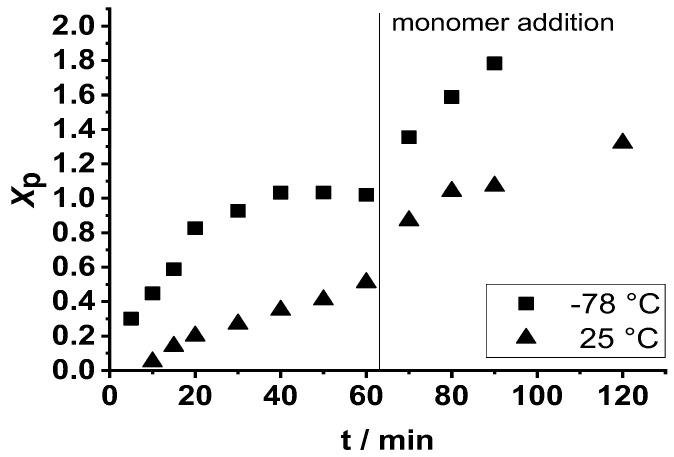
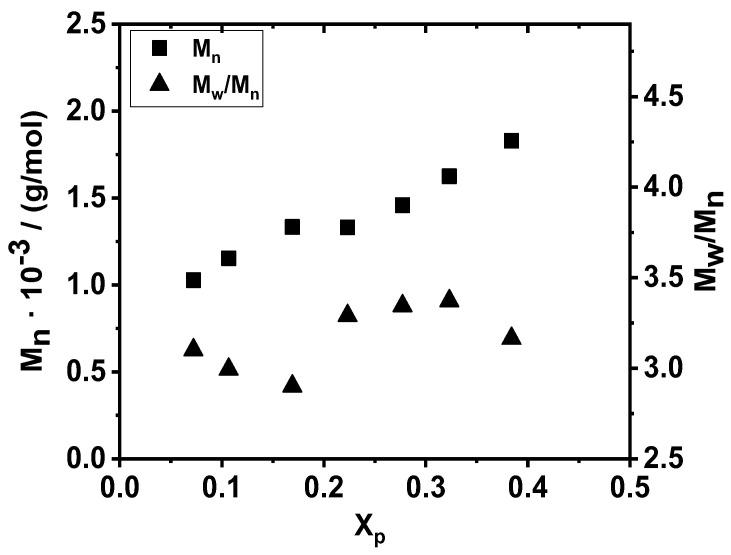
Polymers based on renewable monomers are projected to have a significant role in the sustainable economy, even in the near future. Undoubtedly, the cationically polymerizable β-pinene, available in considerable quantities, is one of the most promising bio-based monomers for such purposes. In the course of our systematic investigations related to the catalytic activity of TiCl on the cationic polymerization of this natural olefin, it was found that the 2-chloro-2,4,4-trimethylpentane (TMPCl)/TiCl/N,N,N',N'-tetramethylethylenediamine (TMEDA) initiating system induced efficient polymerization in dichloromethane (DCM)/hexane (Hx) mixture at both -78 °C and room temperature. At -78 °C, 100% monomer conversion was observed within 40 min, resulting in poly(β-pinene) with relatively high M (5500 g/mol). The molecular weight distributions (MWD) were uniformly shifted towards higher molecular weights (MW) in these polymerizations as long as monomer was present in the reaction mixture. However, chain-chain coupling took place after reaching 100% conversion, i.e., under monomer-starved conditions, resulting in considerable molecular weight increase and MWD broadening at -78 °C. At room temperature, the polymerization rate was lower, but chain coupling did not occur. The addition of a second feed of monomer in the polymerization system led to increasing conversion and polymers with higher MWs at both temperatures. H NMR spectra of the formed polymers indicated high in-chain double-bond contents. To overcome the polarity decrease by raising the temperature, polymerizations were also carried out in pure DCM at room temperature and at -20 °C. In both cases, rapid polymerization occurred with nearly quantitative yields, leading to poly(β-pinene)s with Ms in the range of 2000 g/mol. Strikingly, polymerization by TiCl alone, i.e., without any additive, also occurred with near complete conversion at room temperature within a few minutes, attributed to initiation by adventitious protic impurities. These results convincingly prove that highly efficient carbocationic polymerization of the renewable β-pinene can be accomplished with TiCl as catalyst under both cryogenic conditions, applied widely for carbocationic polymerizations, and the environmentally benign, energy-saving room temperature, i.e., without any additive and cooling or heating. These findings enable TiCl-catalyzed eco-friendly manufacturing of poly(β-pinene)s, which can be utilized in various applications, and in addition, subsequent derivatizations could result in a range of high-added-value products.
基于可再生单体的聚合物有望在可持续经济中发挥重要作用,即使在不久的将来也是如此。毫无疑问,可大量获得的阳离子聚合β-蒎烯是最有前途的生物基单体之一,可用于此类目的。在我们对 TiCl 催化活性的系统研究中,我们发现 2-氯-2,4,4-三甲基戊烷(TMPCl)/TiCl/N,N,N',N'-四甲基乙二胺(TMEDA)引发体系在-78°C 和室温下在二氯甲烷(DCM)/己烷(Hx)混合物中有效引发聚合。在-78°C 下,40 分钟内观察到 100%单体转化率,导致聚(β-蒎烯)具有相对较高的分子量(5500g/mol)。只要反应混合物中存在单体,这些聚合中的分子量分布(MWD)就会均匀地向高分子量(MW)转移。然而,在达到 100%转化率后,即单体耗尽条件下,链-链偶联发生,导致分子量显着增加和 MWD 在-78°C 下变宽。在室温下,聚合速率较低,但链偶联不会发生。在聚合体系中添加第二份单体进料,可导致两种温度下转化率提高和聚合物分子量更高。形成的聚合物的 1H NMR 谱表明具有较高的链内双键含量。为了克服升高温度引起的极性降低,还在室温下和-20°C 下在纯 DCM 中进行聚合。在两种情况下,聚合都迅速进行,产率几乎定量,导致分子量在 2000g/mol 范围内的聚(β-蒎烯)。引人注目的是,TiCl 单独聚合,即在没有任何添加剂的情况下,在室温下几分钟内也几乎完全转化,归因于偶然质子杂质引发。这些结果令人信服地证明,TiCl 作为催化剂,在低温和环境友好、节能的室温下(即无需任何添加剂、冷却或加热),可再生的β-蒎烯可以进行高效的碳阳离子聚合。这些发现使 TiCl 催化的环保型聚(β-蒎烯)制造成为可能,可用于各种应用,此外,随后的衍生化可能会产生一系列高附加值产品。




 Zotero 插件