Malafatti-Picca Lusiane, Bucioli Elaine Cristina, de Barros Chaves Michel Ricardo, de Castro Aline Machado, Valoni Érika, de Oliveira Valéria Maia, Marsaioli Anita Jocelyne, Govone José Silvio, de Franceschi de Angelis Dejanira, Brienzo Michel, Attili-Angelis Derlene
Environmental Studies Center (CEA), São Paulo State University (UNESP), Av. 24-A, 1515, Bela Vista, Rio Claro 13506-900, SP, Brazil.
Coordination of Natural Sciences, Federal University of Maranhão (UFMA), Av. João Alberto, 700, Bacabal 65700-000, MA, Brazil.
Polymers (Basel). 2023 Mar 22;15(6):1581. doi: 10.3390/polym15061581.
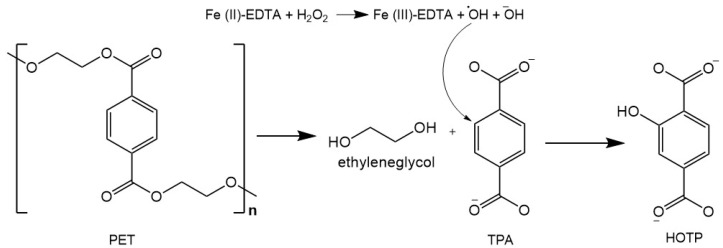
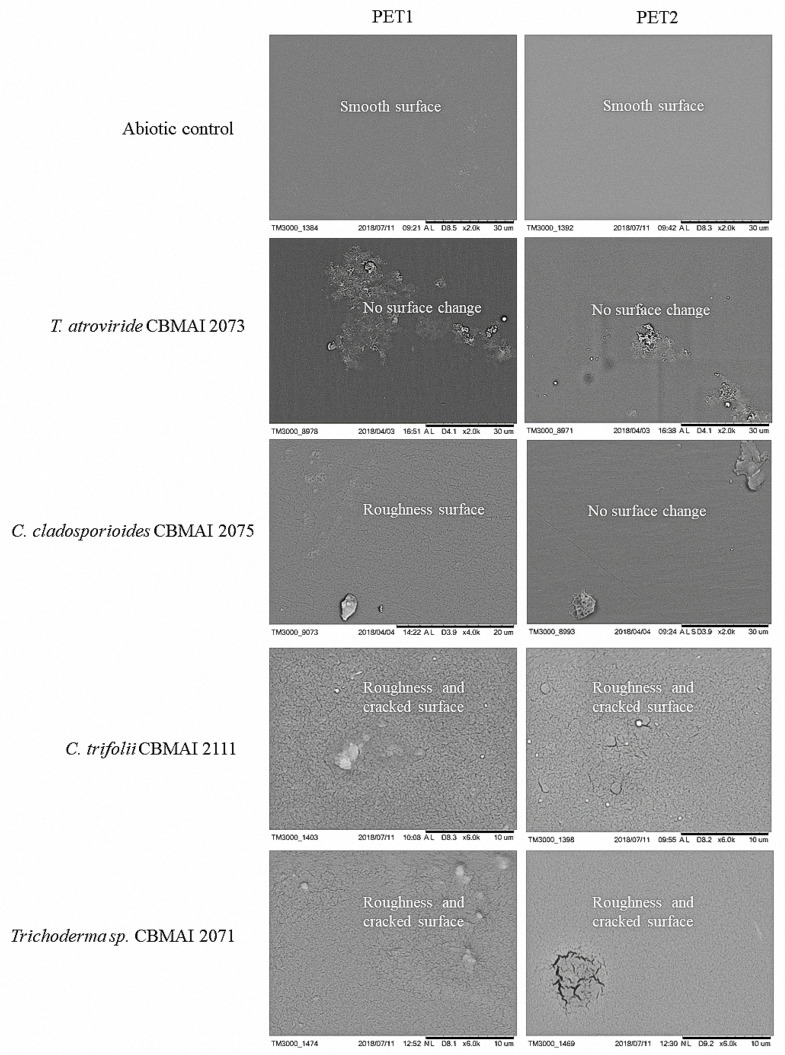
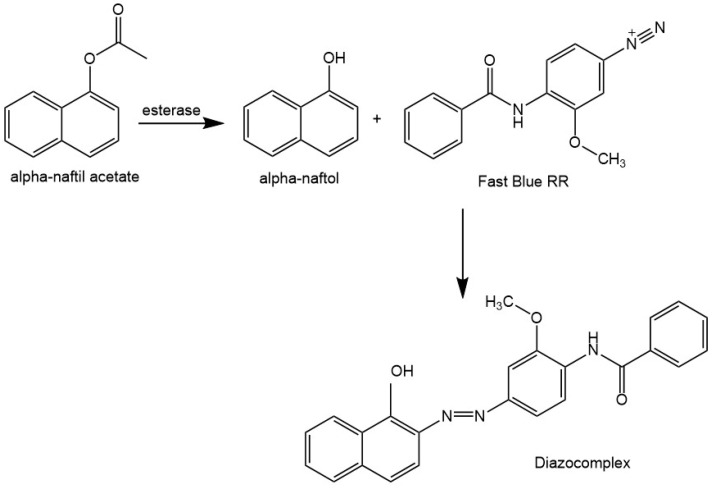
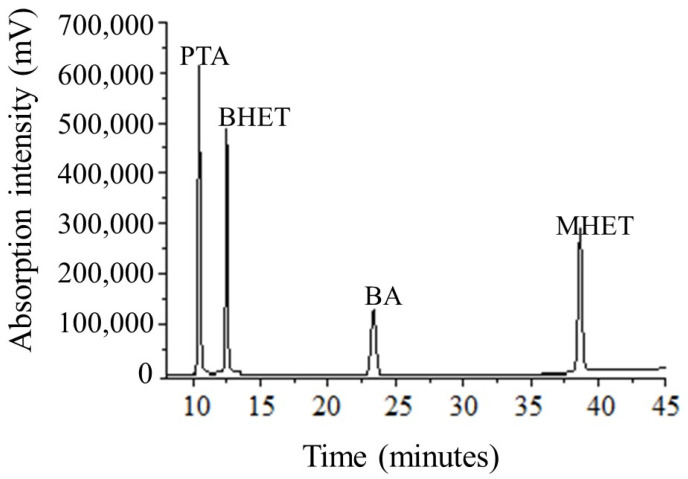
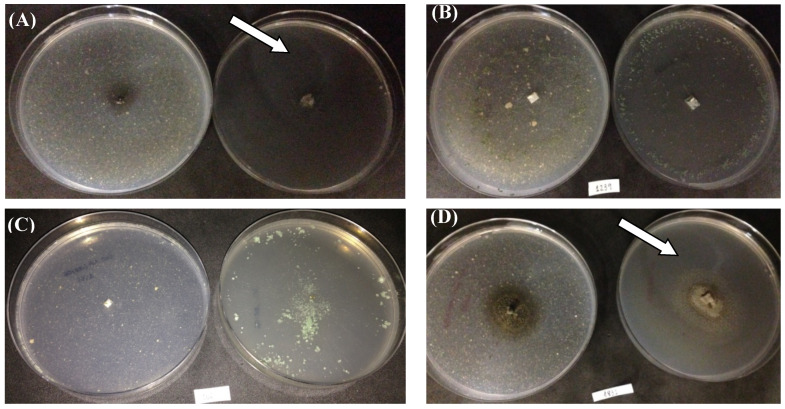
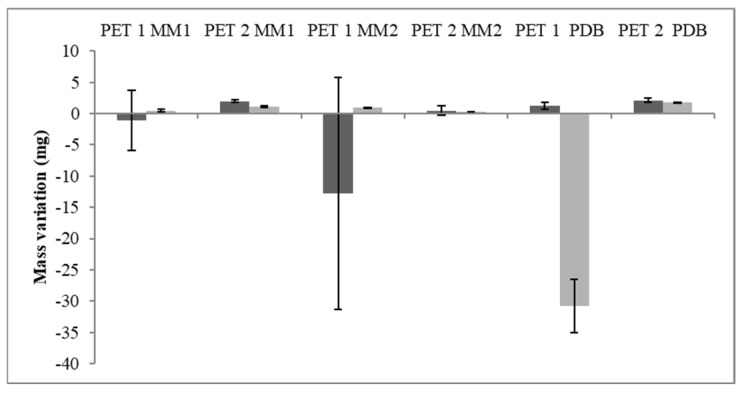
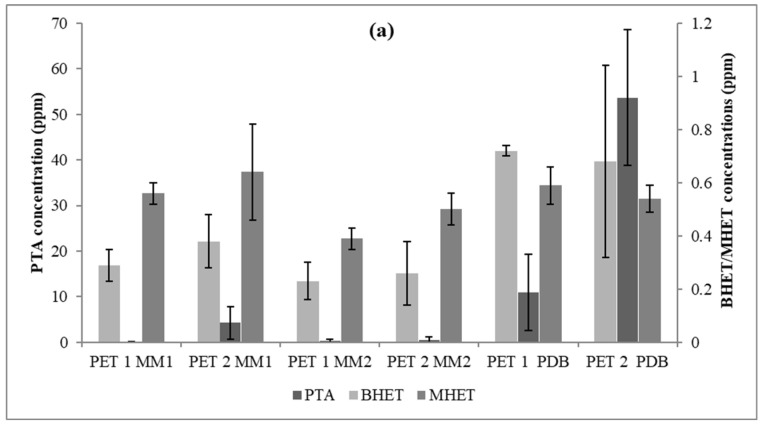
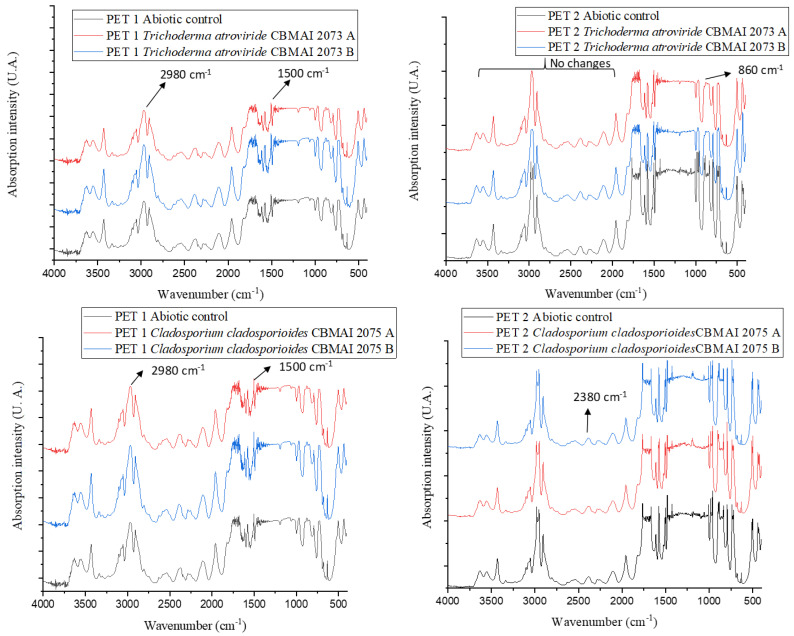
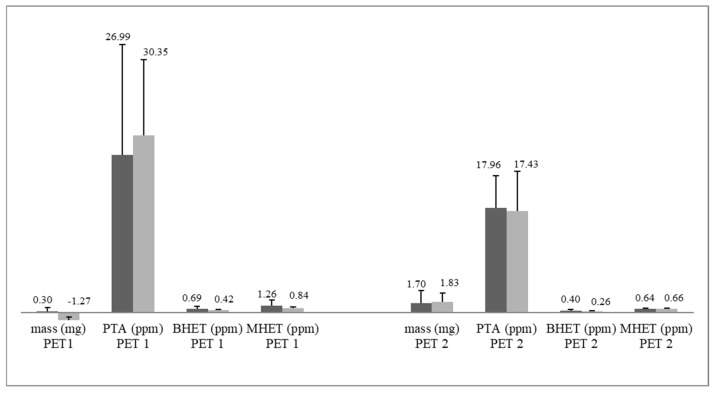
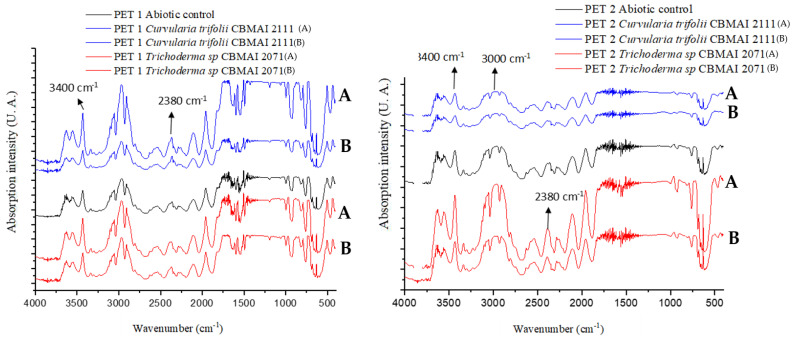
Approximately 400 billion PET bottles are produced annually in the world, of which from 8 to 9 million tons are discarded in oceans. This requires developing strategies to urgently recycle them. PET recycling can be carried out using the microbial hydrolysis of polymers when monomers and oligomers are released. Exploring the metabolic activity of fungi is an environmentally friendly way to treat harmful polymeric waste and obtain the production of monomers. The present study addressed: (i) the investigation of potential of strains with the potential for the depolymerization of PET bottles from different manufacturers (crystallinity of 35.5 and 10.4%); (ii) the search for a culture medium that favors the depolymerization process; and (iii) gaining more knowledge on fungal enzymes that can be applied to PET recycling. Four strains (from 100 fungal strains) were found as promising for conversion into terephthalic acid from PET nanoparticles (npPET): CBMAI 2111, sp. CBMAI 2071, CBMAI 2073, and CBMAI 2075. The fermentation assays in the presence of PET led to the release of terephthalic acid in concentrations above 12 ppm. Biodegradation was also confirmed using mass variation analyses (reducing mass), scanning electron microscopy (SEM) that showed evidence of material roughness, FTIR analysis that showed band modification, enzymatic activities detected for lipase, and esterase and cutinase, confirmed by monomers/oligomers quantification using high performance liquid chromatography (HPLC-UV). Based on the microbial strains PET depolymerization, the results are promising for the exploration of the selected microbial strain.
全球每年大约生产4000亿个PET瓶,其中有800万至900万吨被丢弃在海洋中。这就需要迫切制定策略来回收利用它们。当聚合物释放出单体和低聚物时,可通过聚合物的微生物水解来进行PET回收。探索真菌的代谢活性是处理有害聚合物废物并获得单体产物的一种环保方式。本研究涉及:(i)调查来自不同制造商(结晶度分别为35.5%和10.4%)的PET瓶解聚潜力菌株;(ii)寻找有利于解聚过程的培养基;(iii)进一步了解可应用于PET回收的真菌酶。在100株真菌菌株中发现了4株有望将PET纳米颗粒(npPET)转化为对苯二甲酸的菌株:CBMAI 2111、CBMAI 2071、CBMAI 2073和CBMAI 2075。在PET存在下的发酵试验导致对苯二甲酸的释放浓度高于12 ppm。还通过质量变化分析(质量减少)、扫描电子显微镜(SEM)显示材料粗糙度的证据、傅里叶变换红外光谱(FTIR)分析显示谱带变化、检测到脂肪酶、酯酶和角质酶的酶活性,并通过高效液相色谱(HPLC-UV)对单体/低聚物进行定量来确认生物降解。基于微生物菌株对PET的解聚作用,这些结果对于所选微生物菌株的探索很有前景。