Institut de Ciències del Mar (ICM), CSIC, Passeig Marítim de la Barceloneta 37-49, 08003, Barcelona, Spain.
Institut Català d'Ornitologia, Museu de Ciències Naturals de Barcelona, Pl. Leonardo da Vinci, 4-5, a, 08019, Barcelona, Spain.
Environ Monit Assess. 2023 Mar 29;195(4):521. doi: 10.1007/s10661-023-11133-9.
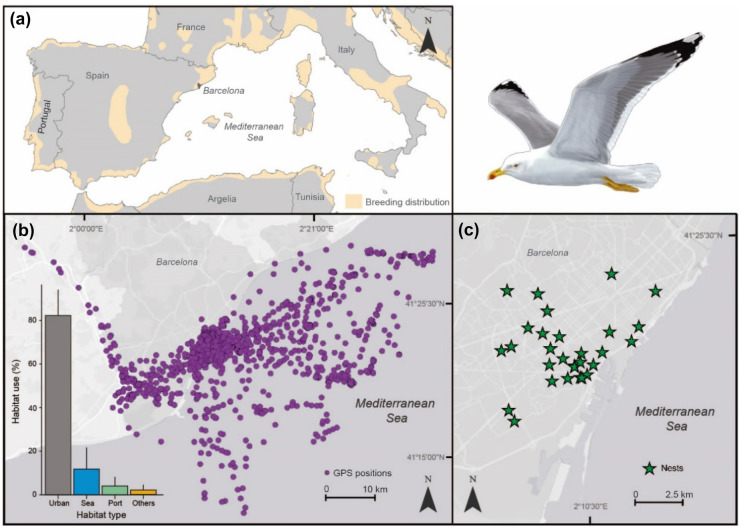
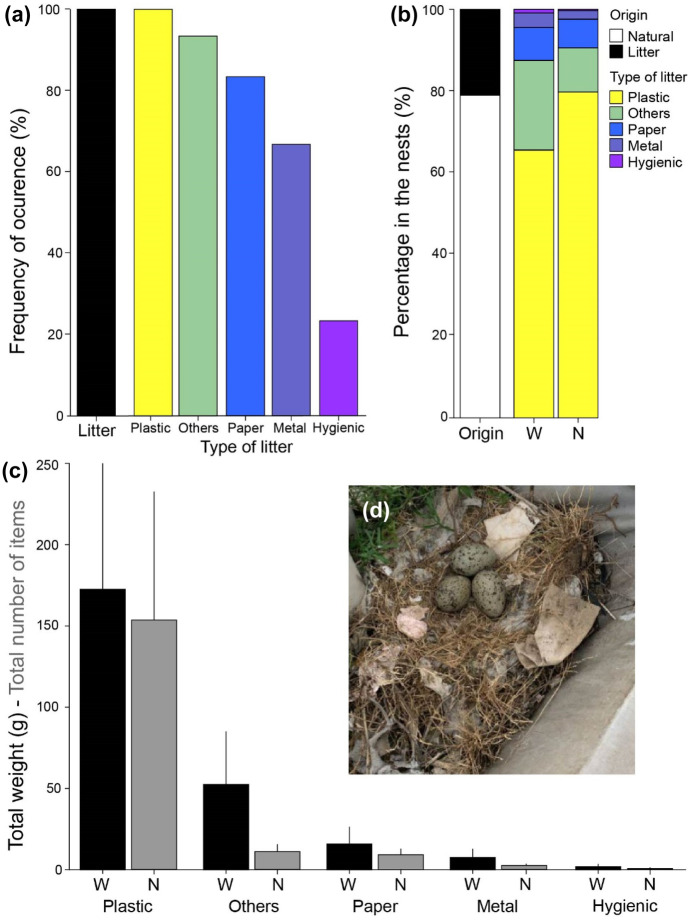
The production of urban waste has increased in the past decades leading to its mishandling. The effects on public health, economy, and wildlife that waste mismanagement can have are forcing governments to increase their efforts in detecting and mitigating the presence of waste. Identifying and monitoring sentinel species to assess the presence of urban litter could be a cost-effective option. Thus, analyzing the nest composition of yellow-legged gulls from an urban population inhabiting a very high populated city (Barcelona, Spain), and combining this information with accurate GPS tracking data, provides a potential tool to monitor the presence of marine and terrestrial litter over time. The results revealed the highest presence of debris in the nests of a seabird ever recorded. All the nests examined contained anthropogenic waste, with plastic items present in all of them. Crossing the nest composition with GPS tracking movements confirmed that the waste to build the nests was collected in the urban area and not in other environments surrounding the city. Then, the nest waste composition may be a good indicator of waste mismanagement and advise the municipalities to improve waste management and recycling strategies for the different types of litter. Using gulls breeding in cities as sentinel species and, in particular, the study of their nest composition, may provide essential data to decision-making stakeholders to adopt a One Health approach and help improve not only the environment's health but also the health of those who live in it.
在过去几十年中,城市垃圾的产量不断增加,导致其处理不当。垃圾管理不善对公共卫生、经济和野生动物造成的影响,迫使各国政府加大力度发现和减轻垃圾的存在。识别和监测监测物种以评估城市垃圾的存在可能是一种具有成本效益的选择。因此,分析栖息在人口非常密集的城市(西班牙巴塞罗那)的城市黄腿海鸥的巢组成,并将这些信息与准确的 GPS 跟踪数据相结合,提供了一种随时间监测海洋和陆地垃圾存在的潜在工具。结果显示,在有记录以来的所有海鸟巢中,该城市的黄腿海鸥巢中发现的碎片数量最多。所有检查过的鸟巢都含有人为废弃物,其中所有鸟巢都有塑料物品。将巢组成与 GPS 跟踪运动交叉确认,用于筑巢的废物是在城市地区收集的,而不是在城市周围的其他环境中收集的。那么,巢废物组成可能是垃圾管理不善的一个很好的指标,并建议市政府改进城市垃圾管理和不同类型垃圾的回收策略。利用在城市中繁殖的海鸥作为监测物种,特别是研究它们的巢组成,可能为决策利益相关者提供必要的数据,以采取一种“同一健康”的方法,不仅有助于改善环境健康,还有助于改善生活在其中的人们的健康。