Beijing Institute of Basic Medical Sciences, Beijing, China.
The Fifth Medical Centre, Chinese PLA General Hospital, Beijing, China.
PLoS One. 2023 Mar 29;18(3):e0282301. doi: 10.1371/journal.pone.0282301. eCollection 2023.
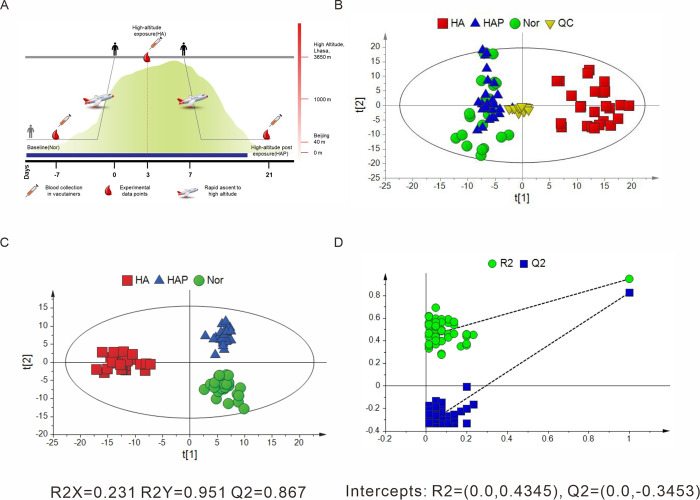
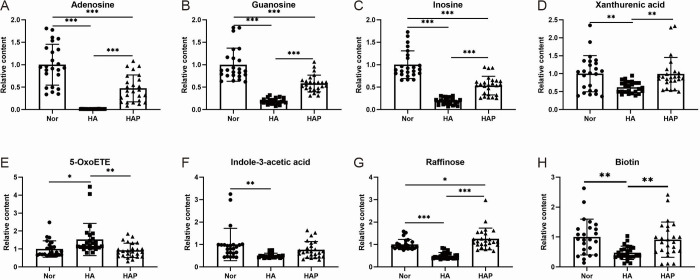
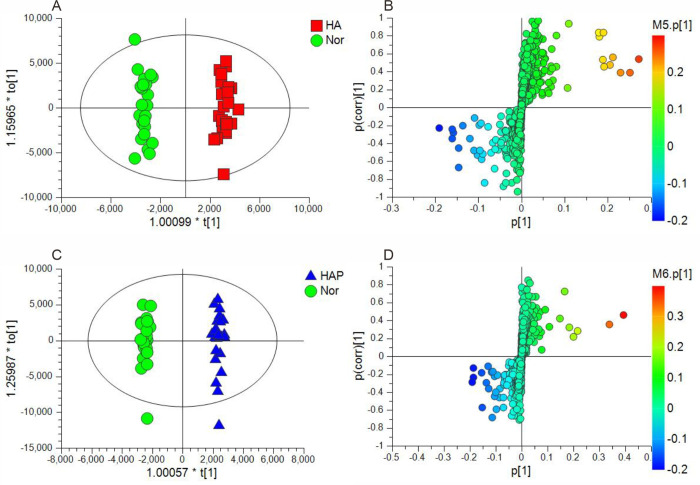
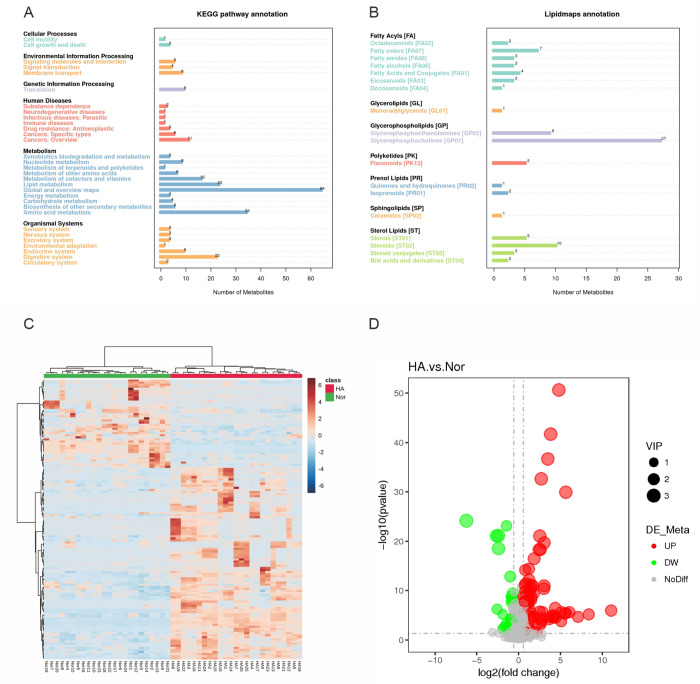
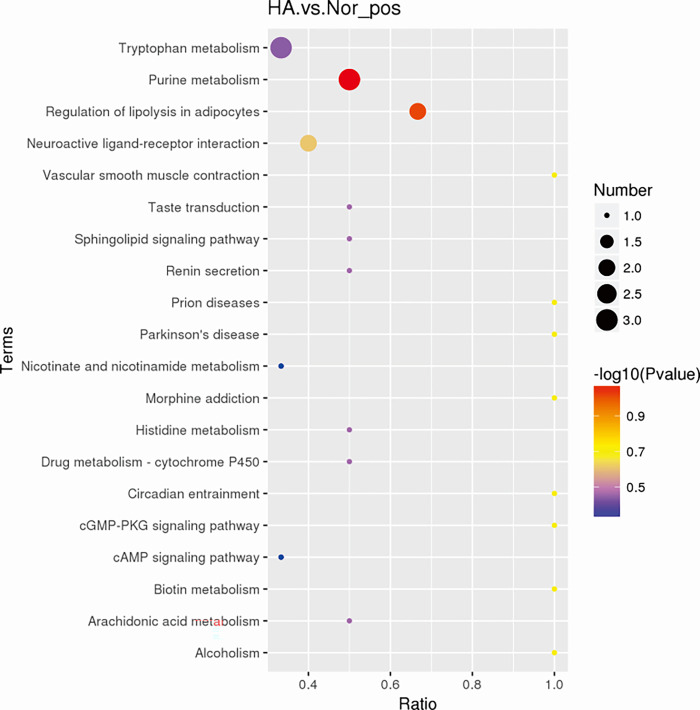
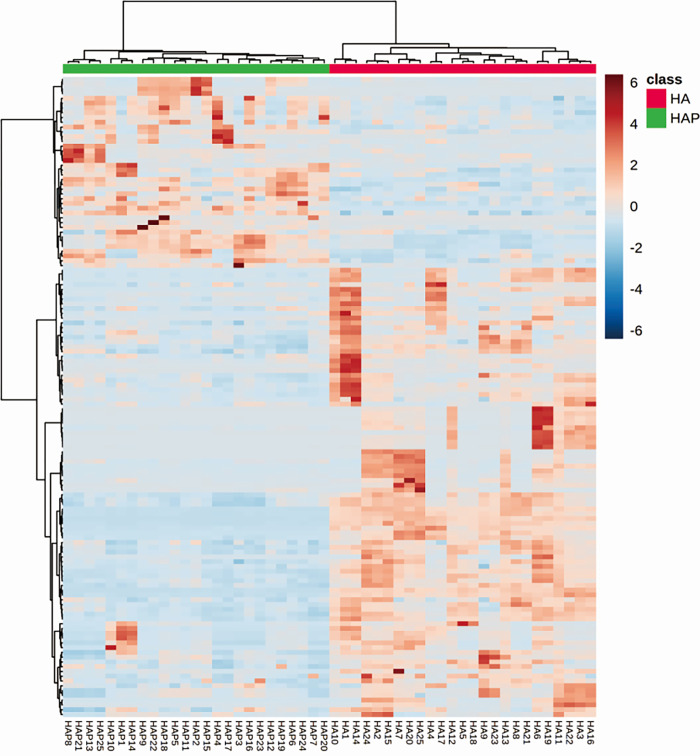
When ascending to high altitude, it is a rigorous challenge to people who living in the low altitude area to acclimatize to hypoxic environment. Hypoxia exposure can cause dramatic disturbances of metabolism. This longitudinal cohort study was conducted to delineate the plasma metabolomics profile following exposure to altitude environments and explore potential metabolic changes after return to low altitude area. 25 healthy volunteers living in the low altitude area (Nor; 40m) were transported to high altitude (HA; 3,650m) for a 7-day sojourn before transported back to the low altitude area (HAP; 40m). Plasma samples were collected on the day before ascending to HA, the third day on HA(day 3) and the fourteenth day after returning to low altitude(14 day) and analyzed using UHPLC-MS/MS tools and then the data were subjected to multivariate statistical analyses. There were 737 metabolites were obtained in plasma samples with 133 significantly changed metabolites. We screened 13 differential metabolites that were significantly changed under hypoxia exposure; enriched metabolic pathways under hypoxia exposure including tryptophan metabolism, purine metabolism, regulation of lipolysis in adipocytes; We verified and relatively quantified eight targeted candidate metabolites including adenosine, guanosine, inosine, xanthurenic acid, 5-oxo-ETE, raffinose, indole-3-acetic acid and biotin for the Nor and HA group. Most of the metabolites recovered when returning to the low altitude area, however, there were still 6 metabolites that were affected by hypoxia exposure. It is apparent that high-altitude exposure alters the metabolic characteristics and two weeks after returning to the low altitude area a small portion of metabolites was still affected by high-altitude exposure, which indicated that high-altitude exposure had a long-term impact on metabolism. This present longitudinal cohort study demonstrated that metabolomics can be a useful tool to monitor metabolic changes exposed to high altitude, providing new insight in the attendant health problem that occur in response to high altitude.
当居住在低海拔地区的人上升到高海拔时,适应缺氧环境是一个严峻的挑战。缺氧暴露会导致代谢的剧烈紊乱。本纵向队列研究旨在描绘暴露于高原环境后血浆代谢组学图谱,并探索返回低海拔地区后潜在的代谢变化。25 名居住在低海拔地区(Nor;40m)的健康志愿者被运送到高海拔地区(HA;3650m)进行为期 7 天的逗留,然后再运回到低海拔地区(HAP;40m)。在前往 HA 的前一天、在 HA 的第三天(第 3 天)和返回低海拔后的第 14 天(第 14 天)采集血浆样本,并使用 UHPLC-MS/MS 工具进行分析,然后对数据进行多变量统计分析。在血浆样本中获得了 737 种代谢物,其中有 133 种代谢物发生了显著变化。我们筛选出 13 种在缺氧暴露下显著变化的差异代谢物;缺氧暴露下富集的代谢途径包括色氨酸代谢、嘌呤代谢、脂肪细胞脂解的调节;我们验证并相对定量了 8 种靶向候选代谢物,包括腺苷、鸟苷、肌苷、黄尿酸、5-氧-ETE、棉子糖、吲哚-3-乙酸和生物素,用于 Nor 和 HA 组。当返回低海拔地区时,大多数代谢物都恢复了,但仍有 6 种代谢物受到缺氧暴露的影响。显然,高海拔暴露改变了代谢特征,返回低海拔地区两周后,仍有一部分代谢物受到高海拔暴露的影响,这表明高海拔暴露对代谢有长期影响。本纵向队列研究表明,代谢组学可以作为监测高原暴露引起的代谢变化的有用工具,为应对高原引起的健康问题提供新的见解。