Poblete Yanina, Contreras Carolina, Fernández Carolina, Flores Cristian R, Vega Patricia, Ávila Miguel, Sabat Pablo
NIAVA: Núcleo de Investigaciones Aplicadas en Ciencias Veterinarias y Agronómicas, Instituto de Ciencias Naturales, Facultad de Medicina Veterinaria y Agronomía Universidad de Las Américas, Campus Providencia Manuel Montt 948 Santiago Chile.
Departamento de Ciencias Ecológicas, Facultad de Ciencias Universidad de Chile Santiago Chile.
Ecol Evol. 2023 Mar 26;13(3):e9941. doi: 10.1002/ece3.9941. eCollection 2023 Mar.
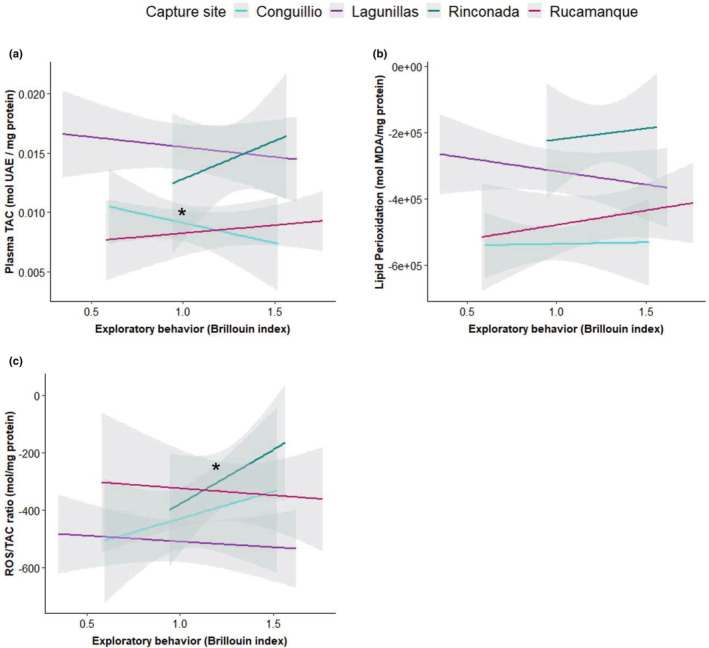
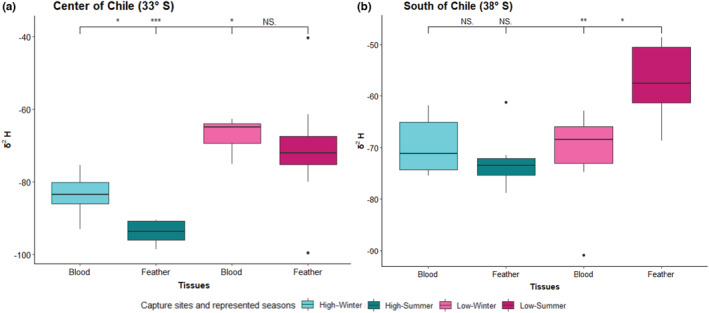
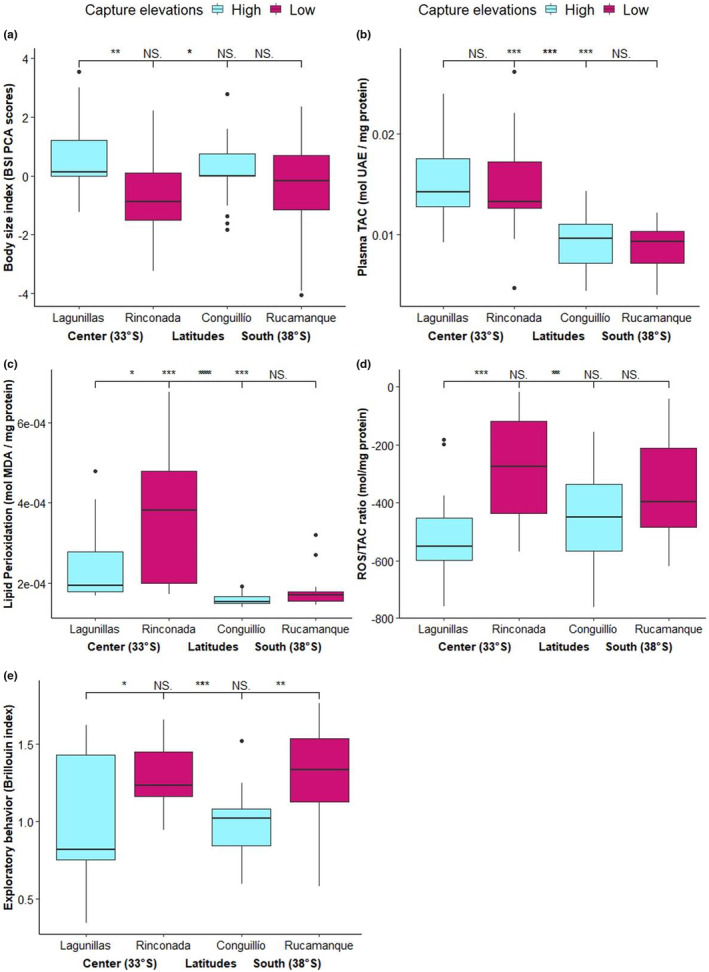
To cope with life in the mountains, populations of the same species can exhibit substantial variability in their altitudinal migration patterns and phenotypes in response to local weather conditions. Studying such variability can provide valuable insights into how local populations respond to environmental challenges, and this information can be useful for conservation efforts in mountain ecosystems. Here, we used δH values of feathers and blood to evaluate latitudinal variation in altitudinal migration patterns and its possible links with body size, oxidative status, and exploratory behavior in 72 individuals of rufous-collared sparrow () that breed at low and high elevations in the center (33°) and south (38°) of Chile. Our results show that both altitudinal migration patterns and oxidative status were significantly influenced by the latitude of breeding sites, while exploratory behavior was associated with elevation. Notably, we found that fast-explorer birds inhabiting low elevations in central Chile displayed higher levels of oxidative damage than slow-explorer birds. These outcomes underscore the possibility of local adaptations in response to diverse local environmental conditions in the Andes. We discuss the implications of latitude, elevation, and environmental temperature in shaping the observed patterns and highlight the significance of identifying local adaptations in mountain birds for better predicting their response to climate change and other challenges stemming from anthropogenic activities.
为了适应山区生活,同一物种的种群在海拔迁移模式和表型上可能会表现出显著的变异性,以应对当地的天气条件。研究这种变异性可以为当地种群如何应对环境挑战提供有价值的见解,而这些信息对于山区生态系统的保护工作可能是有用的。在这里,我们利用羽毛和血液的δH值,评估了72只棕颈雀鹀(Zonotrichia capensis)个体的海拔迁移模式的纬度变化及其与体型、氧化状态和探索行为的可能联系,这些个体在智利中部(约33°)和南部(约38°)的低海拔和高海拔地区繁殖。我们的结果表明,海拔迁移模式和氧化状态都受到繁殖地点纬度的显著影响,而探索行为与海拔高度有关。值得注意的是,我们发现生活在智利中部低海拔地区的快速探索型鸟类比慢速探索型鸟类表现出更高水平的氧化损伤。这些结果强调了安第斯山脉当地种群为应对多样的当地环境条件而产生局部适应性的可能性。我们讨论了纬度、海拔和环境温度对所观察到的模式的影响,并强调了识别山区鸟类的局部适应性对于更好地预测它们对气候变化和其他源于人为活动的挑战的反应的重要性。