Eikenaar Cas, Hegemann Arne, Packmor Florian, Kleudgen Iris, Isaksson Caroline
Institute of Avian Research, 26386 Wilhelmshaven, Germany.
Department of Biology, Lund University, Lund, SE-223 62, Sweden.
Curr Zool. 2020 Feb;66(1):21-28. doi: 10.1093/cz/zoz009. Epub 2019 May 7.
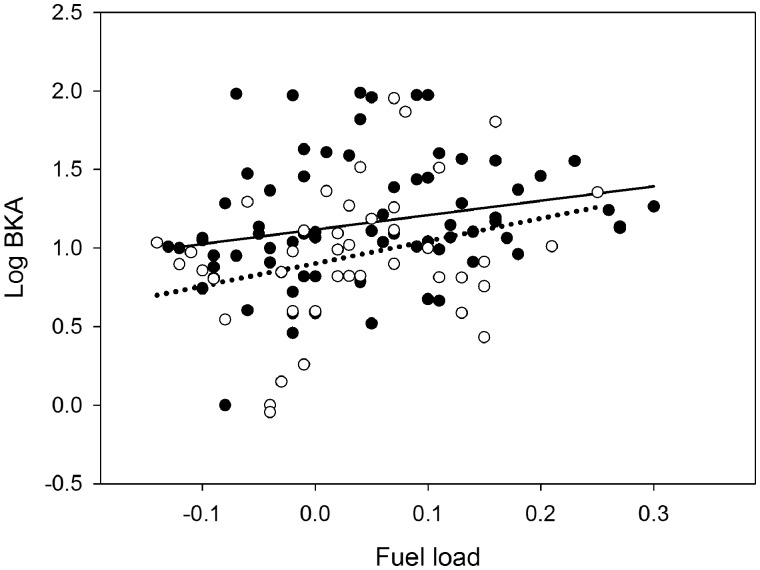
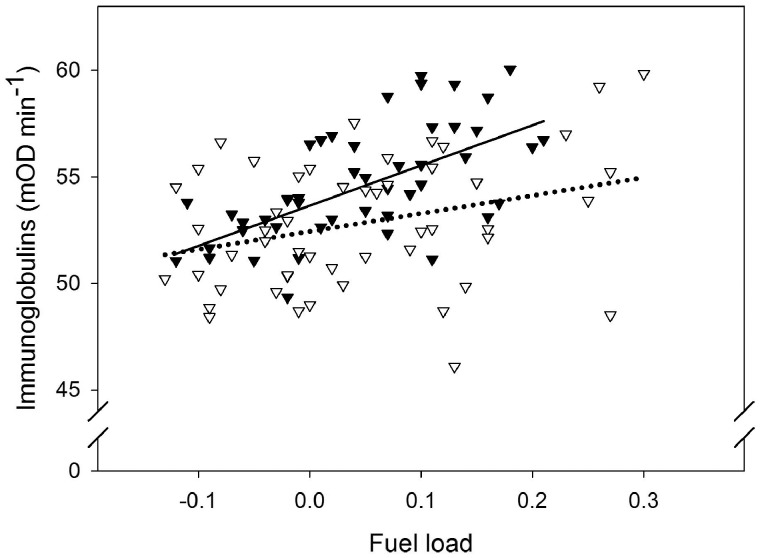
In many animals, catabolic and anabolic periods are temporally separated. Migratory birds alternate energy expenditure during flight with energy accumulation during stopover. The size of the energy stores at stopover affects the decision to resume migration and thus the temporal organization of migration. We now provide data suggesting that it is not only the size of the energy stores that may influence migration scheduling, but also the physiological consequences of flying. In two subspecies of the northern wheatear , a long-distance migrant, estimated energy stores at a stopover during autumn migration were positively related with both constitutive innate and acquired immune function, and negatively related with oxidative damage to lipids. In other words, migrants' physiological condition was associated with their energetic condition. Although time spent at stopover before sampling may have contributed to this relationship, our results suggest that migrants have to trade-off the depletion of energy stores during flight with incurring physiological costs. This will affect migrants' decisions when to start and when to terminate a migratory flight. The physiological costs associated with the depletion of energy stores may also help explaining why migrants often arrive at and depart from stopover sites with larger energy stores than expected. We propose that studies on the role of energy stores as drivers of the temporal organization of (avian) migration need to consider physiological condition, such as immunological and oxidative states.
在许多动物中,分解代谢期和合成代谢期在时间上是分开的。候鸟在飞行期间消耗能量,在中途停留时积累能量。中途停留时能量储备的大小会影响重新开始迁徙的决定,从而影响迁徙的时间安排。我们现在提供的数据表明,不仅能量储备的大小可能影响迁徙计划,飞行的生理后果也会产生影响。在长途迁徙的白斑黑石鵖的两个亚种中,秋季迁徙中途停留时估计的能量储备与先天性固有免疫功能和获得性免疫功能均呈正相关,与脂质氧化损伤呈负相关。换句话说,迁徙者的生理状况与其能量状况相关。虽然采样前在中途停留所花费的时间可能促成了这种关系,但我们的结果表明,迁徙者必须在飞行过程中权衡能量储备的消耗与生理成本。这将影响迁徙者决定何时开始和何时结束迁徙飞行。与能量储备消耗相关的生理成本也可能有助于解释为什么迁徙者到达和离开中途停留地时的能量储备往往比预期的要大。我们建议,关于能量储备作为(鸟类)迁徙时间组织驱动因素的作用的研究需要考虑生理状况,如免疫和氧化状态。