Sparks Ian L, Nijjer Japinder, Yan Jing, Morita Yasu S
Department of Microbiology, University of Massachusetts, Amherst, MA, USA.
Department of Molecular, Cellular and Developmental Biology, Yale University, New Haven CT, USA.
bioRxiv. 2023 Mar 26:2023.03.26.534150. doi: 10.1101/2023.03.26.534150.
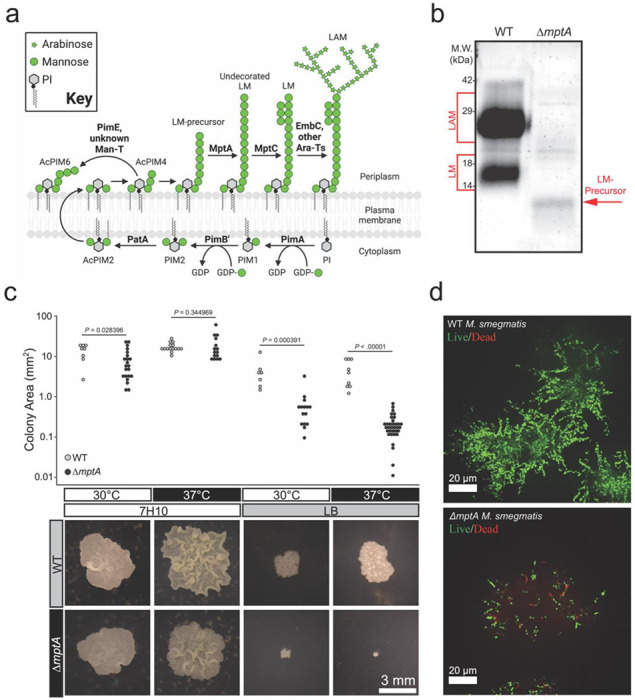
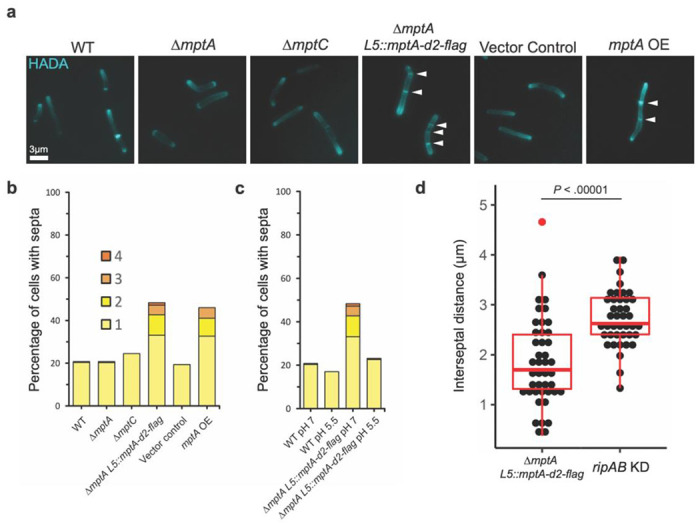
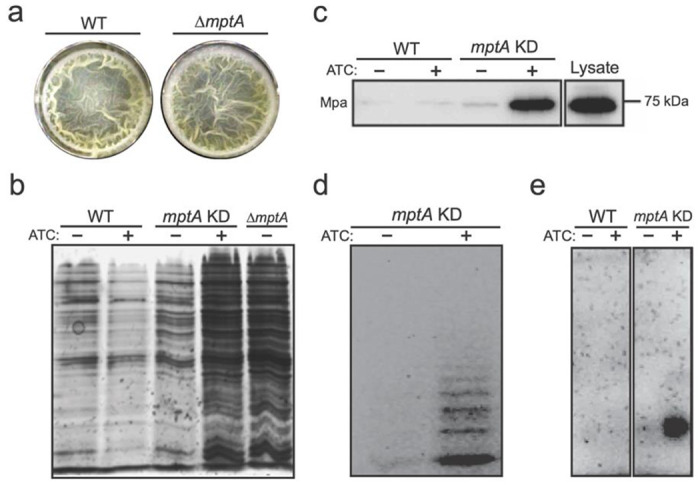
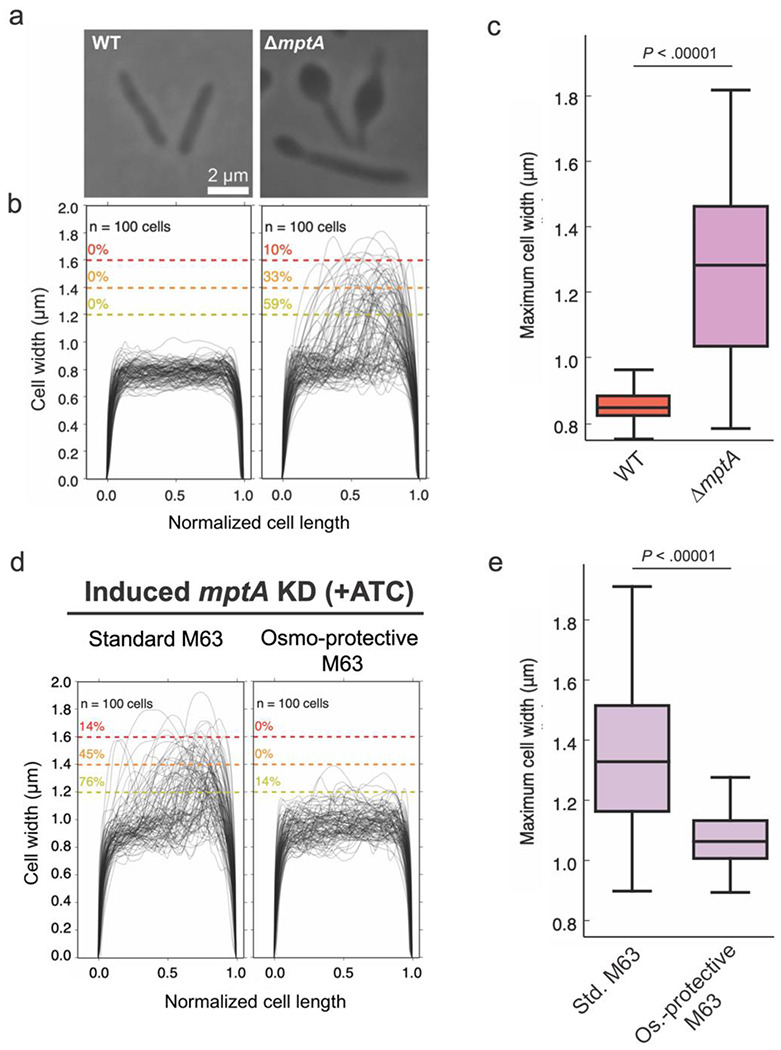
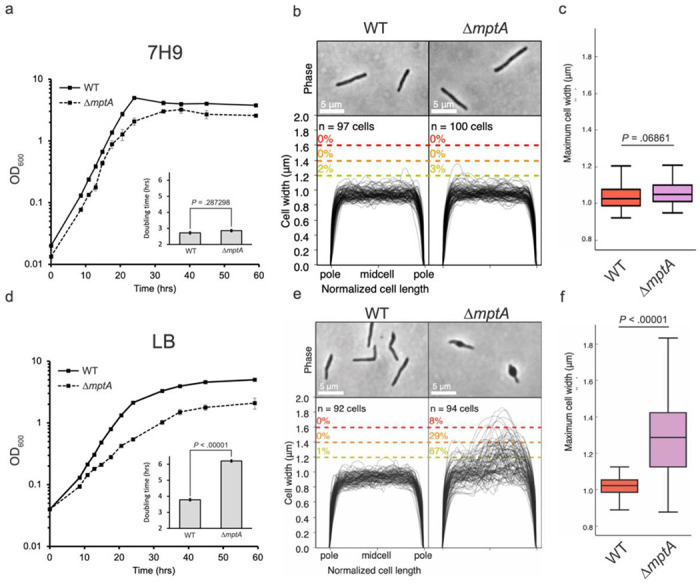
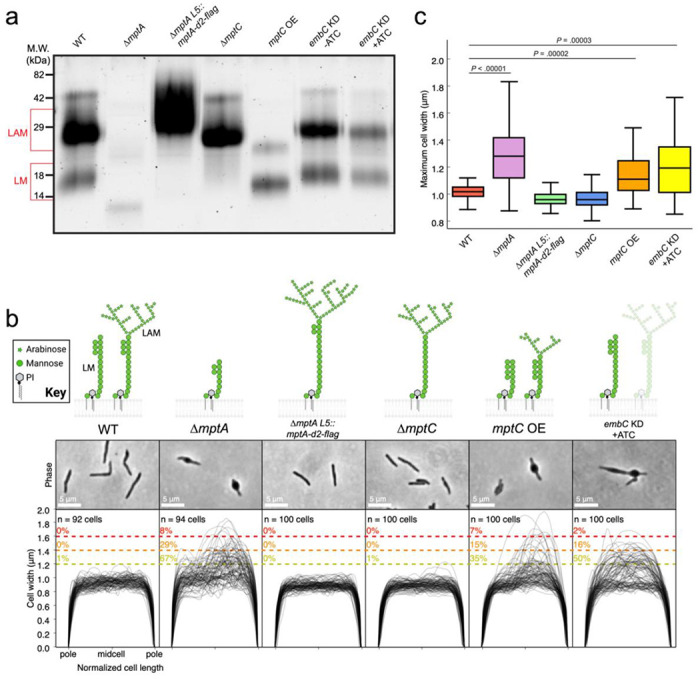
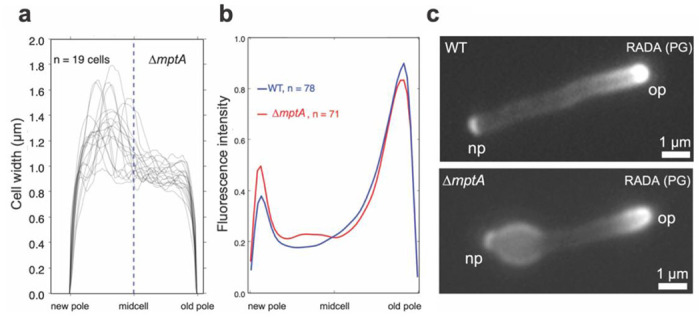
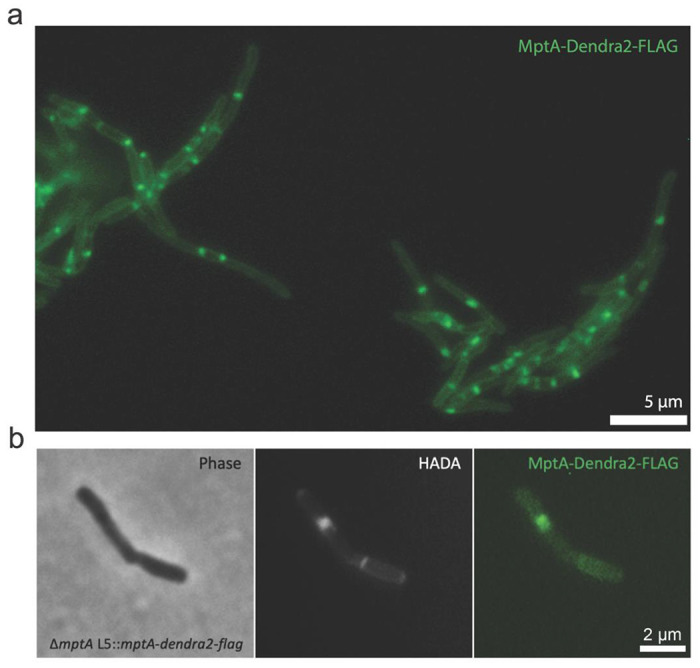
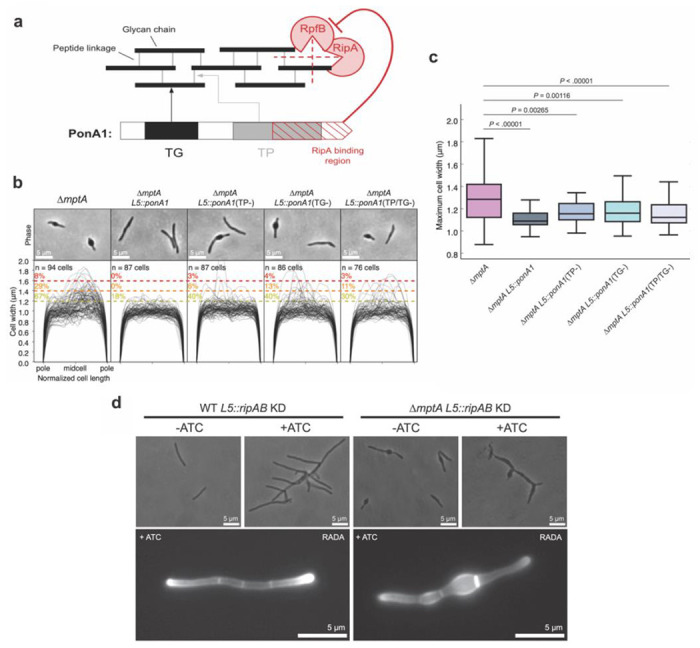
The growth and division of mycobacteria, which include several clinically relevant pathogens, deviate significantly from that of canonical bacterial models. Despite their Gram-positive ancestry, mycobacteria synthesize and elongate a diderm envelope asymmetrically from the poles, with the old pole elongating more robustly than the new pole. In addition to being structurally distinct, the molecular components of the mycobacterial envelope are also evolutionarily unique, including the phosphatidylinositol-anchored lipoglycans lipomannan (LM) and lipoarabinomannan (LAM). LM and LAM modulate host immunity during infection, but their role outside of intracellular survival remains poorly understood, despite their widespread conservation among non-pathogenic and opportunistically pathogenic mycobacteria. Previously, and mutants producing structurally altered LM and LAM were shown to grow slowly under certain conditions and to be more sensitive to antibiotics, suggesting that mycobacterial lipoglycans may support cellular integrity or growth. To test this, we constructed multiple biosynthetic lipoglycan mutants of and determined the effect of each mutation on cell wall biosynthesis, envelope integrity, and division. We found that mutants deficient in LAM, but not LM, fail to maintain cell wall integrity in a medium-dependent manner, with envelope deformations specifically associated with septa and new poles. Conversely, a mutant producing abnormally large LAM formed multiseptated cells in way distinct from that observed in a septal hydrolase mutant. These results show that LAM plays critical and distinct roles at subcellular locations associated with division in mycobacteria, including maintenance of local cell envelope integrity and septal placement.
分枝杆菌包括几种具有临床相关性的病原体,其生长和分裂与典型细菌模型有显著差异。尽管分枝杆菌起源于革兰氏阳性菌,但它们从两极不对称地合成并延长双层包膜,旧极比新极生长得更旺盛。除了结构上不同外,分枝杆菌包膜的分子成分在进化上也很独特,包括磷脂酰肌醇锚定的脂多糖脂甘露聚糖(LM)和脂阿拉伯甘露聚糖(LAM)。LM和LAM在感染过程中调节宿主免疫,但尽管它们在非致病性和机会致病性分枝杆菌中广泛存在,但它们在细胞内存活之外的作用仍知之甚少。以前,产生结构改变的LM和LAM的突变体在某些条件下生长缓慢且对抗生素更敏感,这表明分枝杆菌脂多糖可能支持细胞完整性或生长。为了验证这一点,我们构建了多个分枝杆菌生物合成脂多糖突变体,并确定了每个突变对细胞壁生物合成、包膜完整性和分裂的影响。我们发现,缺乏LAM而非LM的突变体无法以培养基依赖的方式维持细胞壁完整性,包膜变形与隔膜和新极特异性相关。相反,产生异常大量LAM的突变体形成多隔膜细胞的方式与在隔膜水解酶突变体中观察到的不同。这些结果表明,LAM在分枝杆菌中与分裂相关的亚细胞位置发挥关键且独特的作用,包括维持局部细胞包膜完整性和隔膜定位。