Eiger Dylan S, Smith Jeffrey S, Shi Tujin, Stepniewski Tomasz Maciej, Tsai Chia-Feng, Honeycutt Christopher, Boldizsar Noelia, Gardner Julia, Nicora Carrie D, Moghieb Ahmed M, Kawakami Kouki, Choi Issac, Zheng Kevin, Warman Anmol, Alagesan Priya, Knape Nicole M, Huang Ouwen, Silverman Justin D, Smith Richard D, Inoue Asuka, Selent Jana, Jacobs Jon M, Rajagopal Sudarshan
Department of Biochemistry, Duke University, Durham, NC, 27710, USA.
Department of Dermatology, Massachusetts General Hospital, Boston, MA, 02114, USA.
bioRxiv. 2023 Mar 14:2023.03.14.532634. doi: 10.1101/2023.03.14.532634.
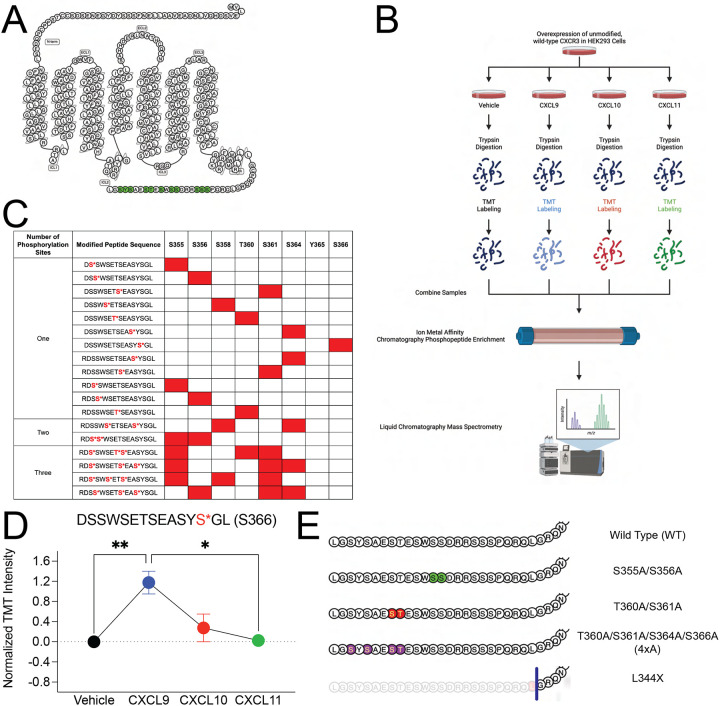
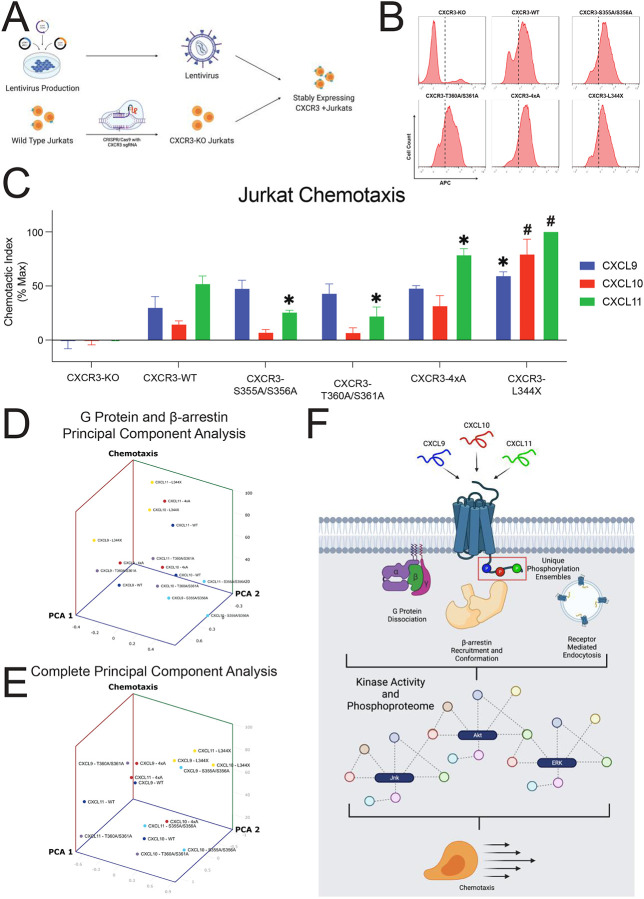
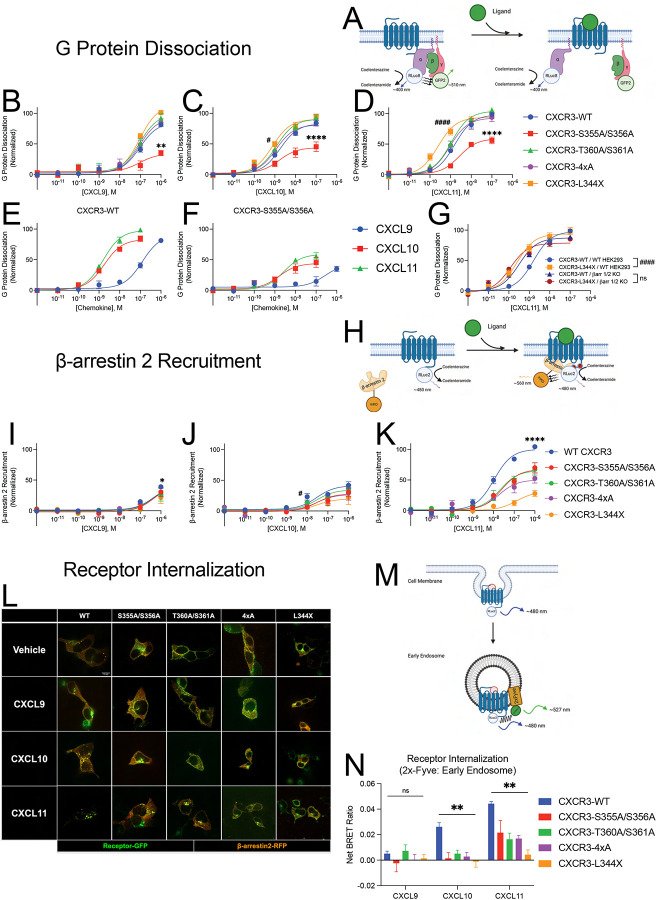
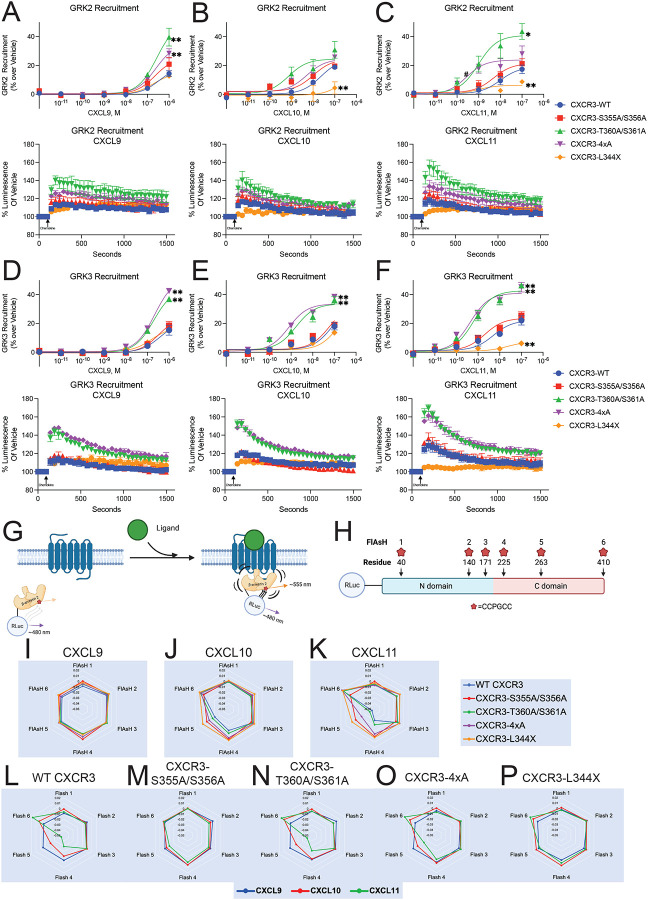
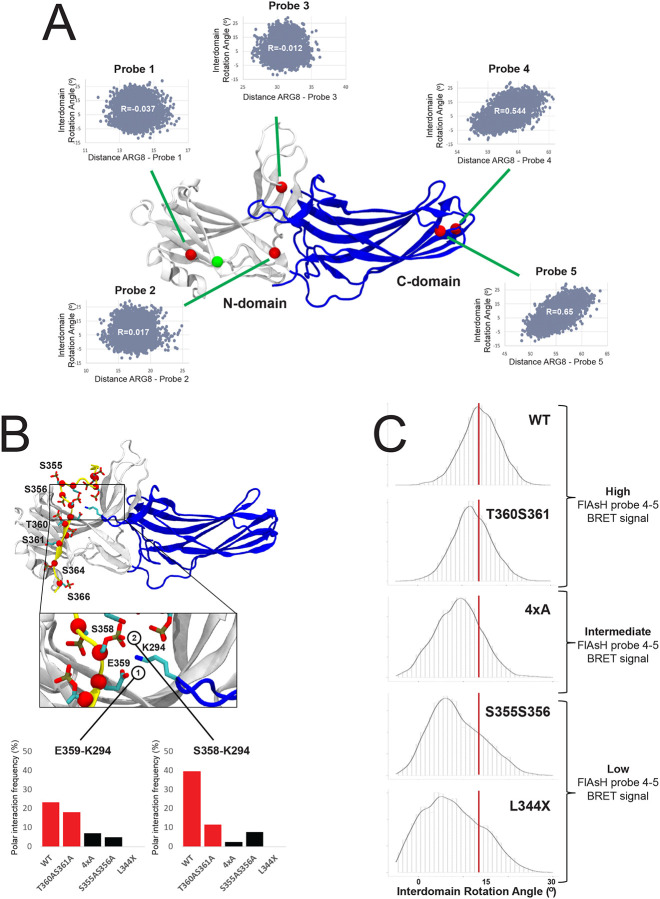
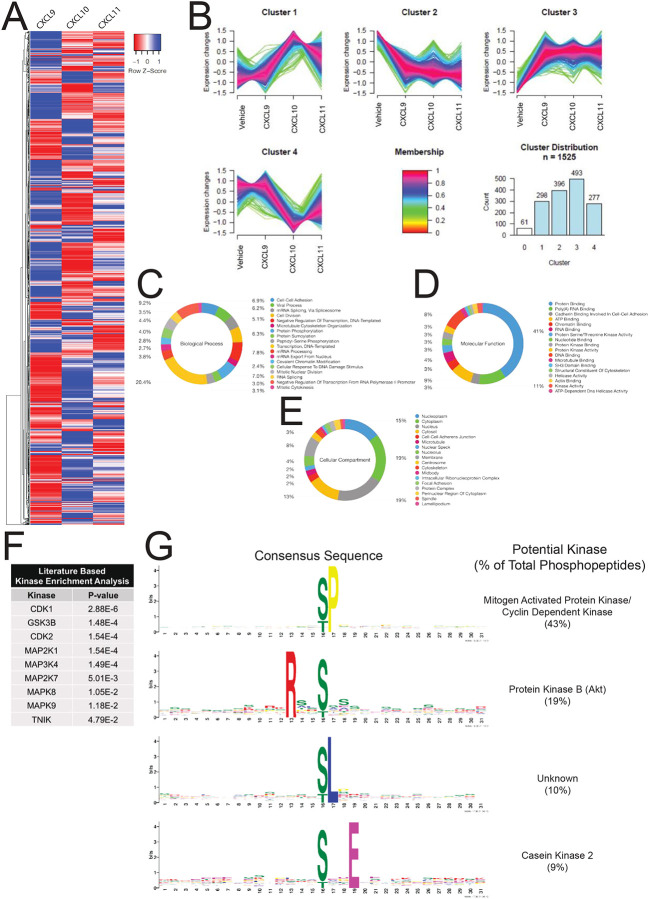
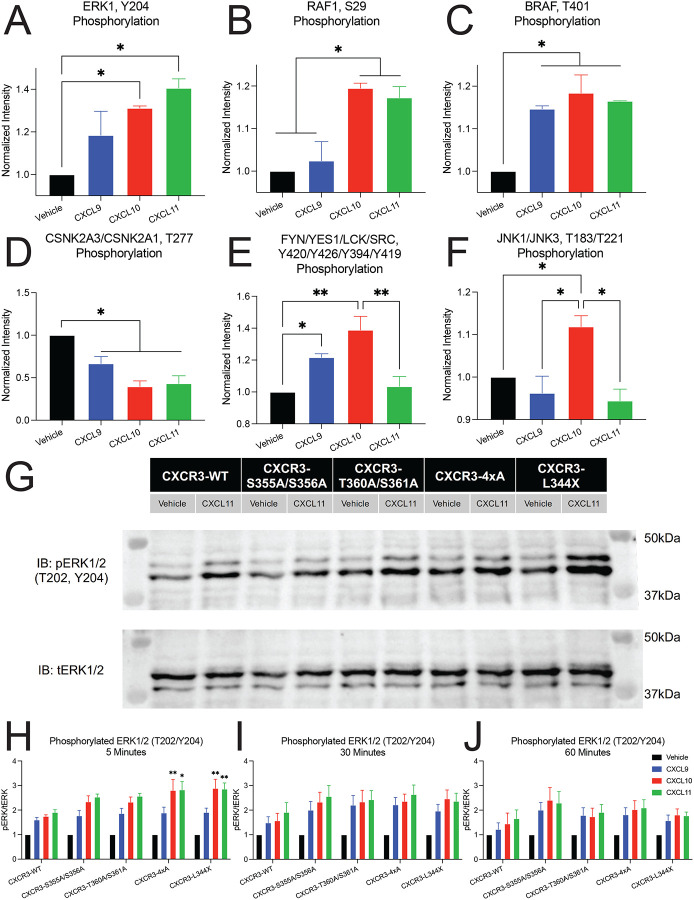
G protein-coupled receptor (GPCR) biased agonism, the activation of some signaling pathways over others, is thought to largely be due to differential receptor phosphorylation, or "phosphorylation barcodes." At chemokine receptors, ligands act as "biased agonists" with complex signaling profiles, which contributes to the limited success in pharmacologically targeting these receptors. Here, mass spectrometry-based global phosphoproteomics revealed that CXCR3 chemokines generate different phosphorylation barcodes associated with differential transducer activation. Chemokine stimulation resulted in distinct changes throughout the kinome in global phosphoproteomic studies. Mutation of CXCR3 phosphosites altered β-arrestin conformation in cellular assays and was confirmed by molecular dynamics simulations. T cells expressing phosphorylation-deficient CXCR3 mutants resulted in agonist- and receptor-specific chemotactic profiles. Our results demonstrate that CXCR3 chemokines are non-redundant and act as biased agonists through differential encoding of phosphorylation barcodes and lead to distinct physiological processes.
G蛋白偶联受体(GPCR)偏向性激动作用,即某些信号通路比其他信号通路更易被激活,被认为主要是由于受体磷酸化差异,或“磷酸化条形码”所致。在趋化因子受体中,配体作为具有复杂信号特征的“偏向性激动剂”,这导致了在对这些受体进行药理学靶向治疗方面取得的成功有限。在此,基于质谱的全局磷酸化蛋白质组学研究表明,CXCR3趋化因子产生与不同转导器激活相关的不同磷酸化条形码。在全局磷酸化蛋白质组学研究中,趋化因子刺激导致整个激酶组发生明显变化。在细胞实验中,CXCR3磷酸化位点的突变改变了β-抑制蛋白的构象,并通过分子动力学模拟得到证实。表达磷酸化缺陷型CXCR3突变体的T细胞产生了激动剂和受体特异性的趋化图谱。我们的研究结果表明,CXCR3趋化因子并非冗余,而是通过对磷酸化条形码的差异编码作为偏向性激动剂,并导致不同的生理过程。