Department of Biochemistry, Duke University, Durham, NC 27710, USA.
Department of Medicine, Duke University, Durham, NC 27710, USA.
Sci Signal. 2018 Nov 6;11(555):eaaq1075. doi: 10.1126/scisignal.aaq1075.
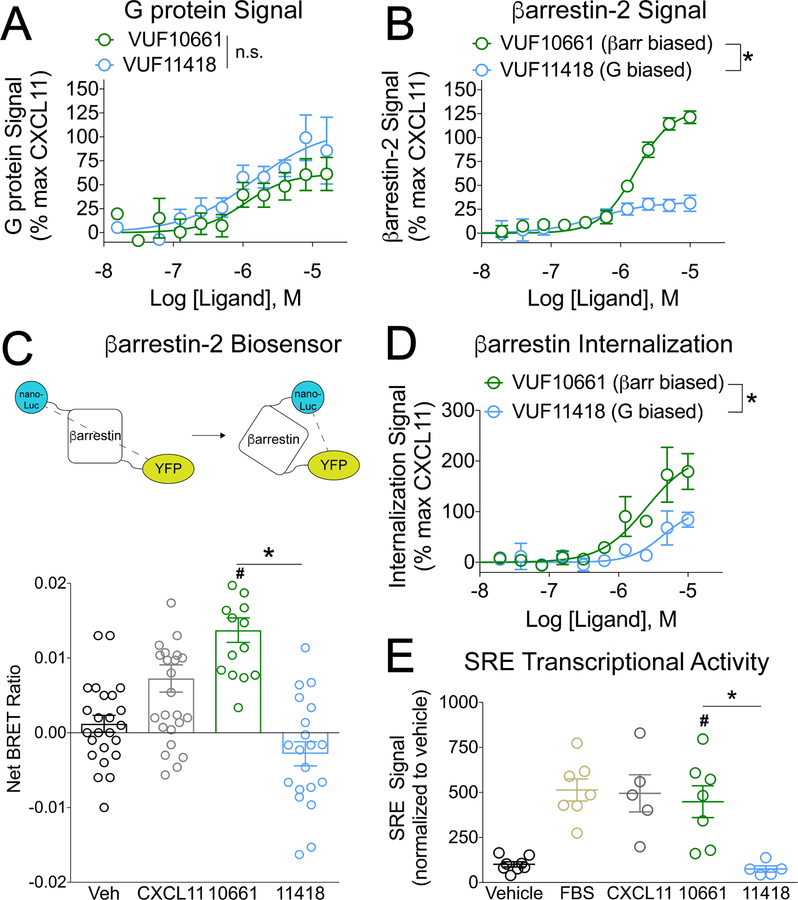
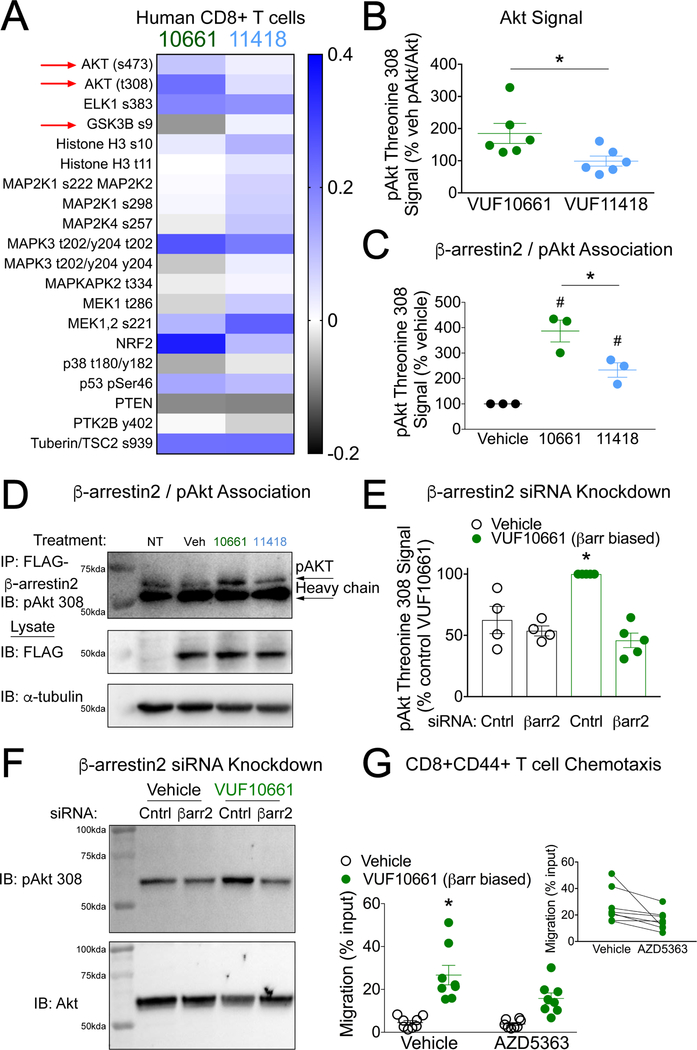
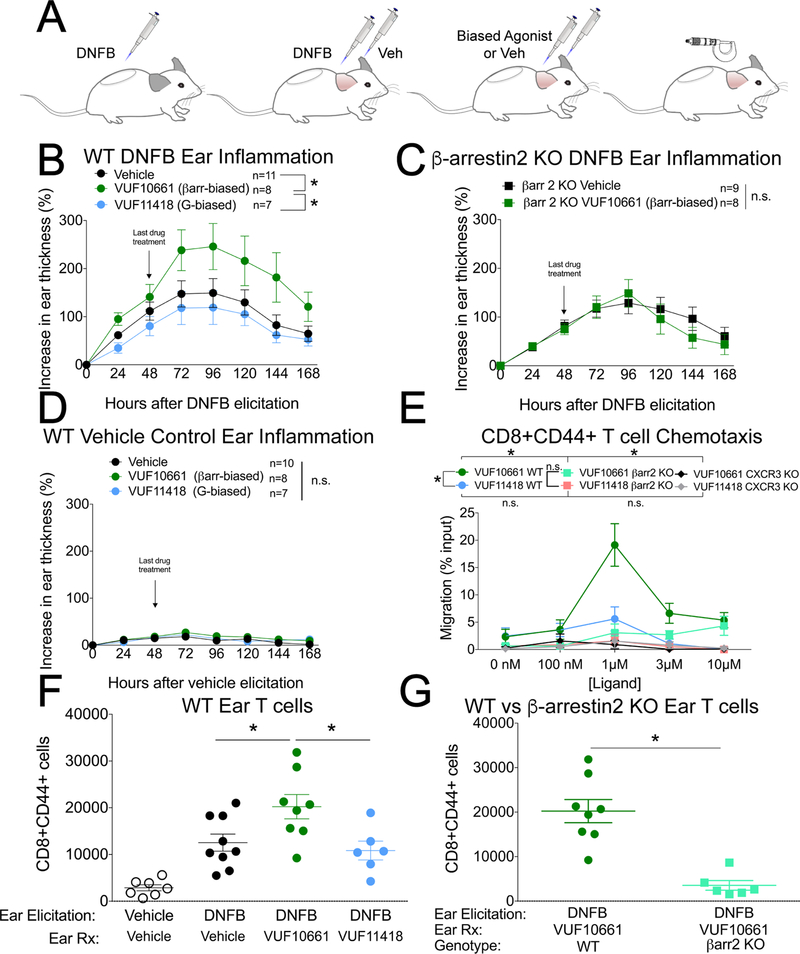
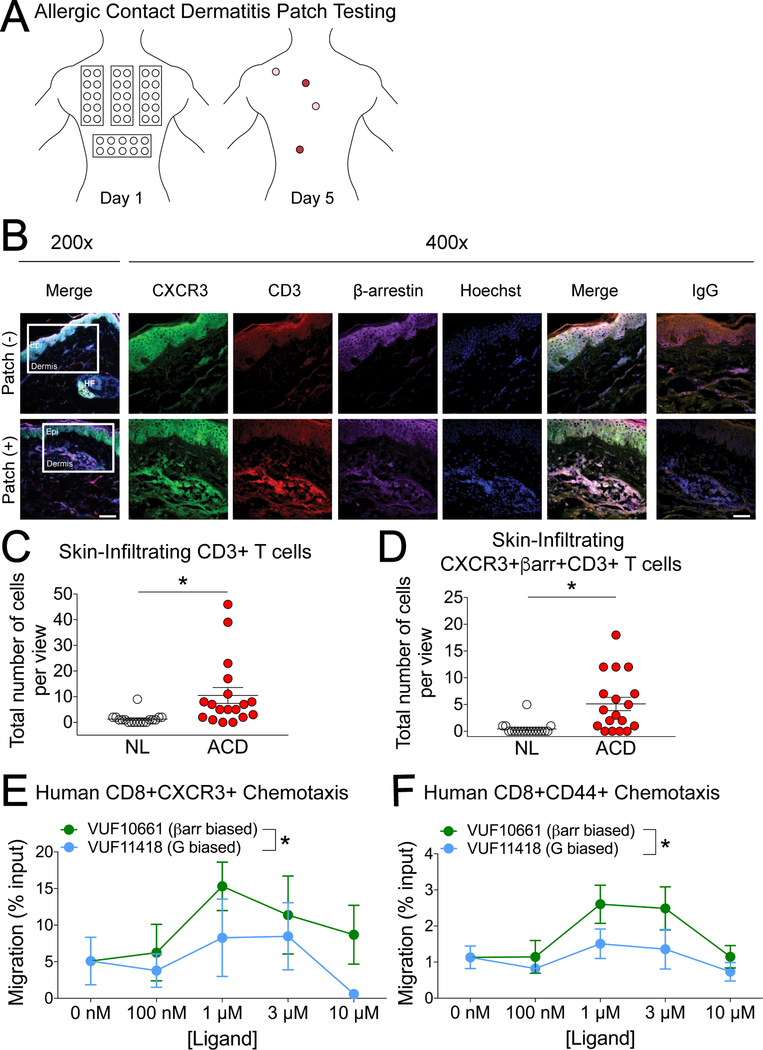
The chemokine receptor CXCR3 plays a central role in inflammation by mediating effector/memory T cell migration in various diseases; however, drugs targeting CXCR3 and other chemokine receptors are largely ineffective in treating inflammation. Chemokines, the endogenous peptide ligands of chemokine receptors, can exhibit so-called biased agonism by selectively activating either G protein- or β-arrestin-mediated signaling after receptor binding. Biased agonists might be used as more targeted therapeutics to differentially regulate physiological responses, such as immune cell migration. To test whether CXCR3-mediated physiological responses could be segregated by G protein- and β-arrestin-mediated signaling, we identified and characterized small-molecule biased agonists of the receptor. In a mouse model of T cell-mediated allergic contact hypersensitivity (CHS), topical application of a β-arrestin-biased, but not a G protein-biased, agonist potentiated inflammation. T cell recruitment was increased by the β-arrestin-biased agonist, and biopsies of patients with allergic CHS demonstrated coexpression of CXCR3 and β-arrestin in T cells. In mouse and human T cells, the β-arrestin-biased agonist was the most efficient at stimulating chemotaxis. Analysis of phosphorylated proteins in human lymphocytes showed that β-arrestin-biased signaling activated the kinase Akt, which promoted T cell migration. This study demonstrates that biased agonists of CXCR3 produce distinct physiological effects, suggesting discrete roles for different endogenous CXCR3 ligands and providing evidence that biased signaling can affect the clinical utility of drugs targeting CXCR3 and other chemokine receptors.
趋化因子受体 CXCR3 通过介导效应/记忆 T 细胞在各种疾病中的迁移,在炎症中发挥核心作用;然而,靶向 CXCR3 和其他趋化因子受体的药物在治疗炎症方面基本上没有效果。趋化因子是趋化因子受体的内源性肽配体,在与受体结合后,可以通过选择性激活 G 蛋白或β-arrestin 介导的信号转导,表现出所谓的偏激动作用。偏激动剂可能被用作更具靶向性的治疗药物,以差异化调节生理反应,如免疫细胞迁移。为了测试 CXCR3 介导的生理反应是否可以通过 G 蛋白和β-arrestin 介导的信号转导来分离,我们鉴定并表征了该受体的小分子偏激动剂。在 T 细胞介导的过敏性接触性超敏反应 (CHS) 的小鼠模型中,局部应用β-arrestin 偏向激动剂而非 G 蛋白偏向激动剂可增强炎症。β-arrestin 偏向激动剂增加了 T 细胞募集,并且过敏性 CHS 患者的活检显示 CXCR3 和β-arrestin 在 T 细胞中共表达。在小鼠和人 T 细胞中,β-arrestin 偏向激动剂最有效地刺激趋化作用。对人淋巴细胞中磷酸化蛋白的分析表明,β-arrestin 偏向信号激活了激酶 Akt,促进了 T 细胞迁移。这项研究表明,CXCR3 的偏激动剂产生不同的生理效应,这表明不同的内源性 CXCR3 配体具有不同的作用,并提供了证据表明偏信号可以影响靶向 CXCR3 和其他趋化因子受体的药物的临床应用。