Chitalia Rhea, Miliotis Marios, Jahani Nariman, Tastsoglou Spyros, McDonald Elizabeth S, Belenky Vivian, Cohen Eric A, Newitt David, Van't Veer Laura J, Esserman Laura, Hylton Nola, DeMichele Angela, Hatzigeorgiou Artemis, Kontos Despina
Department of Bioengineering, University of Pennsylvania, Perelman School of Medicine 3400 Spruce Street, Philadelphia, PA, 19104, USA.
Department of Radiology, Division of Hematology/Oncology, University of Pennsylvania, Perelman School of Medicine 3400 Spruce Street, Philadelphia, PA, 19104, USA.
Commun Med (Lond). 2023 Mar 30;3(1):46. doi: 10.1038/s43856-023-00273-1.
Early changes in breast intratumor heterogeneity during neoadjuvant chemotherapy may reflect the tumor's ability to adapt and evade treatment. We investigated the combination of precision medicine predictors of genomic and MRI data towards improved prediction of recurrence free survival (RFS).
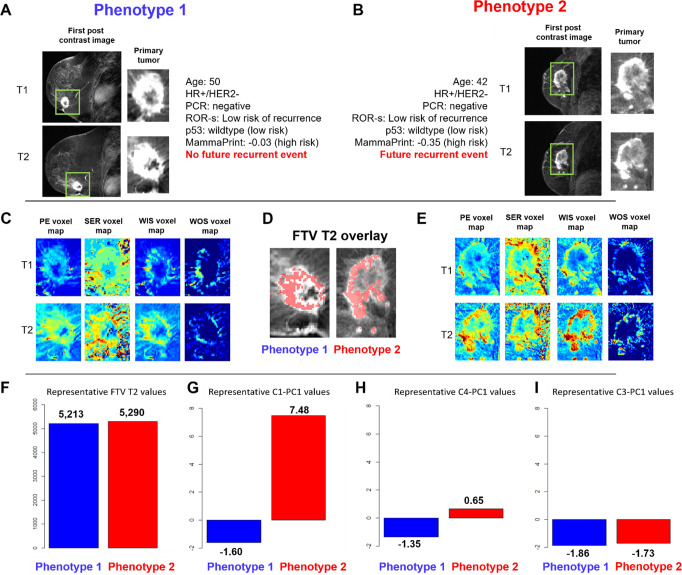
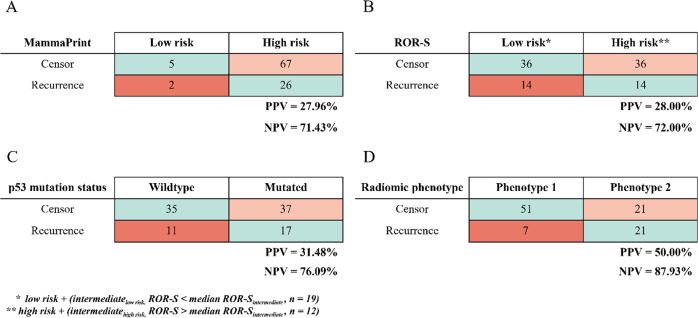
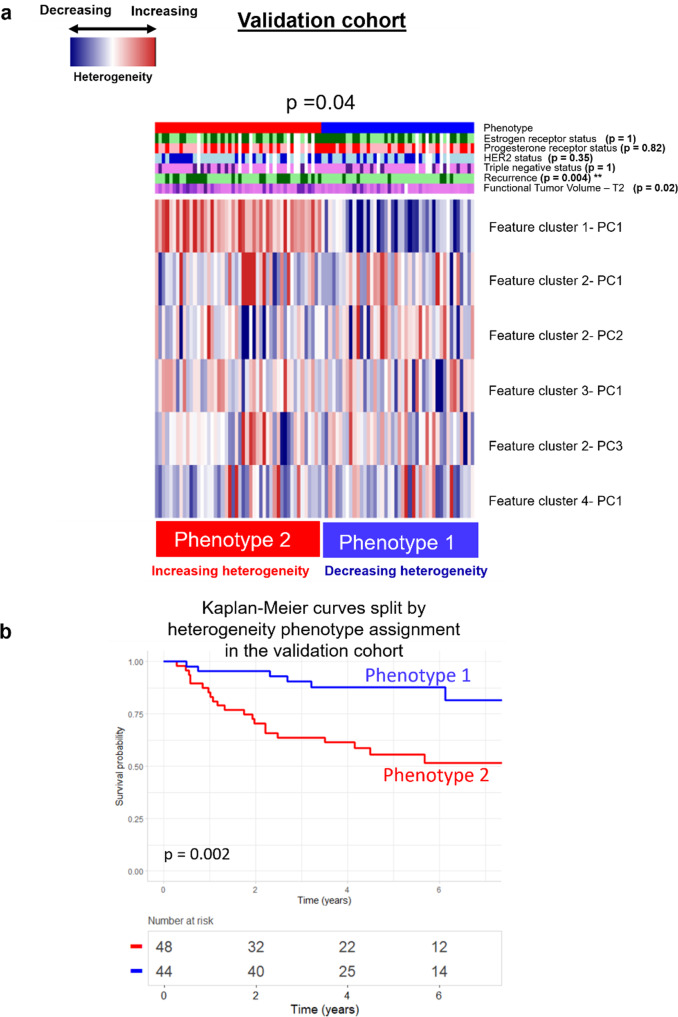
A total of 100 women from the ACRIN 6657/I-SPY 1 trial were retrospectively analyzed. We estimated MammaPrint, PAM50 ROR-S, and p53 mutation scores from publicly available gene expression data and generated four, voxel-wise 3-D radiomic kinetic maps from DCE-MR images at both pre- and early-treatment time points. Within the primary lesion from each kinetic map, features of change in radiomic heterogeneity were summarized into 6 principal components.
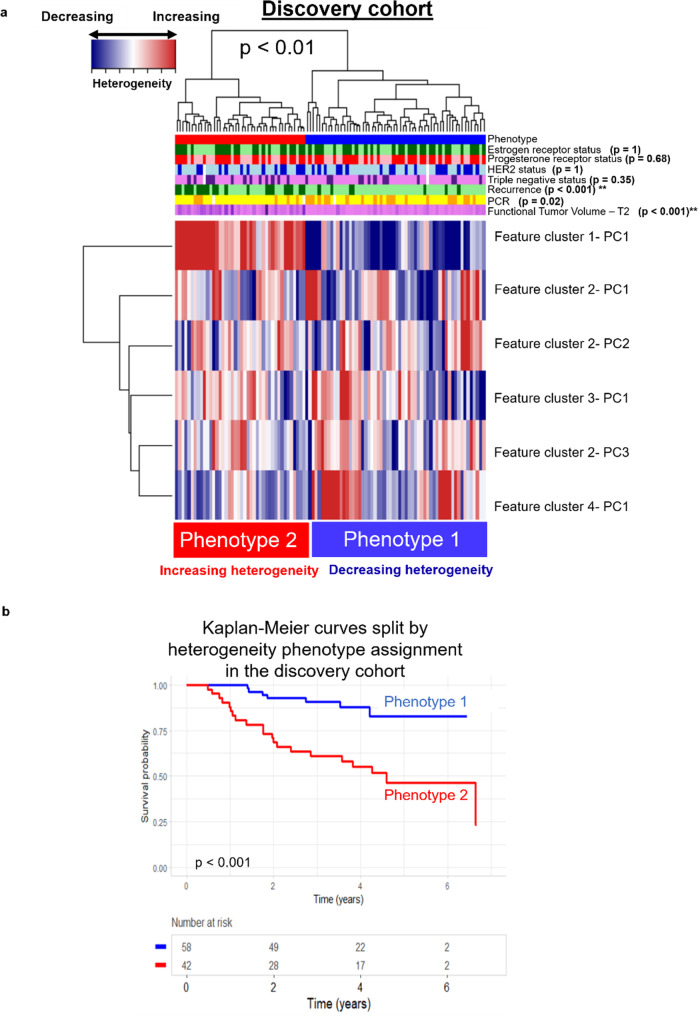
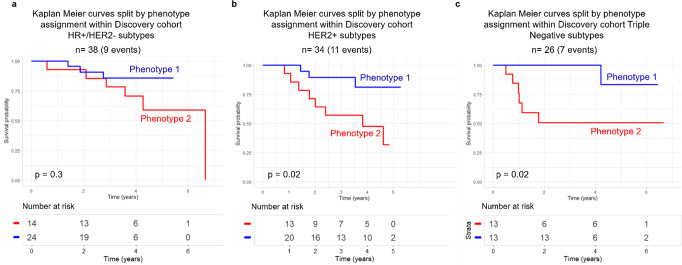
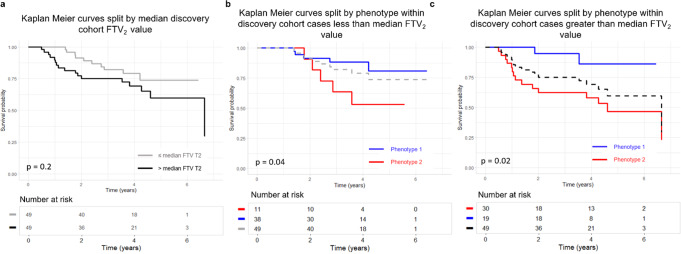
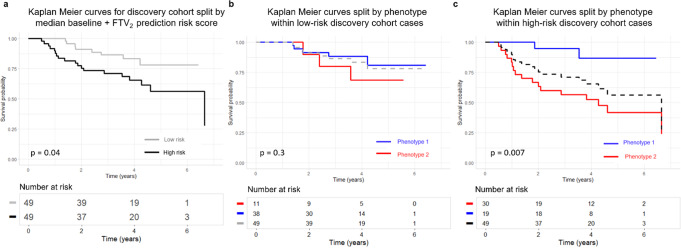
We identify two imaging phenotypes of change in intratumor heterogeneity (p < 0.01) demonstrating significant Kaplan-Meier curve separation (p < 0.001). Adding phenotypes to established prognostic factors, functional tumor volume (FTV), MammaPrint, PAM50, and p53 scores in a Cox regression model improves the concordance statistic for predicting RFS from 0.73 to 0.79 (p = 0.002).
These results demonstrate an important step in combining personalized molecular signatures and longitudinal imaging data towards improved prognosis.
新辅助化疗期间乳腺肿瘤内异质性的早期变化可能反映肿瘤适应和逃避治疗的能力。我们研究了基因组和MRI数据的精准医学预测指标的组合,以改善无复发生存期(RFS)的预测。
对来自ACRIN 6657/I-SPY 1试验的100名女性进行回顾性分析。我们从公开可用的基因表达数据中估计MammaPrint、PAM50 ROR-S和p53突变评分,并在治疗前和治疗早期时间点从DCE-MR图像生成四个体素级三维放射组学动力学图谱。在每个动力学图谱的原发灶内,放射组学异质性变化的特征被总结为6个主成分。
我们识别出肿瘤内异质性变化的两种影像学表型(p < 0.01),显示出显著的Kaplan-Meier曲线分离(p < 0.001)。在Cox回归模型中,将这些表型添加到已建立的预后因素、功能肿瘤体积(FTV)、MammaPrint、PAM50和p53评分中,可将预测RFS的一致性统计量从0.73提高到0.79(p = 0.002)。
这些结果证明了在结合个性化分子特征和纵向影像学数据以改善预后方面迈出的重要一步。