Department of Liver and Gastrointestinal Diseases, Biodonostia Health Research Institute, Donostia University Hospital, University of the Basque Country (UPV/EHU), San Sebastian, Spain.
Department of Medicine, Faculty of Medicine and Nursing, University of the Basque Country UPV/EHU, Leioa, Spain.
Hepatology. 2023 Sep 1;78(3):709-726. doi: 10.1097/HEP.0000000000000376. Epub 2023 Apr 1.
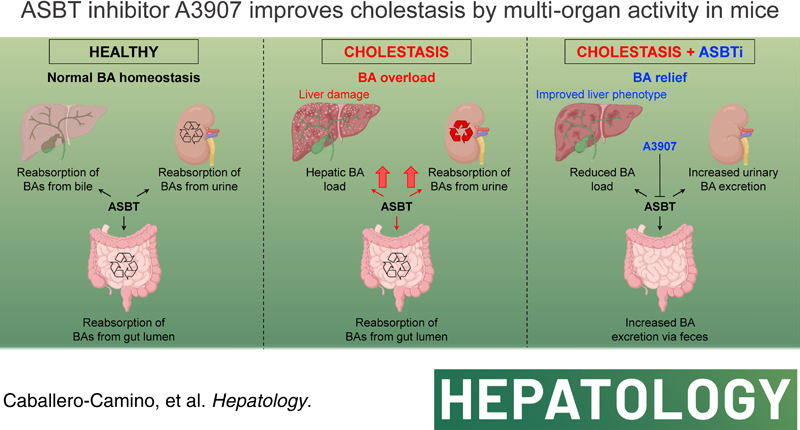
Cholestasis is characterized by intrahepatic accumulation of bile constituents, including bile acids (BAs), which promote liver damage. The apical sodium-dependent BA transporter (ASBT) plays an important role in BA reabsorption and signaling in ileum, bile ducts, and kidneys. Our aim was to investigate the pharmacokinetics and pharmacological activity of A3907, an oral and systemically available ASBT inhibitor in experimental mouse models of cholestasis. In addition, the tolerability, pharmacokinetics, and pharmacodynamics of A3907 were examined in healthy humans.
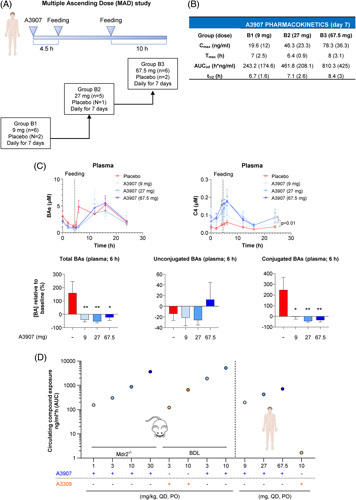
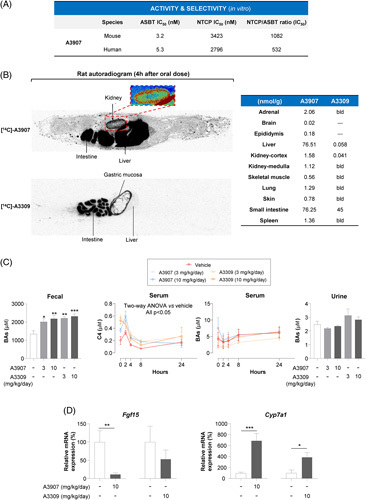
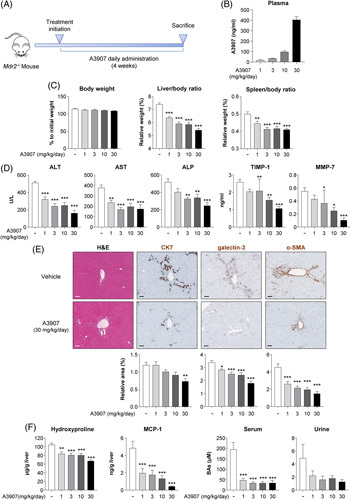
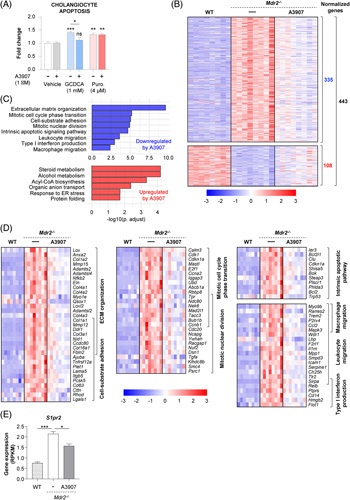
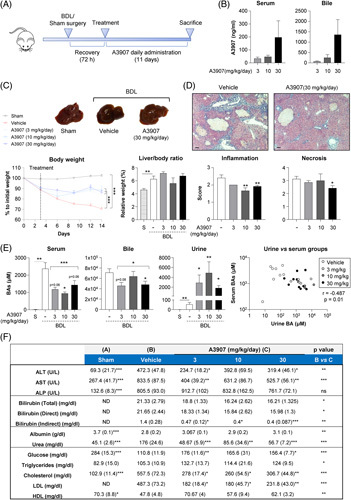
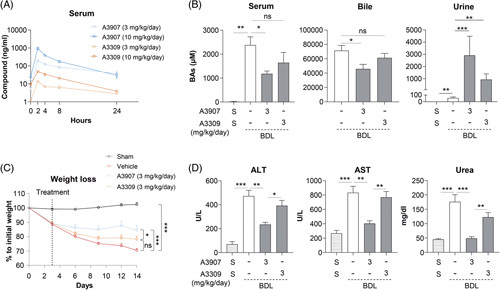
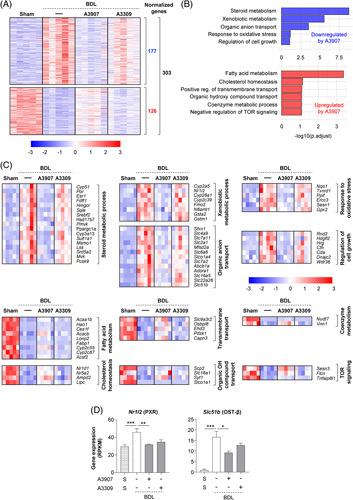
A3907 was a potent and selective ASBT inhibitor in vitro. In rodents, orally administered A3907 distributed to the ASBT-expressing organs, that is, ileum, liver, and kidneys, and dose dependently increased fecal BA excretion. A3907 improved biochemical, histological, and molecular markers of liver and bile duct injury in Mdr2-/- mice and also had direct protective effects on rat cholangiocytes exposed to cytotoxic BA concentrations in vitro . In bile duct ligated mice, A3907 increased urinary BA elimination, reduced serum BA levels, and prevented body weight loss, while improving markers of liver injury. A3907 was well tolerated and demonstrated target engagement in healthy volunteers. Plasma exposure of A3907 in humans was within the range of systemic concentrations that achieved therapeutic efficacy in mouse.
The systemic ASBT inhibitor A3907 improved experimental cholestatic disease by targeting ASBT function at the intestinal, liver, and kidney levels, resulting in marked clearance of circulating BAs and liver protection. A3907 is well tolerated in humans, supporting further clinical development for the treatment of cholestatic liver diseases.
胆汁淤积症的特征是胆汁成分(包括胆汁酸[BAs])在肝内蓄积,这些成分促进肝脏损伤。顶端钠依赖性 BA 转运蛋白(ASBT)在回肠、胆管和肾脏中 BA 重吸收和信号转导中发挥重要作用。我们的目的是研究 A3907 在胆汁淤积症实验小鼠模型中的药代动力学和药理活性。此外,还在健康人群中研究了 A3907 的耐受性、药代动力学和药效学。
A3907 是一种体外强效且选择性的 ASBT 抑制剂。在啮齿动物中,口服给予 A3907 可分布至表达 ASBT 的器官,即回肠、肝脏和肾脏,并剂量依赖性地增加粪便 BA 排泄。A3907 改善了 Mdr2-/- 小鼠的生化、组织学和分子标志物,以及对体外暴露于细胞毒性 BA 浓度的大鼠胆管细胞的直接保护作用。在胆管结扎小鼠中,A3907 增加了尿 BA 排泄,降低了血清 BA 水平,预防了体重减轻,同时改善了肝损伤标志物。A3907 在健康志愿者中具有良好的耐受性,并显示出靶标结合。人体中 A3907 的血浆暴露量处于在小鼠中达到治疗效果的全身浓度范围内。
全身 ASBT 抑制剂 A3907 通过靶向回肠、肝脏和肾脏水平的 ASBT 功能改善实验性胆汁淤积症,导致循环 BAs 的显著清除和肝脏保护。A3907 在人体中具有良好的耐受性,支持进一步开发用于治疗胆汁淤积性肝病。