Department of Medicine, Johns Hopkins University School of Medicine, Baltimore, Maryland, USA.
Department of Medicine, Duke University School of Medicine, Durham, North Carolina, USA.
Clin Infect Dis. 2023 Jul 5;77(1):32-37. doi: 10.1093/cid/ciad178.
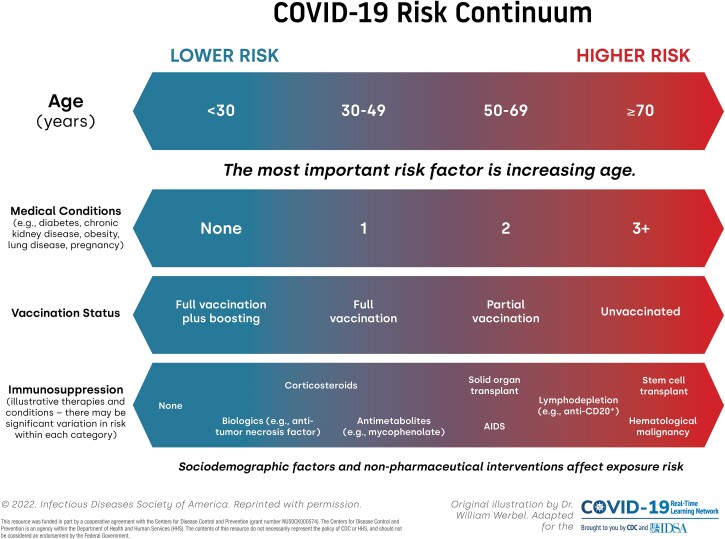
Mutations accumulated by novel Severe Acute Respiratory Syndrome Coronavirus 2 Omicron sublineages contribute to evasion of previously effective monoclonal antibodies for treatment or prevention of Coronavirus Disease 2019 (COVID-19). Other authorized or approved antiviral drugs such as nirmatrelvir/ritonavir, remdesivir, and molnupiravir are, however, predicted to maintain activity against these sublineages and are key tools to reduce severe COVID-19 outcomes in vulnerable populations. A stepwise approach may be taken to target the appropriate antiviral drug to the appropriate patient, beginning with identifying whether a patient is at high risk for hospitalization or other complications of COVID-19. Among higher risk individuals, patient profile (including factors such as age, organ function, and comedications) and antiviral drug access inform suitable antiviral drug selection. When applied in targeted fashion, these therapies serve as a complement to vital ongoing nonpharmaceutical interventions and vaccination strategies that reduce morbidity and maximize protection against COVID-19.
新型严重急性呼吸综合征冠状病毒 2 奥密克戎亚谱系积累的突变有助于逃避以前用于治疗或预防 2019 年冠状病毒病(COVID-19)的有效单克隆抗体。然而,其他授权或批准的抗病毒药物,如奈玛特韦/利托那韦、瑞德西韦和莫那比拉韦,预计将对这些亚谱系保持活性,是减少弱势群体中严重 COVID-19 结局的关键工具。可以采取逐步方法,针对合适的患者使用合适的抗病毒药物,首先确定患者是否有住院或 COVID-19 其他并发症的高风险。在高风险人群中,患者特征(包括年龄、器官功能和合并症等因素)和抗病毒药物的可及性决定了合适的抗病毒药物选择。当以有针对性的方式应用时,这些疗法是对重要的持续非药物干预和疫苗接种策略的补充,这些策略可降低发病率并最大限度地预防 COVID-19。