Department of Clinical Pharmacy and Pharmacology, University Medical Center Groningen, Groningen, The Netherlands.
Department of Hematology, University Medical Centre Groningen, Groningen, The Netherlands.
Clin Pharmacokinet. 2023 Apr;62(4):559-571. doi: 10.1007/s40262-023-01225-7. Epub 2023 Mar 31.
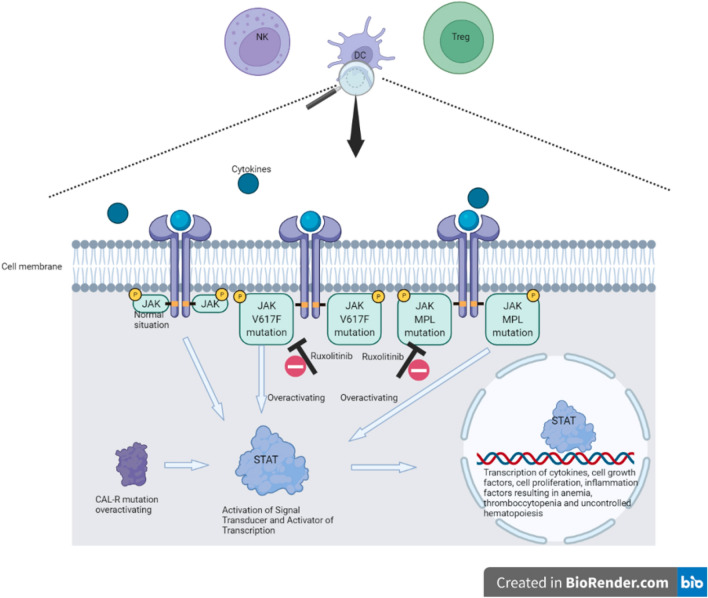
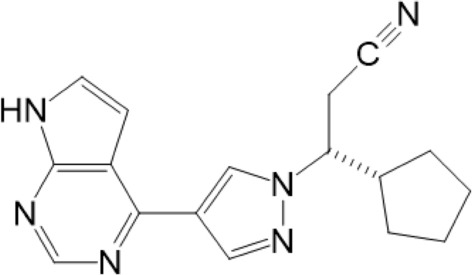
Ruxolitinib is a tyrosine kinase inhibitor targeting the Janus kinase (JAK) and signal transducer and activator of transcription (STAT) pathways. Ruxolitinib is used to treat myelofibrosis, polycythemia vera and steroid-refractory graft-versus-host disease in the setting of allogeneic stem-cell transplantation. This review describes the pharmacokinetics and pharmacodynamics of ruxolitinib.
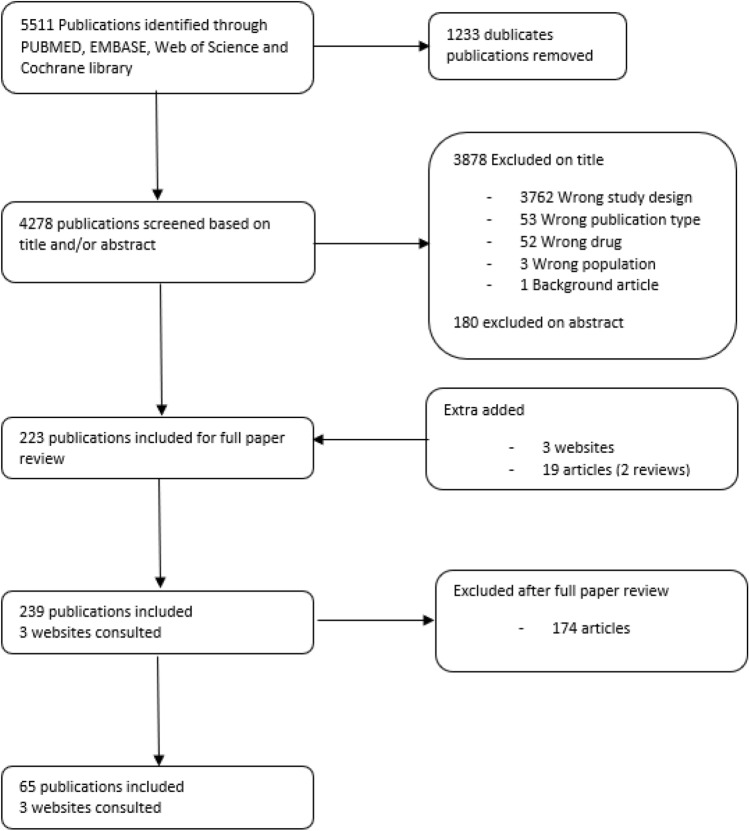
Pubmed, EMBASE, Cochrane Library and web of Science were searched from the time of database inception to march 15, 2021 and was repeated on November 16, 2021. Articles not written in English, animal or in vitro studies, letters to the editor, case reports, where ruxolitinib was not used for hematological diseases or not available as full text were excluded.
Ruxolitinib is well absorbed, has 95% bio-availability, and is bound to albumin for 97%. Ruxolitinib pharmacokinetics can be described with a two-compartment model and linear elimination. Volume of distribution differs between men and women, likely related to bodyweight differences. Metabolism is mainly hepatic via CYP3A4 and can be altered by CYP3A4 inducers and inhibitors. The major metabolites of ruxolitinib are pharmacologically active. The main route of elimination of ruxolitinib metabolites is renal. Liver and renal dysfunction affect some of the pharmacokinetic variables and require dose reductions. Model-informed precision dosing might be a way to further optimize and individualize ruxolitinib treatment, but is not yet advised for routine care due to lack of information on target concentrations.
Further research is needed to explain the interindividual variability of the ruxolitinib pharmacokinetic variables and to optimize individual treatment.
芦可替尼是一种针对 Janus 激酶(JAK)和信号转导子和转录激活子(STAT)途径的酪氨酸激酶抑制剂。芦可替尼用于治疗骨髓纤维化、真性红细胞增多症和异基因干细胞移植背景下类固醇难治性移植物抗宿主病。本文描述了芦可替尼的药代动力学和药效学。
从数据库建立时间到 2021 年 3 月 15 日,检索了 Pubmed、EMBASE、Cochrane 图书馆和 web of Science,并于 2021 年 11 月 16 日重复检索。排除了非英文、动物或体外研究、给编辑的信、病例报告,以及芦可替尼未用于血液疾病或无法提供全文的文章。
芦可替尼吸收良好,生物利用度为 95%,与白蛋白结合率为 97%。芦可替尼的药代动力学可以用二室模型和线性消除来描述。男性和女性之间的分布容积不同,可能与体重差异有关。代谢主要通过 CYP3A4 进行,并且可以被 CYP3A4 诱导剂和抑制剂改变。芦可替尼的主要代谢物具有药理活性。芦可替尼代谢物的主要消除途径是肾脏。肝肾功能不全影响一些药代动力学变量,需要减少剂量。模型指导的精准给药可能是进一步优化和个体化芦可替尼治疗的一种方法,但由于缺乏目标浓度的信息,目前不建议常规使用。
需要进一步研究来解释芦可替尼药代动力学变量的个体间变异性,并优化个体化治疗。