Gonzales Fanny, Schneider Constanze, Alexe Gabriela, Lin Shan, Khalid Delan, Alvarez Montserrat, Basanthakumar Allen, Ellegast Jana, Merickel Lucy, Salhotra Silvi, Taillon Audrey, Wunderlich Mark, Ansari Marc, Perry Jennifer, Degar Barbara, Pikman Yana, Stegmaier Kimberly
Geneva University Medical School.
Dana-Farber Cancer Institute.
Res Sq. 2025 May 13:rs.3.rs-6528748. doi: 10.21203/rs.3.rs-6528748/v1.
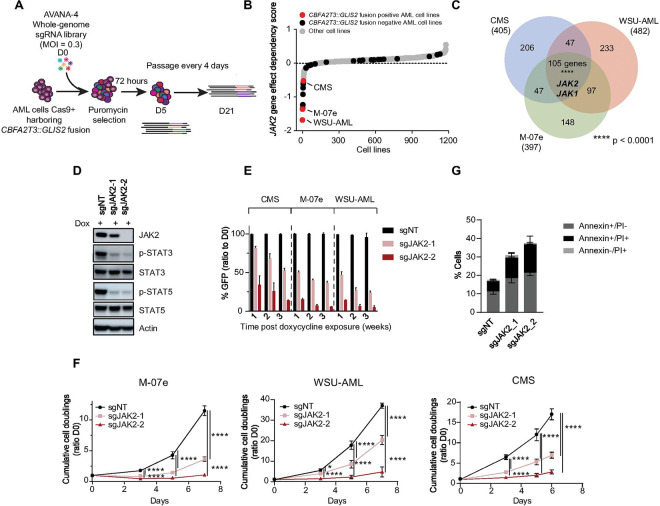
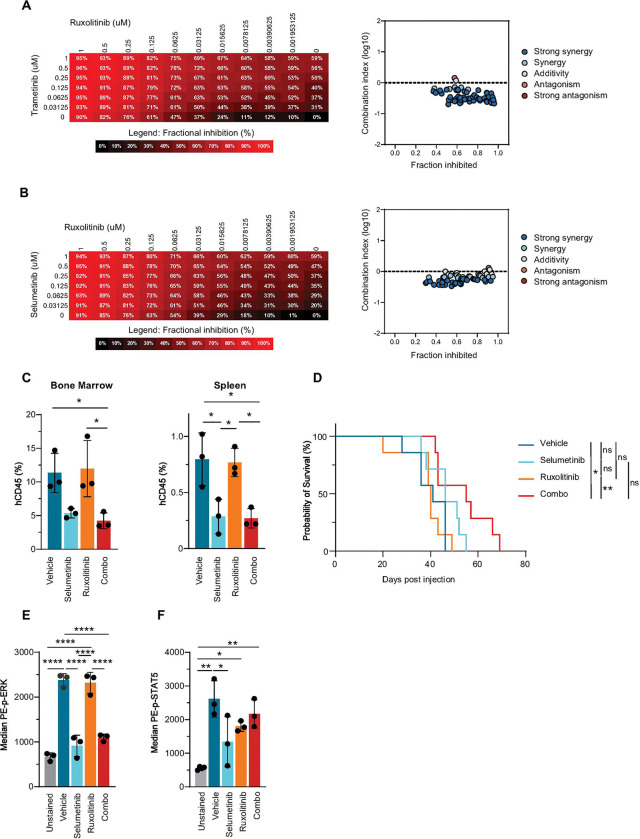
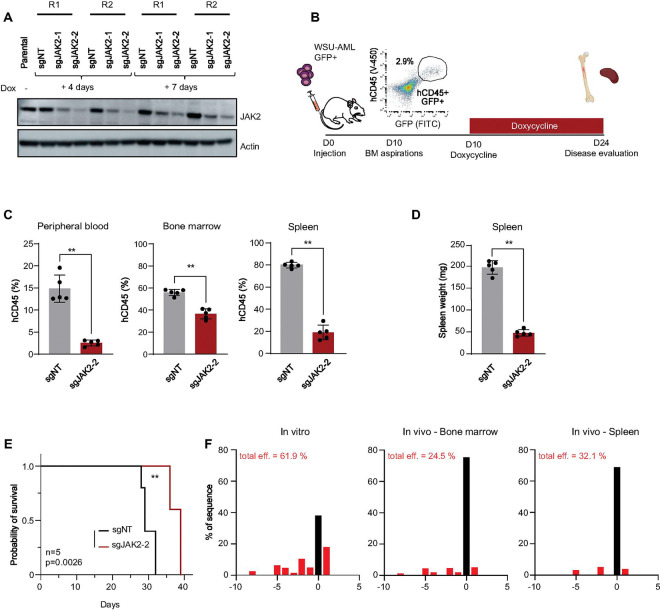
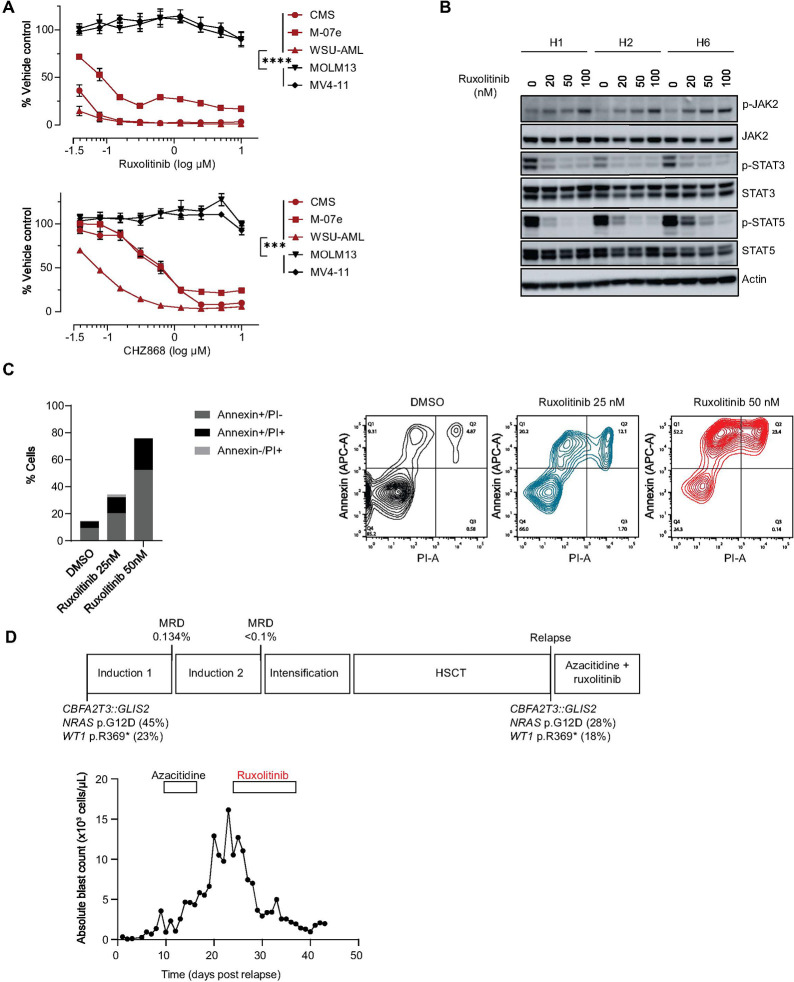
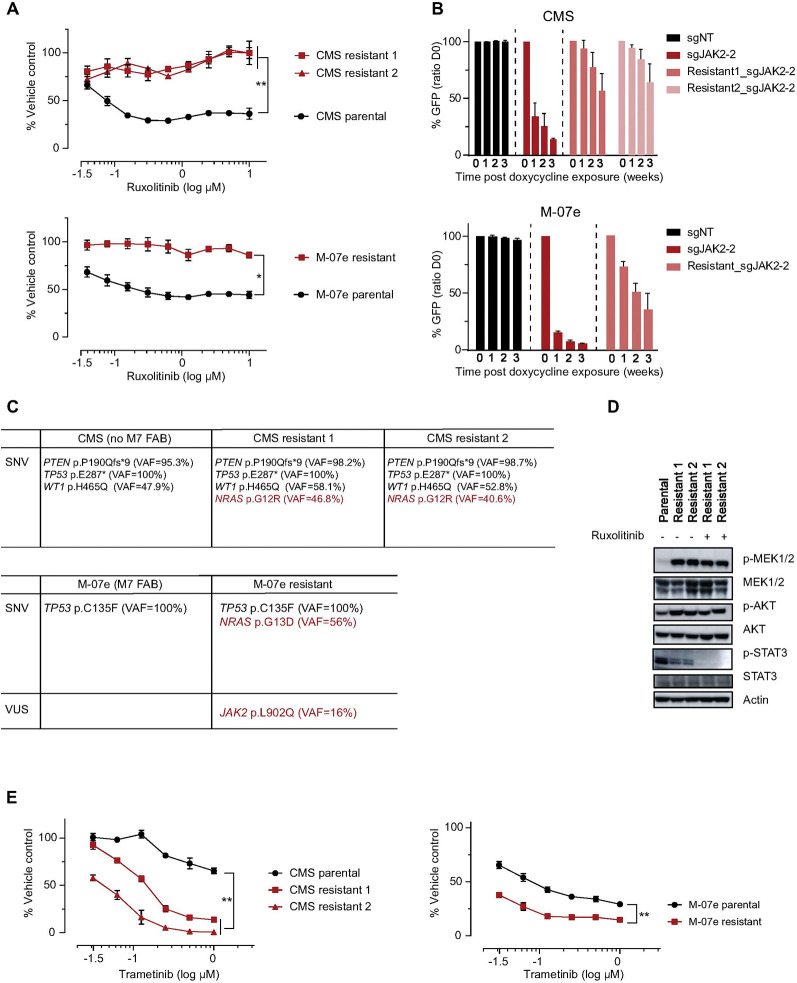
fusion positive pediatric acute myeloid leukemia (AML) remains one of the worst prognostic AML subgroups. To uncover innovative targeted therapeutic approaches in this disease subtype we performed genome-scale CRISPR-Cas9 screening that highlighted a strong, selective dependency on compared to other types of cancer. Using a doxycycline-inducible knockout (KO) system, we validated dependency in cell lines, observing impaired proliferation in vitro and in vivo and induced apoptosis with KO. Both type I (ruxolitinib) and type II (CHZ868) JAK2 inhibitors showed selective in vitro activity in positive AML models. To identify resistance and sensitizer mechanisms to JAK2 inhibitors, we used CRISPR-Cas9 ruxolitinib anchor screening in AML. sgRNAs targeting negative regulators of the MAPK pathway were enriched in the ruxolitinib-treated cells. Similarly, AML sublines grown to resistance under chronic ruxolitinib treatment expressed pathogenic mutations. Both approaches converged on MAPK pathway activation as a resistance mechanism to ruxolitinib treatment. Combining ruxolitinib with MEK inhibitors showed a synergistic effect in cell lines and patient-derived xenograft (PDX) cells expressing the fusion and in vivo activity in a AML PDX, suggesting a potential approach to target this signaling circuitry in this poor outcome AML subtype.
融合基因阳性的儿童急性髓系白血病(AML)仍然是预后最差的AML亚组之一。为了在这种疾病亚型中发现创新的靶向治疗方法,我们进行了全基因组规模的CRISPR-Cas9筛选,结果表明与其他类型的癌症相比,其对[未提及的基因或物质]有强烈的选择性依赖。使用强力霉素诱导的[未提及的基因或物质]敲除(KO)系统,我们在[未提及的细胞系]细胞系中验证了对[未提及的基因或物质]的依赖性,观察到体外和体内增殖受损,并且[未提及的基因或物质]敲除会诱导细胞凋亡。I型(鲁索替尼)和II型(CHZ868)JAK2抑制剂在融合基因阳性的AML模型中均显示出选择性体外活性。为了确定对JAK2抑制剂的耐药和增敏机制,我们在[未提及的AML细胞系]中使用了CRISPR-Cas9鲁索替尼锚定筛选。靶向MAPK途径负调节因子的sgRNA在鲁索替尼处理的细胞中富集。同样,在慢性鲁索替尼治疗下产生耐药性的[未提及的AML亚系]表达了致病性[未提及的基因突变]。两种方法都表明MAPK途径激活是对鲁索替尼治疗的耐药机制。将鲁索替尼与MEK抑制剂联合使用在表达融合基因的细胞系和患者来源的异种移植(PDX)细胞中显示出协同作用,并在[未提及的AML PDX]中具有体内活性,这表明在这种预后不良的AML亚型中靶向该信号通路的一种潜在方法。