Department of Respiratory Medicine, Graduate School of Biomedical Sciences, Nagasaki University, Nagasaki, Japan.
Center for Medical Innovation, Nagasaki University, Nagasaki, Japan.
Front Immunol. 2023 Mar 17;14:1058838. doi: 10.3389/fimmu.2023.1058838. eCollection 2023.
Malignant pleural mesothelioma (MPM) is a rare and highly aggressive thoracic tumor with poor prognosis and limited therapeutic options. Although immune checkpoint inhibitors exhibit a promising effect in some patients with unresectable MPM in clinical trials, the majority of MPM patients show only modest response rates to the currently available treatments. It is thus imperative to develop novel and innovative therapeutic modalities for MPM, including immune effector cell-based therapies.
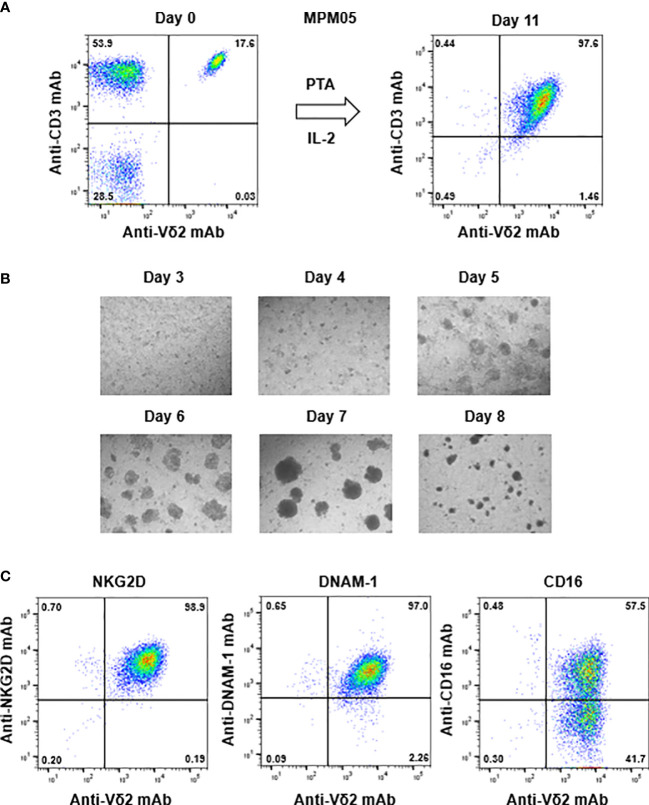
γδ T cells were expanded using tetrakis-pivaloyloxymethyl 2-(thiazole-2-ylamino) ethylidene-1,1-bisphosphonate (PTA) and interleukin-2, and the therapeutic potential of γδ T cells was examined through analyzing cell surface markers and cellular cytotoxicity against MPM in vitro using a europium chelate-based time-resolved fluorescence assay system and a luciferase-based luminescence assay system.
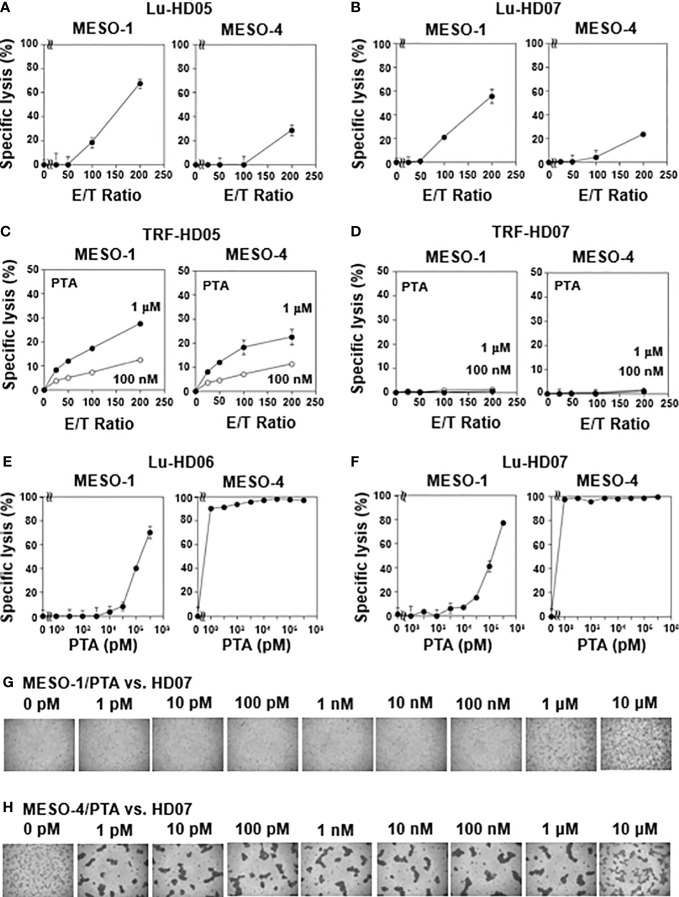
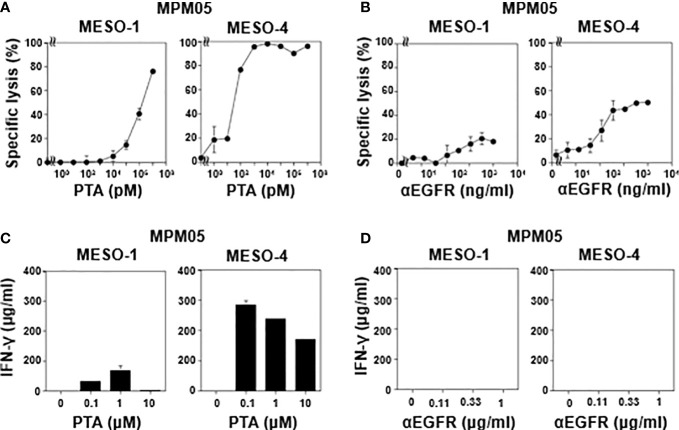
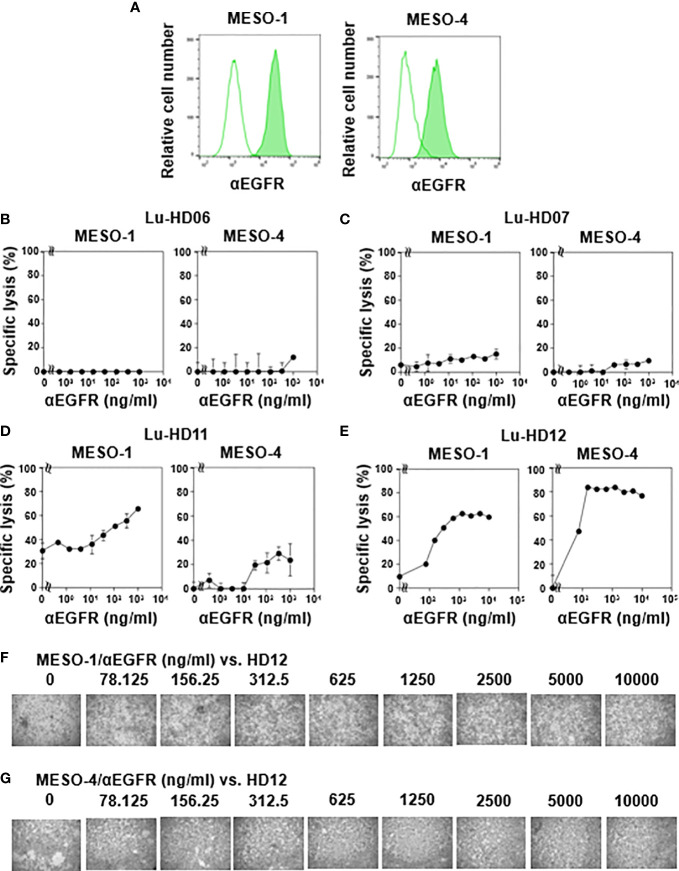
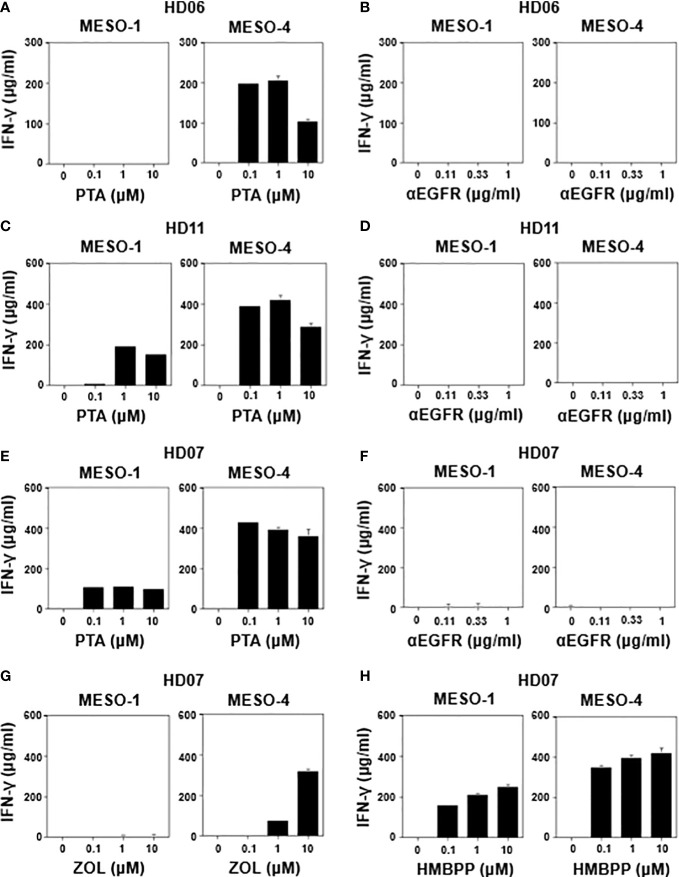
We successfully expanded γδ T cells from peripheral blood mononuclear cells of healthy donors and MPM patients. γδ T cells expressed natural killer receptors such as NKG2D and DNAM-1 and exhibited a moderate level of cytotoxicity to MPM cells in the absence of antigens. The inclusion of PTA, ()-4-hydroxy-3- methylbut-2-enyl diphosphate (HMBPP) or zoledronic acid (ZOL) induced a TCR-dependent cytotoxicity in γδ T cells and secreted interferon-γ (IFN-γ). In addition, γδ T cells expressing CD16 exhibited a significant level of cytotoxicity against MPM cells in the presence of an anti-epidermal growth factor receptor (EGFR) mAb, at lower concentrations than in clinical settings, whereas a detectable level of IFN-γ was not produced. Taken together, γδ T cells showed cytotoxic activity against MPM in three distinct mechanisms through NK receptors, TCRs and CD16. Since major histocompatibility complex (MHC) molecules are not involved in the recognition, both autologous and allogeneic γδ T cells could be used for the development of γδ T cell-based adoptive immunotherapy for MPM.
恶性胸膜间皮瘤(MPM)是一种罕见且高度侵袭性的胸部肿瘤,预后差,治疗选择有限。尽管免疫检查点抑制剂在临床试验中对一些不可切除的 MPM 患者显示出有希望的效果,但大多数 MPM 患者对目前可用的治疗方法仅显示出适度的反应率。因此,迫切需要为 MPM 开发新的创新治疗方式,包括免疫效应细胞为基础的治疗方法。
使用四(特戊酰氧基甲基)2-(噻唑-2-基氨基)乙叉-1,1-双膦酸(PTA)和白细胞介素-2 扩增 γδ T 细胞,并通过分析细胞表面标记物和细胞毒性来研究 γδ T 细胞的治疗潜力,使用基于铕螯合物的时间分辨荧光测定系统和基于荧光素酶的发光测定系统对 MPM 进行体外研究。
我们成功地从健康供体和 MPM 患者的外周血单核细胞中扩增了 γδ T 细胞。γδ T 细胞表达自然杀伤受体,如 NKG2D 和 DNAM-1,并在没有抗原的情况下对 MPM 细胞表现出中等水平的细胞毒性。在包含 PTA、()-4-羟基-3-甲基丁烯二磷酸(HMBPP)或唑来膦酸(ZOL)的情况下,γδ T 细胞中的 TCR 依赖性细胞毒性诱导和干扰素-γ(IFN-γ)的分泌。此外,表达 CD16 的 γδ T 细胞在存在抗表皮生长因子受体(EGFR)单克隆抗体的情况下对 MPM 细胞表现出显著水平的细胞毒性,其浓度低于临床环境,而不会产生可检测水平的 IFN-γ。总之,γδ T 细胞通过 NK 受体、TCR 和 CD16 表现出针对 MPM 的三种不同机制的细胞毒性。由于主要组织相容性复合体(MHC)分子不参与识别,因此可以使用自体和同种异体 γδ T 细胞为 MPM 的 γδ T 细胞为基础的过继免疫疗法的开发。