Jeanblanc Jérôme, Sauton Pierre, Houdant Charles, Fernandez Rodriguez Sandra, de Sousa Sofia Vilelas, Jeanblanc Virginie, Bodeau Sandra, Labat Laurence, Soichot Marion, Vorspan Florence, Naassila Mickael
INSERM UMR-S 1247, Research Group on Alcohol and Pharmacodependences (GRAP), Université de Picardie Jules Verne, Amiens, France.
GDR3557 Psychiatrie-Addictions, Institut de Psychiatrie, University Hospital Federation (FHU A2M2P), Caen, France.
Front Pharmacol. 2023 Mar 16;14:1146848. doi: 10.3389/fphar.2023.1146848. eCollection 2023.
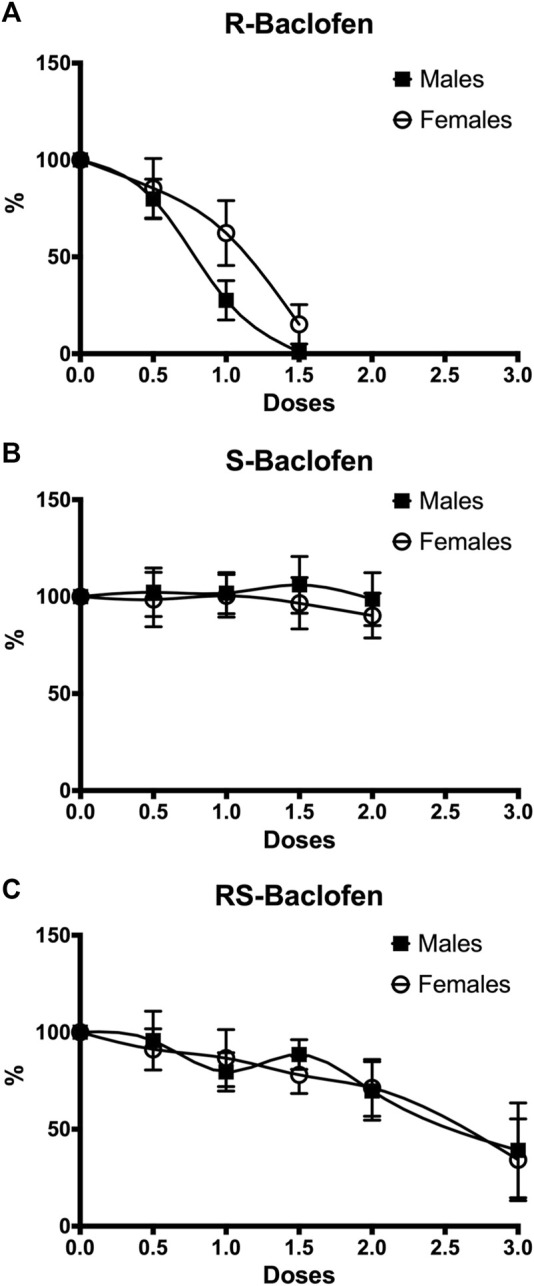
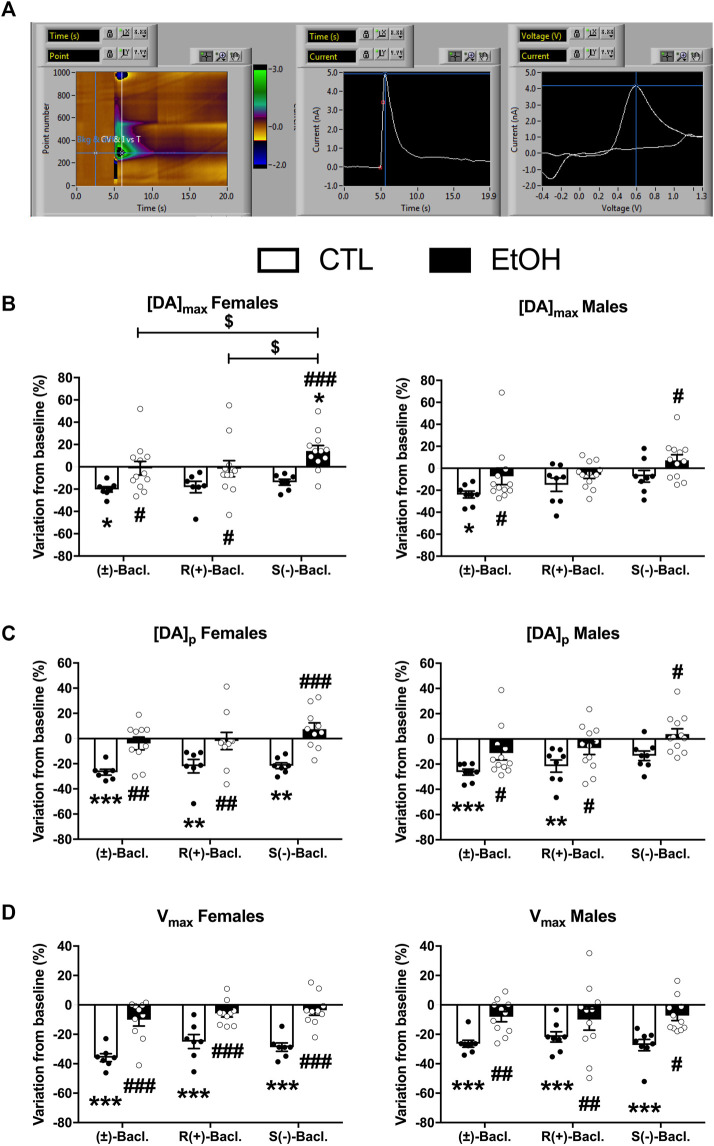
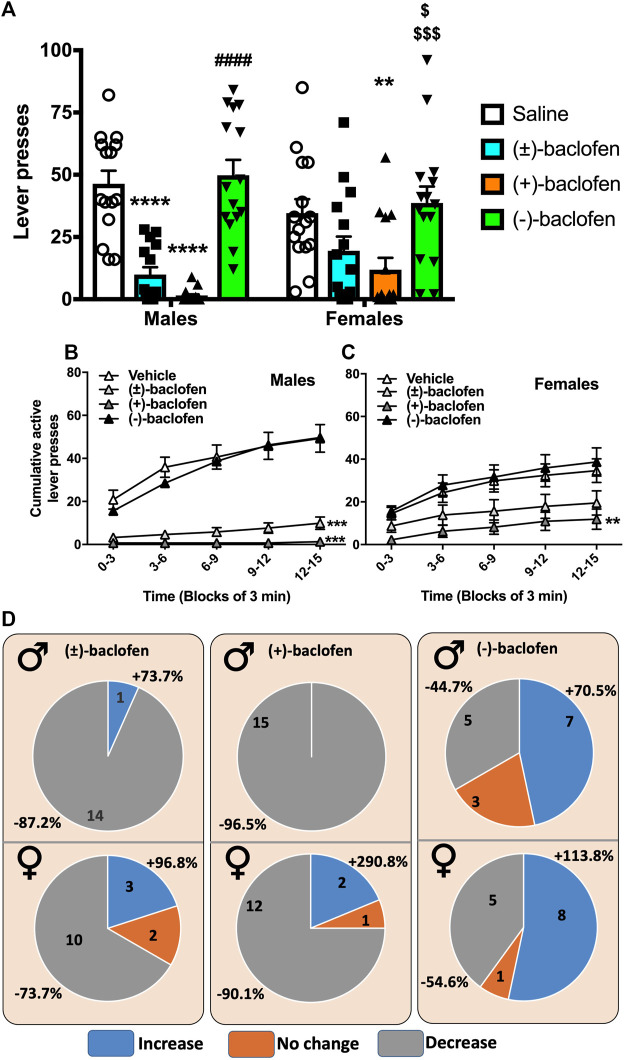
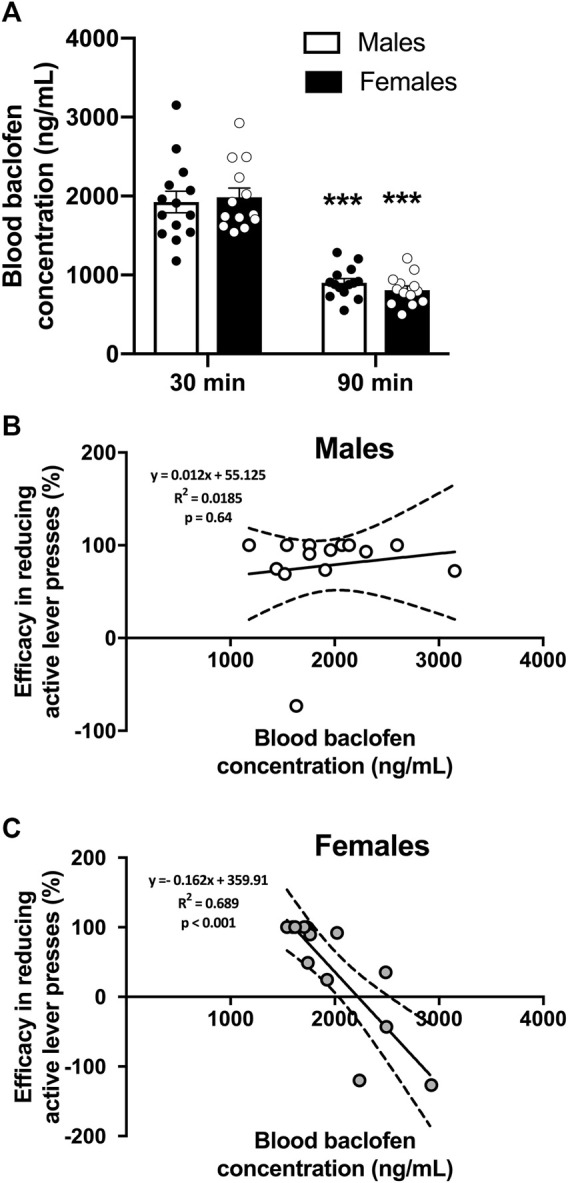
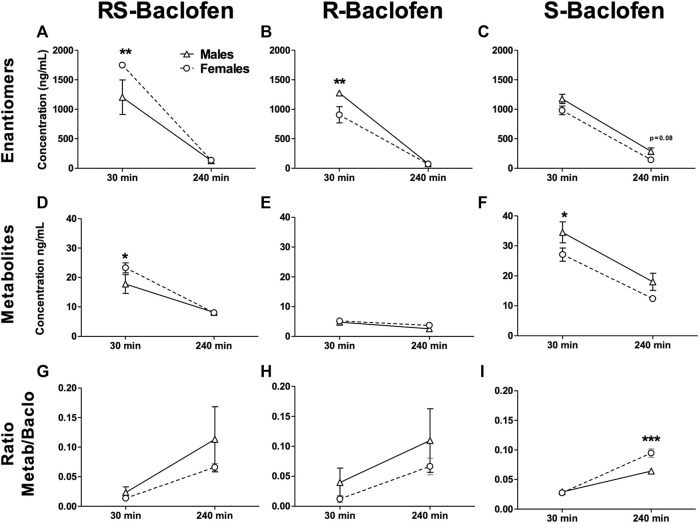
Clinical studies on the effectiveness of Baclofen in alcohol use disorder (AUD) yielded mixed results possibly because of differential effects of the enantiomers and sex-related differences. Here we examined the effect of the different Baclofen enantiomers on alcohol intake and on evoked dopamine release in the core of the nucleus accumbens (NAcc) in male and female Long Evans rats. Rats were trained to chronically self-administer 20% alcohol solution in daily binge drinking sessions and were treated with the different forms of Baclofen [RS(±), R(+) and S(-)]. The effects on the evoked dopamine release within the core of the nucleus accumbens were measured in brain slices from the same animals and the alcohol naïve animals using the fast scan cyclic voltammetry technique. RS(±)-Baclofen reduced alcohol intake regardless of sex but more females were non-responders to the treatment. R(+)-Baclofen also reduced alcohol intake regardless of sex but females were less sensitive than males. S(-)-Baclofen did not have any effect on average but in some individuals, especially in the females, it did increase alcohol intake by at least 100%. There were no sex differences in Baclofen pharmacokinetic but a strong negative correlation was found in females with a paradoxical effect of increased alcohol intake with higher blood Baclofen concentration. Chronic alcohol intake reduced the sensitivity to the effect of Baclofen on evoked dopamine release and S(-)-Baclofen increased dopamine release specifically in females. Our results demonstrate a sex-dependent effect of the different forms of Baclofen with no or negative effects (meaning an increase in alcohol self-administration) in subgroup of females that could be linked to a differential effect on dopamine release and should warrant future clinical studies on alcohol use disorder pharmacotherapy that will deeply analyze sex difference.
巴氯芬治疗酒精使用障碍(AUD)有效性的临床研究结果不一,这可能是由于对映体的不同作用以及性别相关差异所致。在此,我们研究了不同巴氯芬对映体对雄性和雌性Long Evans大鼠酒精摄入量以及伏隔核(NAcc)核心区域诱发多巴胺释放的影响。大鼠经训练,在每日暴饮环节中长期自行摄入20%的酒精溶液,并接受不同形式的巴氯芬[RS(±)、R(+)和S(-)]治疗。使用快速扫描循环伏安法技术,在来自相同动物和未接触过酒精动物的脑片中,测量对伏隔核核心区域诱发多巴胺释放的影响。RS(±)-巴氯芬无论性别均可减少酒精摄入量,但更多女性对该治疗无反应。R(+)-巴氯芬无论性别也可减少酒精摄入量,但女性比男性敏感性更低。S(-)-巴氯芬总体上没有任何效果,但在一些个体中,尤其是女性,它确实使酒精摄入量增加了至少100%。巴氯芬的药代动力学不存在性别差异,但在女性中发现了一种强烈的负相关,即血液中巴氯芬浓度升高时,酒精摄入量出现反常增加的现象。长期摄入酒精降低了对巴氯芬诱发多巴胺释放作用的敏感性,且S(-)-巴氯芬特别在女性中增加了多巴胺释放。我们的结果表明,不同形式的巴氯芬存在性别依赖性效应,在部分女性亚组中无作用或有负面效应(即酒精自我给药增加),这可能与对多巴胺释放的不同作用有关,并且应该促使未来对酒精使用障碍药物治疗进行临床研究,深入分析性别差异。