Delgado-Gallén Selma, Soler M Dolors, Albu Sergiu, Pachón-García Catherine, Alviárez-Schulze Vanessa, Solana-Sánchez Javier, Bartrés-Faz David, Tormos Josep M, Pascual-Leone Alvaro, Cattaneo Gabriele
Institut Guttmann, Institut Universitari de Neurorehabilitació adscrit a la Universitat Autònoma de Barcelona (UAB), Badalona, Spain.
Departament de Medicina, Facultat de Medicina, Universitat Autònoma de Barcelona, Bellaterra, Spain.
Front Psychol. 2021 Oct 25;12:752623. doi: 10.3389/fpsyg.2021.752623. eCollection 2021.
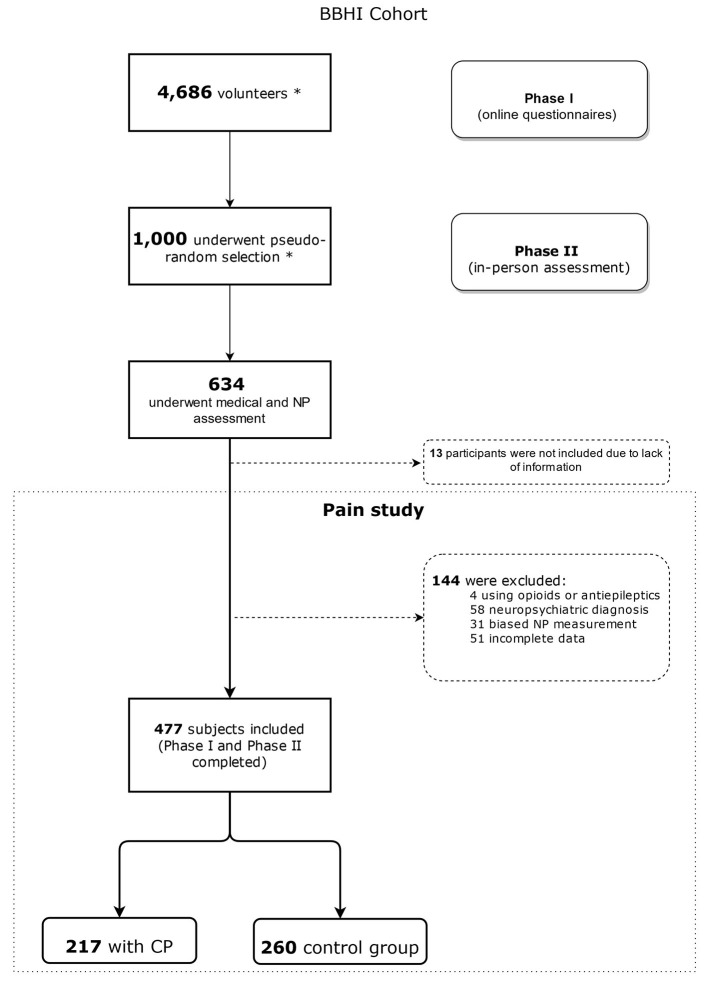
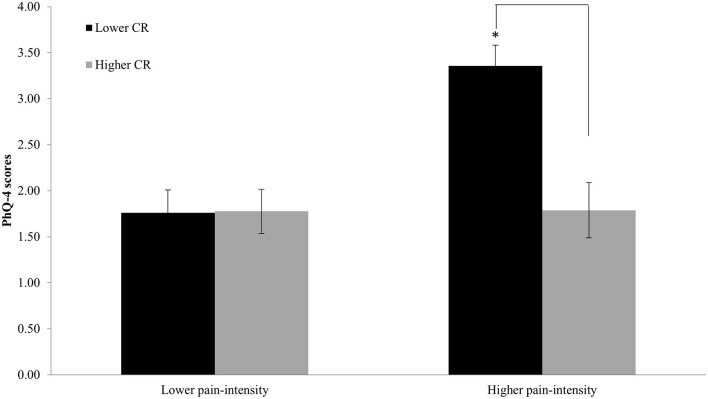
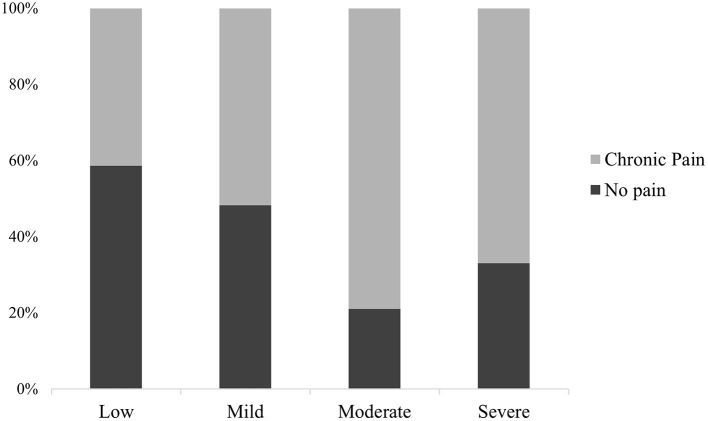
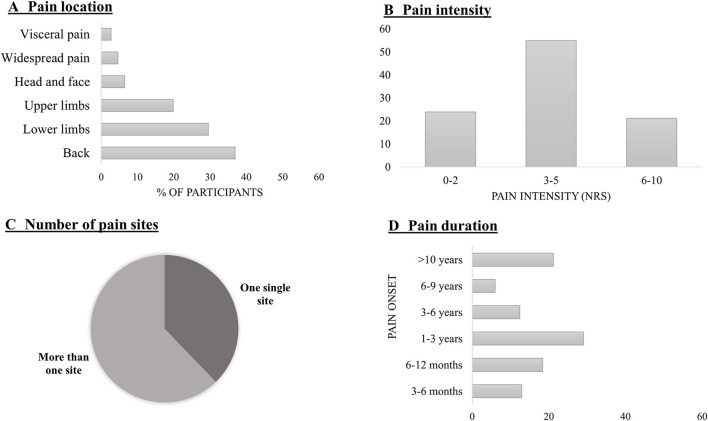
Chronic pain is associated with worse mental health and cognitive impairment, which can be a cause or a consequence of brain structure and function alterations, e.g., maladaptive plasticity, antinociceptive system dysregulation. Cognitive reserve reflects the effectiveness of the internal connections of the brain and it has been shown to be a protective factor in brain damage, slowing cognitive aging or reducing the risk of mental health disorders. The current study explored the impact of chronic pain on psychosocial factors, mental health, and cognition. Furthermore, we aimed to examine the role of cognitive reserve in the relationship between mental health and chronic pain clinical characteristics in middle-aged adults. The study group consisted of 477 volunteers from the Barcelona Brain Health Initiative who completed online surveys on pain, mental health, cognitive reserve, and psychosocial factors (sleep and quality of life). We described the differences in sociodemographic data, psychosocial factors, mental health, and self-perceived cognitive impairment, and neuropsychological assessment, between participants reporting pain compared with those without pain, as well as the main characteristics of the chronic pain group. Finally, to study the role of cognitive reserve in the modulation of the relationship between chronic pain and mental health, we compared variables between subgroups of participants with high/low pain intensity and cognitive reserve. The results showed that chronic pain was reported by 45.5% of middle-aged adults. Our results revealed that participants with chronic pain were older and had worse health status than people without pain. The presence of chronic pain affected working memory, mental health, and daily life activities. Moreover, cognitive reserve moderated the influence of pain intensity on mental health, resulting in less mental health affection in people suffering from high pain intensity with high cognitive reserve. In conclusion, the construct of the cognitive reserve could explain differential susceptibility between chronic pain and its mental health association and be a powerful tool in chronic pain assessment and treatment, principally due to its modifiable nature.
慢性疼痛与较差的心理健康和认知障碍有关,而这可能是脑结构和功能改变的原因或结果,例如适应不良的可塑性、抗伤害感受系统失调。认知储备反映了大脑内部连接的有效性,并且已被证明是脑损伤中的一个保护因素,可减缓认知衰老或降低心理健康障碍的风险。本研究探讨了慢性疼痛对心理社会因素、心理健康和认知的影响。此外,我们旨在研究认知储备在中年成年人心理健康与慢性疼痛临床特征之间关系中的作用。研究组由来自巴塞罗那脑健康倡议组织的477名志愿者组成,他们完成了关于疼痛、心理健康、认知储备和心理社会因素(睡眠和生活质量)的在线调查。我们描述了报告有疼痛的参与者与无疼痛参与者在社会人口统计学数据、心理社会因素、心理健康、自我感知的认知障碍以及神经心理学评估方面的差异,以及慢性疼痛组的主要特征。最后,为了研究认知储备在调节慢性疼痛与心理健康关系中的作用,我们比较了高/低疼痛强度和认知储备的参与者亚组之间的变量。结果显示,45.5%的中年成年人报告有慢性疼痛。我们的结果表明,患有慢性疼痛的参与者比无疼痛的人年龄更大且健康状况更差。慢性疼痛的存在影响工作记忆、心理健康和日常生活活动。此外,认知储备调节了疼痛强度对心理健康的影响,导致认知储备高且疼痛强度高的人群心理健康受影响较小。总之,认知储备这一概念可以解释慢性疼痛与其心理健康关联之间的易感性差异,并且主要由于其可改变的性质,它可能成为慢性疼痛评估和治疗中的一个有力工具。