Rakús Tomáš, Hubčíková Katarína, Bruncvik Lucia, Petrášová Zuzana, Brunovsky Martin
Department of Neuropsychiatry, Philippe Pinel Psychiatric Hospital, Slovak Medical University in Bratislava, Pezinok, Slovakia.
Third Faculty of Medicine, Charles University in Prague, Prague, Czechia.
Front Psychiatry. 2023 Mar 15;14:1002215. doi: 10.3389/fpsyt.2023.1002215. eCollection 2023.
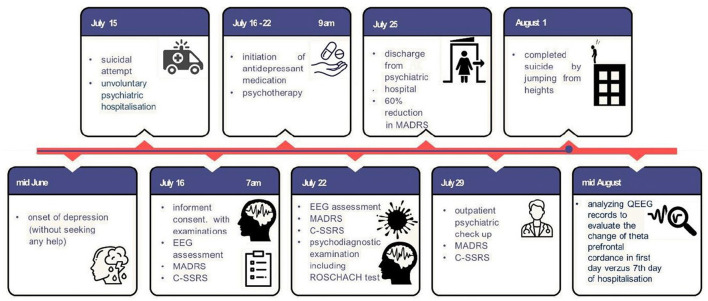
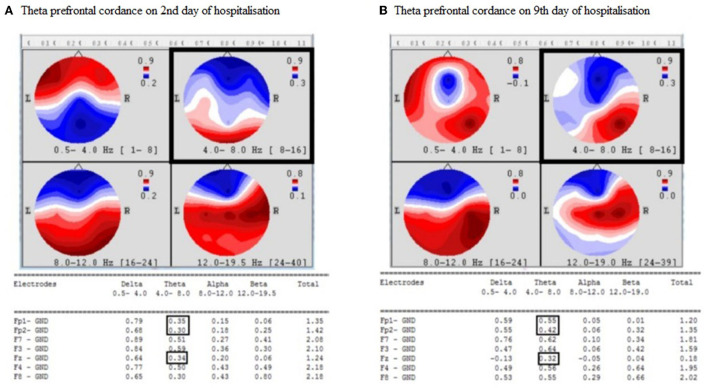
We present the case of a 49-year-old man who was diagnosed with depressive disorder, with the first episode having a strong reactive factor. He was involuntarily admitted to a psychiatric hospital after a failed attempt at taking his own life, where he responded to psychotherapy and antidepressant therapy, as evidenced by a >60% reduction in his MADRS total score. He was discharged after 10 days of treatment, denied having suicidal ideations, and was motivated to follow the recommended outpatient care. The risk for suicide during hospitalization was also assessed using suicide risk assessment tools and psychological assessments, including projective tests. The patient underwent a follow-up examination with an outpatient psychiatrist on the 7th day after discharge, during which the suicide risk assessment tool was administered. The results indicated no acute suicide risk or worsening of depressive symptoms. On the 10th day after discharge, the patient took his own life by jumping out of the window of his flat. We believe that the patient had dissimulated his symptoms and possessed suicidal ideations, which were not detected despite repeated examinations specifically designed to assess suicidality and depression symptoms. We retrospectively analyzed his quantitative electroencephalography (QEEG) records to evaluate the change in prefrontal theta cordance as a potentially promising biomarker of suicidality, given the inconclusive results of studies published to date. An increase in prefrontal theta cordance value was found after the first week of antidepressant therapy and psychotherapy in contrast to the expected decrease due to the fading of depressive symptoms. As demonstrated by the provided case study, we hypothesized that prefrontal theta cordance may be an EEG indicator of a higher risk of non-responsive depression and suicidality despite therapeutic improvement.
我们报告一例49岁男性,被诊断为抑郁症,首次发作时有强烈的反应性因素。在一次自杀未遂后,他被非自愿送入精神病院,在那里他对心理治疗和抗抑郁治疗有反应,蒙哥马利-艾森伯格抑郁评定量表(MADRS)总分降低超过60%即为证据。治疗10天后他出院了,否认有自杀意念,并积极配合推荐的门诊治疗。住院期间还使用自杀风险评估工具和心理评估(包括投射测试)对自杀风险进行了评估。患者在出院后第7天接受了门诊精神科医生的随访检查,期间进行了自杀风险评估工具测试。结果显示没有急性自杀风险或抑郁症状恶化。出院后第10天,患者从公寓窗户跳下自杀。我们认为患者掩饰了自己的症状并怀有自杀意念,尽管进行了专门旨在评估自杀倾向和抑郁症状的反复检查,但这些意念仍未被发现。鉴于迄今为止发表的研究结果尚无定论,我们回顾性分析了他的定量脑电图(QEEG)记录,以评估前额叶θ波协调性的变化,将其作为自杀倾向的一个潜在有前景的生物标志物。与因抑郁症状消退而预期的下降相反,在抗抑郁治疗和心理治疗第一周后发现前额叶θ波协调性值增加。如所提供的案例研究所示,我们假设前额叶θ波协调性可能是脑电图指标,表明尽管治疗有改善,但仍存在无反应性抑郁和自杀倾向的较高风险。