Children's Cancer Institute, Lowy Cancer Research Centre, UNSW, Kensington, NSW, Australia.
School of Clinical Medicine, UNSW Medicine & Health, UNSW Sydney, Kensington, NSW, Australia.
Genome Med. 2023 Apr 3;15(1):20. doi: 10.1186/s13073-023-01170-x.
Molecular profiling of the tumour immune microenvironment (TIME) has enabled the rational choice of immunotherapies in some adult cancers. In contrast, the TIME of paediatric cancers is relatively unexplored. We speculated that a more refined appreciation of the TIME in childhood cancers, rather than a reliance on commonly used biomarkers such as tumour mutation burden (TMB), neoantigen load and PD-L1 expression, is an essential prerequisite for improved immunotherapies in childhood solid cancers.
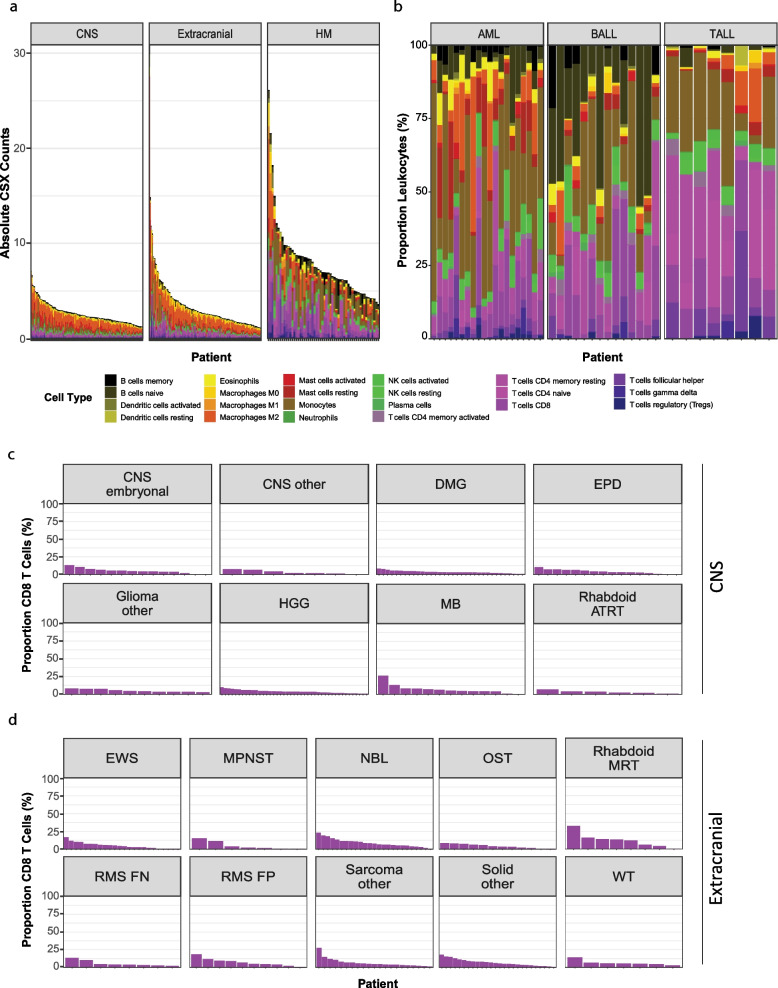
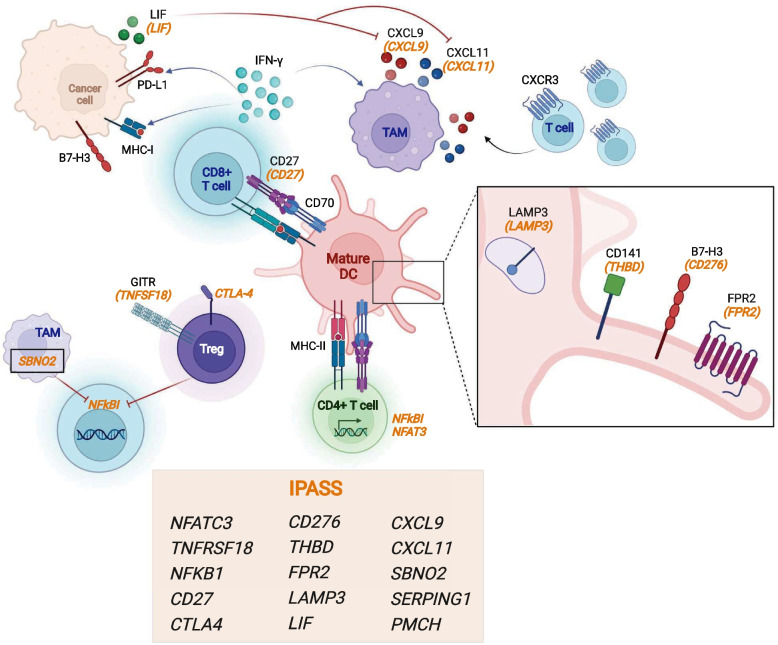
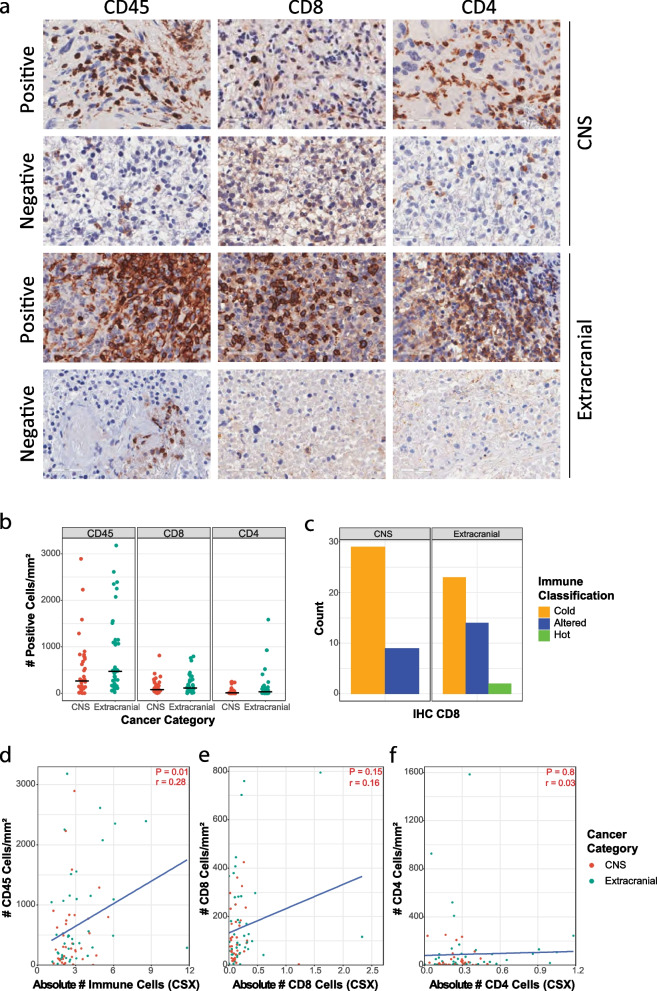
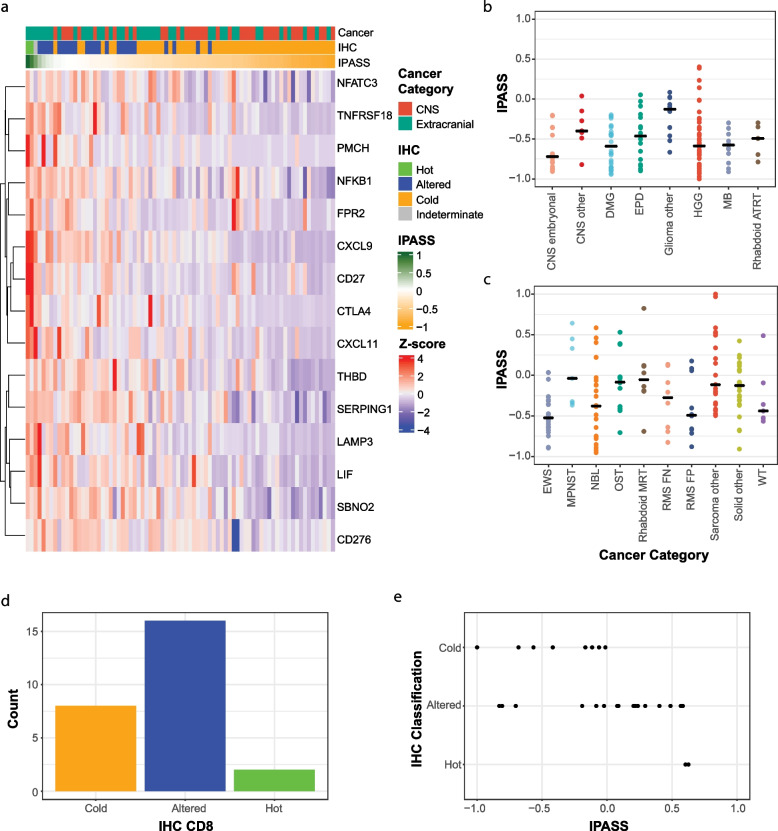
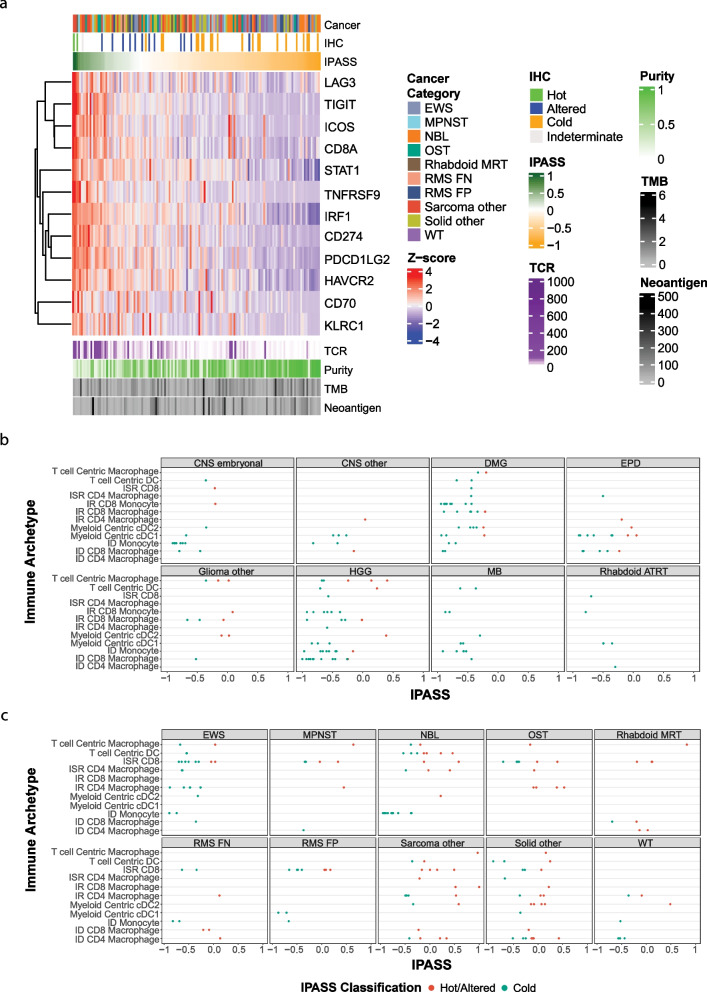
We combined immunohistochemistry (IHC) with RNA sequencing and whole-genome sequencing across a diverse spectrum of high-risk paediatric cancers to develop an alternative, expression-based signature associated with CD8 T-cell infiltration of the TIME. Furthermore, we explored transcriptional features of immune archetypes and T-cell receptor sequencing diversity, assessed the relationship between CD8 and CD4 abundance by IHC and deconvolution predictions and assessed the common adult biomarkers such as neoantigen load and TMB.
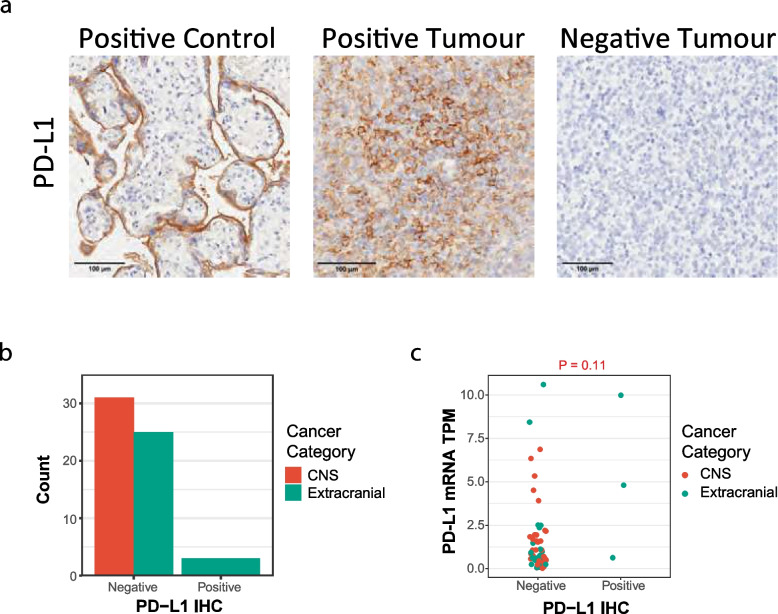
A novel 15-gene immune signature, Immune Paediatric Signature Score (IPASS), was identified. Using this signature, we estimate up to 31% of high-risk cancers harbour infiltrating T-cells. In addition, we showed that PD-L1 protein expression is poorly correlated with PD-L1 RNA expression and TMB and neoantigen load are not predictive of T-cell infiltration in paediatrics. Furthermore, deconvolution algorithms are only weakly correlated with IHC measurements of T-cells.
Our data provides new insights into the variable immune-suppressive mechanisms dampening responses in paediatric solid cancers. Effective immune-based interventions in high-risk paediatric cancer will require individualised analysis of the TIME.
肿瘤免疫微环境(TIME)的分子谱分析使一些成人癌症能够合理选择免疫疗法。相比之下,儿科癌症的 TIME 相对没有得到充分探索。我们推测,更精细地了解儿童癌症的 TIME,而不是依赖于常用的生物标志物,如肿瘤突变负担(TMB)、新抗原负荷和 PD-L1 表达,是改善儿童实体瘤免疫治疗的必要前提。
我们结合免疫组织化学(IHC)与 RNA 测序和全基因组测序,对一系列不同的高危儿科癌症进行了研究,开发了一种与 TIME 中 CD8 T 细胞浸润相关的替代、基于表达的特征。此外,我们还探索了免疫原型的转录特征和 T 细胞受体测序多样性,通过 IHC 和去卷积预测评估了 CD8 和 CD4 丰度之间的关系,并评估了常见的成人生物标志物,如新抗原负荷和 TMB。
确定了一个新的 15 基因免疫特征,即免疫儿科特征评分(IPASS)。使用这个特征,我们估计高达 31%的高危癌症存在浸润性 T 细胞。此外,我们还表明,PD-L1 蛋白表达与 PD-L1 RNA 表达相关性较差,TMB 和新抗原负荷不能预测儿科肿瘤中 T 细胞浸润。此外,去卷积算法与 T 细胞的 IHC 测量相关性较弱。
我们的数据为儿科实体瘤中抑制反应的可变免疫抑制机制提供了新的见解。高危儿科癌症的有效免疫干预措施将需要对 TIME 进行个体化分析。