College of Natural and Computational Science, Bule Hora University, Bule Hora, Ethiopia.
College of Natural and Computational Science, Hawassa University, Hawassa, Ethiopia.
BMC Public Health. 2023 Apr 4;23(1):641. doi: 10.1186/s12889-023-15488-z.
The burden of malnutrition in children under five remains an important child health issue where significant regional variations are observed in Ethiopia. The main aim of the current study was to explore the spatial distribution of stunting, wasting, and underweight in children under five in Ethiopia.
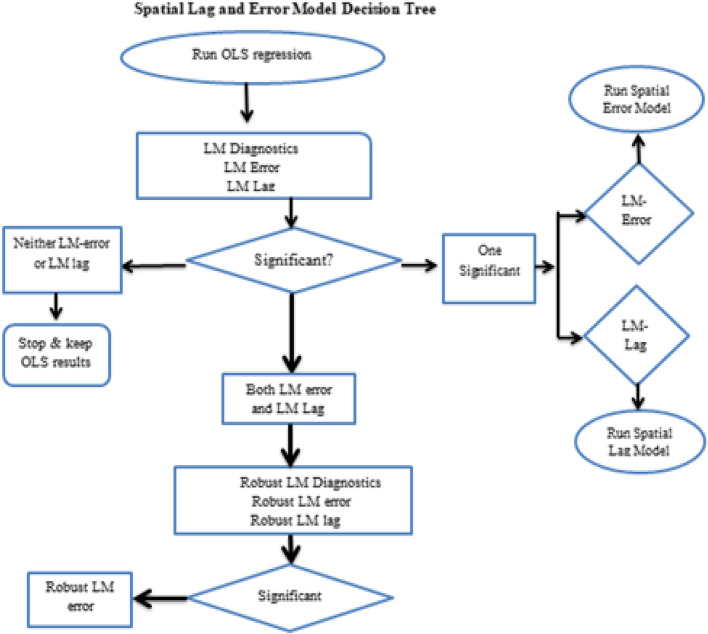
The secondary data from EDHS, 2016, was employed, and a total of 7960 under-five children were included in the analysis. The general spatial analysis was performed to explore the spatial distribution of malnutrition among under-five within and between the regions of Ethiopia. The Spatial Lag and Spatial Error models were used to examine the spatial dependence between stunting, wasting, and being underweight. The Geographically weighted regression analysis was performed to estimate the types and strength of relationships between malnutrition and associated determinant factors across the regions and within the clusters or Zones of each region.
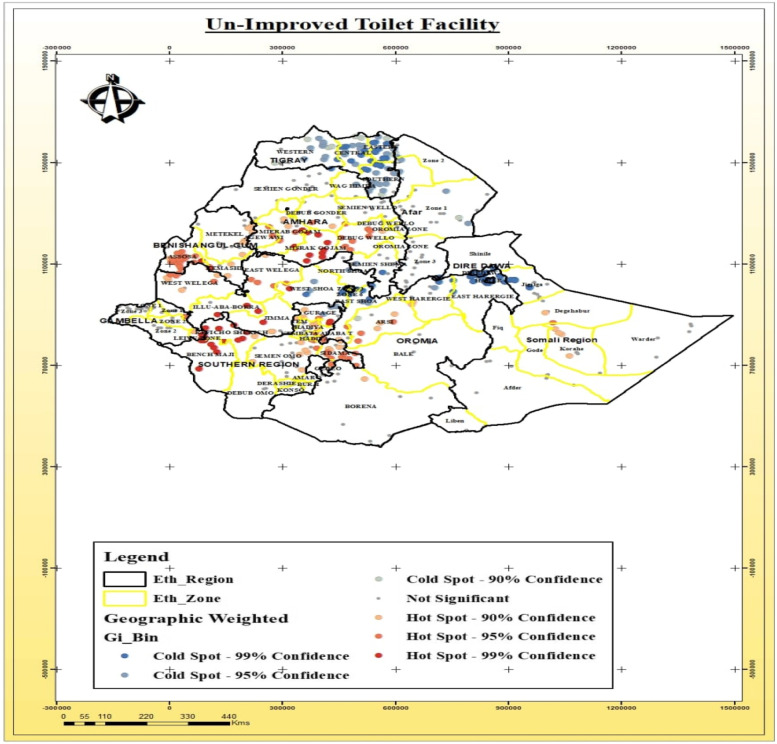
Among the under-five children included in the study, 36.6% were stunted, 12.2% were wasted and 25.2% were underweight. The Global Moran Index's value indicates (Stunting, I = 0.3135, p-value < 0.00001, Wasting, I = 0.1948, p-value < 0.0001 and Underweight, I = 0.5291, p-value < 0.0001) that there was a significant spatial variation of malnutrition across the regions and Zones of Ethiopia. The significant source of spatial variation of malnutrition in children under five was associated with the mother's education level, drinking water facility, toilet facilities, number of children under-five in the household, household's wealth index, breastfeeding duration of the child, child size at birth, Body Mass Index of Mothers (BMI), region, and place of residence.
The spatial association and spatial patterns of stunting, wasting, and being underweight were clustered within and between the regions of Ethiopia. The hotspot areas of stunting, wasting, and being underweight were detected in the regions where there were poor health facilities and limited socioeconomic indicators.
五岁以下儿童的营养不良负担仍然是一个重要的儿童健康问题,在埃塞俄比亚,这一问题在不同地区存在显著差异。本研究的主要目的是探讨埃塞俄比亚五岁以下儿童发育迟缓、消瘦和体重不足的空间分布。
本研究使用了 EDHS 2016 的二次数据,共纳入 7960 名五岁以下儿童进行分析。采用广义空间分析方法,探讨了埃塞俄比亚各地区之间和各地区内部五岁以下儿童营养不良的空间分布。采用空间滞后和空间误差模型,检验了发育迟缓、消瘦和体重不足之间的空间相关性。采用地理加权回归分析,估计了营养不良与相关决定因素之间的类型和关系强度,以及各地区和各地区内聚类或区域的关系。
在所纳入的五岁以下儿童中,有 36.6%发育迟缓,12.2%消瘦,25.2%体重不足。全局 Moran 指数(Global Moran Index)值表明(发育迟缓,I=0.3135,p 值<0.00001,消瘦,I=0.1948,p 值<0.0001,体重不足,I=0.5291,p 值<0.0001),埃塞俄比亚各地区和区域之间存在显著的营养不良空间变异。五岁以下儿童营养不良的空间变异主要与母亲的教育水平、饮用水设施、厕所设施、家庭中五岁以下儿童数量、家庭的财富指数、儿童母乳喂养持续时间、儿童出生时的体重、母亲的身体质量指数(BMI)、地区和居住地有关。
发育迟缓、消瘦和体重不足的空间关联和空间模式在埃塞俄比亚各地区内和地区之间呈聚集分布。在卫生设施较差和社会经济指标有限的地区,发现了发育迟缓、消瘦和体重不足的热点地区。