Acadia Pharmaceuticals Inc., 12830 El Camino Real, Ste. 400, San Diego, CA, 92130, USA.
Analysis Group, Inc., 111 Huntington Avenue, 14th floor, Boston, MA, 02199, USA.
BMC Neurol. 2023 Apr 4;23(1):141. doi: 10.1186/s12883-023-03181-y.
Rett syndrome (RTT) is a neurodevelopmental disorder that almost exclusively affects females and is associated with high clinical burden. However, literature characterizing the real-world journey of patients with RTT is limited. This study provided an overview of the epidemiology, patient characteristics, clinical manifestations, healthcare resource utilization (HRU), costs, and treatment patterns of patients with RTT in the US.
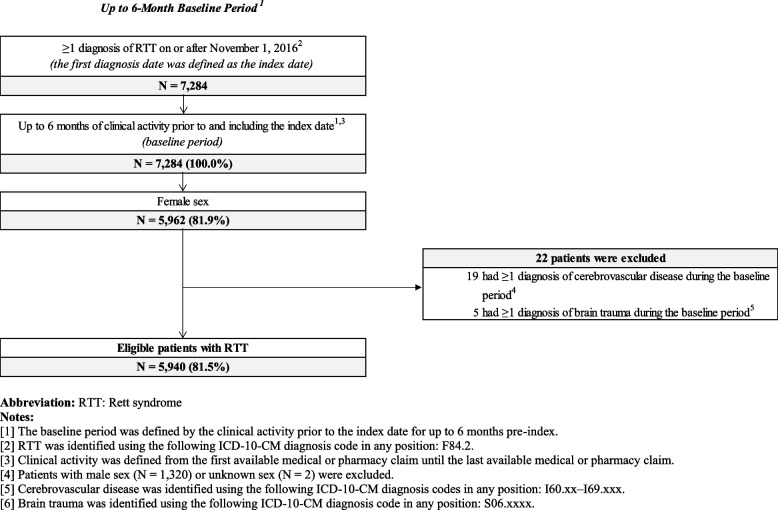
IQVIA™ Medical Claims Data and Longitudinal Prescription Data (11/01/2016-10/31/2019) were used to identify female patients with RTT, with the first observed diagnosis defined as the index date. Annual incidence and prevalence of RTT were assessed over the entire study period; clinical manifestations, all-cause and RTT-related HRU and costs, and treatment patterns were evaluated during the observation period-from the index date to end of clinical activity or end of data availability, whichever occurred first. Results were further stratified into pediatric (< 18 years) and adult (≥ 18 years) subgroups.
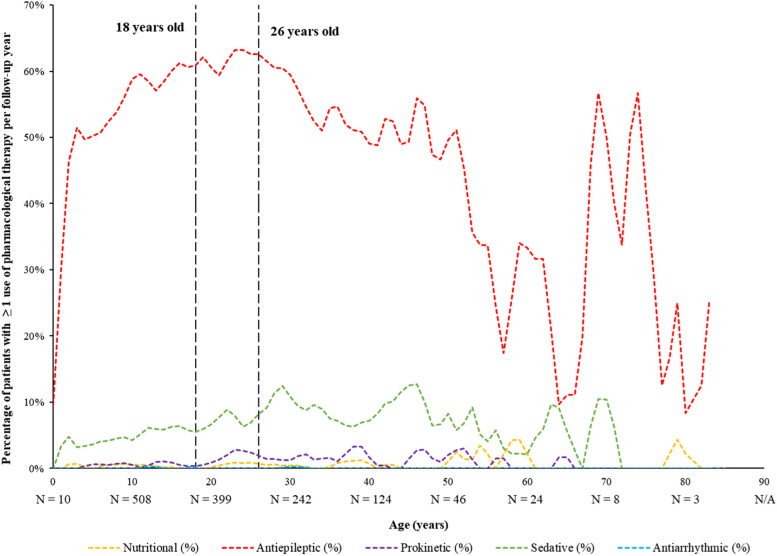
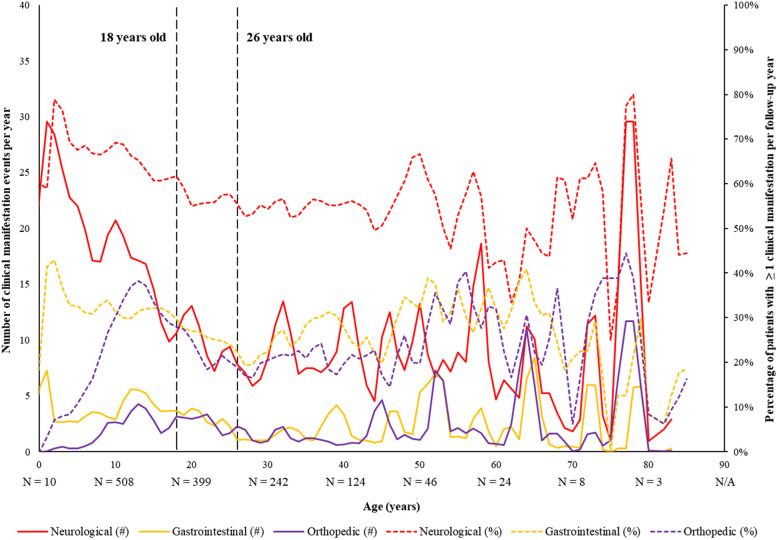
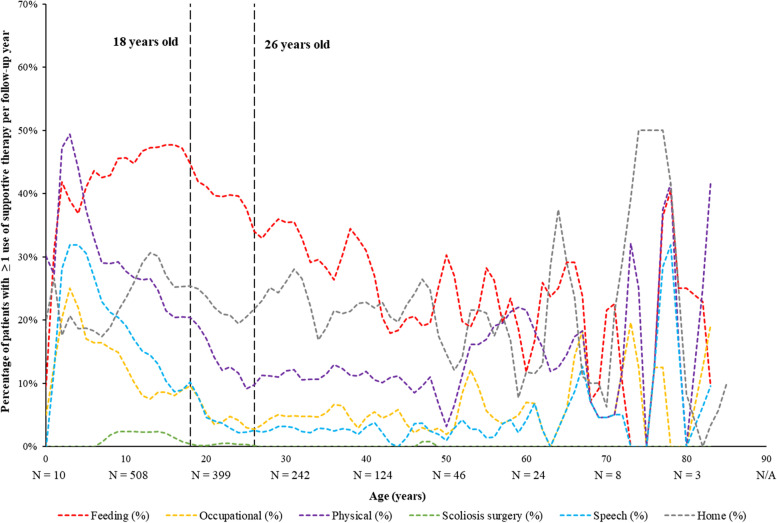
In 2019, prevalence and incidence of RTT was 0.32 and 0.23 per 10,000 enrollees, respectively. Among 5,940 female patients (pediatric: 3,078; adult: 2,862) with mean observation period of 2.04 years, the most prevalent clinical manifestations were neurological disorders (72.8%), gastrointestinal/nutritional disorders (41.9%), and orthopedic disorders (34.6%). The incidence rate of all-cause HRU was 44.43 visits per-patient-per-year and RTT-related HRU comprised 47% of all-cause HRU. Mean all-cause healthcare costs were $40,326 per-patient-per-year, with medical costs driven by home/hospice care visits, therapeutic services, outpatient visits, and inpatient visits. RTT-related healthcare costs comprised 45% of all-cause healthcare costs. The most prevalent supportive therapy and pharmacologic agent were feeding assistance (37.9%) and antiepileptic drugs (54.8%), respectively. Trends were similar by subgroup; although, rates of HRU were generally higher among pediatric patients relative to adult patients (all-cause: 52.43 and 35.86, respectively), which translated into higher mean healthcare costs (all-cause: $45,718 and $34,548, respectively).
Patients with RTT have substantial disease burden, including prevalent clinical manifestations, high rates of HRU and annual healthcare costs, and reliance on pharmacologic and supportive therapies. These findings underscore the unmet need for effective therapies to target the multifactorial manifestations of RTT.
雷特综合征(RTT)是一种神经发育障碍,几乎仅发生于女性,且与较高的临床负担相关。然而,描述 RTT 患者真实世界经历的文献有限。本研究提供了美国 RTT 患者的流行病学、患者特征、临床表现、医疗资源利用(HRU)、成本和治疗模式概述。
使用 IQVIA 医疗索赔数据和纵向处方数据(2016 年 11 月 1 日-2019 年 10 月 31 日)来确定患有 RTT 的女性患者,首次观察到的诊断定义为索引日期。在整个研究期间评估 RTT 的年度发病率和患病率;在观察期间(从索引日期到临床活动结束或数据可用性结束,以先到者为准)评估了所有病因和 RTT 相关的 HRU 和成本以及治疗模式。结果进一步分为儿科(<18 岁)和成人(≥18 岁)亚组。
2019 年,RTT 的患病率和发病率分别为每 10000 名参保者 0.32 例和 0.23 例。在 5940 名女性患者(儿科:3078 名;成人:2862 名)中,平均观察期为 2.04 年,最常见的临床表现为神经障碍(72.8%)、胃肠道/营养障碍(41.9%)和骨科障碍(34.6%)。所有病因的 HRU 发生率为每位患者每年 44.43 次就诊,而 RTT 相关 HRU 占所有病因 HRU 的 47%。每位患者每年的平均医疗保健费用为 40326 美元,其中家庭/临终关怀就诊、治疗服务、门诊就诊和住院就诊推动了医疗费用的增长。RTT 相关的医疗保健费用占所有病因医疗保健费用的 45%。最常见的支持治疗和药物治疗分别是喂养辅助(37.9%)和抗癫痫药物(54.8%)。亚组间趋势相似;尽管儿科患者的 HRU 率通常高于成年患者(所有病因:分别为 52.43 和 35.86),这导致了更高的平均医疗保健费用(所有病因:分别为 45718 美元和 34548 美元)。
患有 RTT 的患者疾病负担沉重,包括常见的临床表现、高发生率的 HRU 和年度医疗保健费用,以及对药物和支持治疗的依赖。这些发现强调了需要有效的治疗方法来针对 RTT 的多种表现。