
基于早期口腔健康相关生活质量的鼻咽癌放疗患者牙齿保护剂量限值
The dose limits of teeth protection for patients with nasopharyngeal carcinoma undergoing radiotherapy based on the early oral health-related quality of life.
作者信息
Yang Jing, Yang Liping, Han Qian, Zhang Yangyang, Tao Zhenchao, Zhou Yan, Zhang Peng, Wang Ru, Sun Bin, He Jian, Gao Jin
机构信息
Department of Radiation Oncology, The First Affiliated Hospital of USTC, Division of Life Sciences and Medicine, University of Science and Technology of China, Hefei 230031, Anhui Province, China.
Department of Stomatology, The First Affiliated Hospital of USTC, Division of Life Sciences and Medicine, University of Science and Technology of China, Hefei, Anhui, China.
出版信息
Open Med (Wars). 2023 Mar 30;18(1):20230673. doi: 10.1515/med-2023-0673. eCollection 2023.
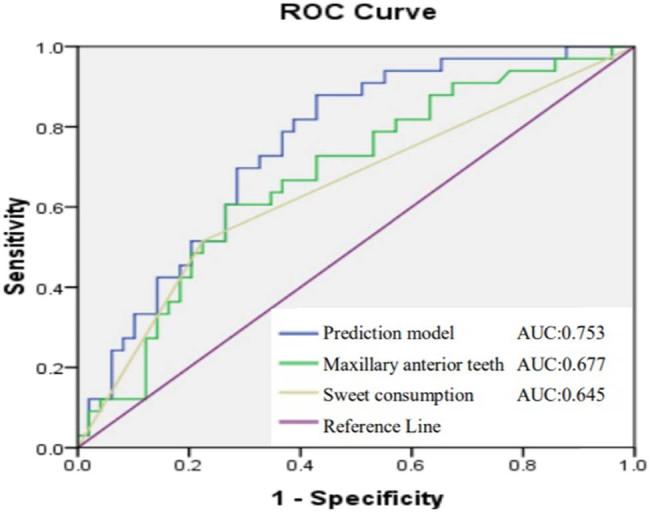
Radiation-related teeth damage is a common complication in nasopharyngeal carcinoma (NPC) patients undergoing radiotherapy (RT) that seriously affects their oral health-related quality of life (OHRQoL). However, few studies have focused on protecting teeth function. This study aimed to calculate dental dose limits based on OHRQoL. Analysis was performed on 96 NPC patients who received RT (all received routine pre-radiotherapy dental interventions in our department). Based on the General Oral Health Assessment Index (GOHAI), OHRQoL was assigned into poor (<46) and good condition groups (≥46). The binary logistic regression analysis model was used for single-factor and multivariate analyses to identify the independent factors affecting OHRQoL. The cut-off value of dose received by teeth was obtained by drawing a receiver operating characteristic curve. NPC patients experienced a decline in OHRQoL following RT ( < 0.05). Univariate analysis of GOHAI revealed that the average dose of maxillary anterior teeth, the average dose received by the oral cavity, tumor volume (GTVnx), and liking of the sweet food all affected GOHAI ( < 0.05). Multivariate analysis indicated that the average dose of maxillary anterior teeth and liking sweet food were independent factors that influenced the OHRQoL of NPC patients with RT. When the average dose received by maxillary anterior teeth is greater than 28.78 Gy, and there is a tendency in sweet food, the OHRQoL will deteriorate. NPC patients who received RT had a better OHRQoL if the average dose to maxillary anterior teeth was limited to less than 28.78 Gy and the intake of high-sugar foods was reduced.
放射性牙齿损伤是鼻咽癌(NPC)患者接受放射治疗(RT)时常见的并发症,严重影响其口腔健康相关生活质量(OHRQoL)。然而,很少有研究关注保护牙齿功能。本研究旨在基于OHRQoL计算牙齿剂量限值。对96例接受RT的NPC患者进行分析(所有患者均在我科接受常规放疗前牙齿干预)。根据一般口腔健康评估指数(GOHAI),将OHRQoL分为差(<46)和好(≥46)两组。采用二元逻辑回归分析模型进行单因素和多因素分析,以确定影响OHRQoL的独立因素。通过绘制受试者工作特征曲线获得牙齿接受剂量的截断值。NPC患者放疗后OHRQoL下降(<0.05)。对GOHAI的单因素分析显示,上颌前牙平均剂量、口腔接受的平均剂量、肿瘤体积(GTVnx)和对甜食的喜好均影响GOHAI(<0.05)。多因素分析表明,上颌前牙平均剂量和对甜食的喜好是影响接受RT的NPC患者OHRQoL的独立因素。当上颌前牙接受的平均剂量大于28.78 Gy且有甜食倾向时,OHRQoL会恶化。如果将上颌前牙的平均剂量限制在28.78 Gy以下并减少高糖食物的摄入,接受RT的NPC患者的OHRQoL会更好。


 Zotero 插件