Department of Clinical Laboratory, Renmin Hospital of Wuhan University, Wuhan, Hubei 430060, P.R. China.
Department of Breast and Thyroid Surgery, Renmin Hospital of Wuhan University, Wuhan, Hubei 430060, P.R. China.
Hum Mol Genet. 2023 Jun 19;32(13):2219-2228. doi: 10.1093/hmg/ddad055.
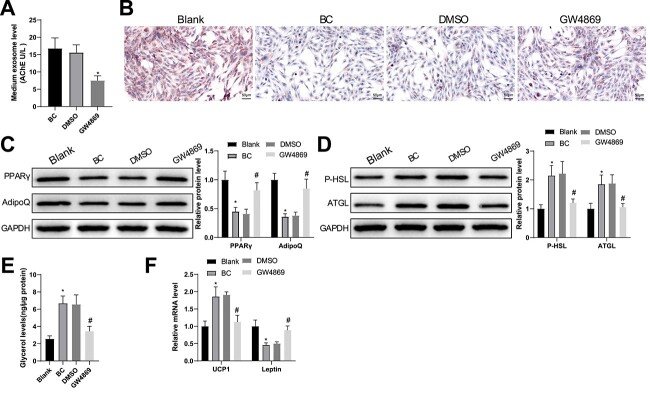
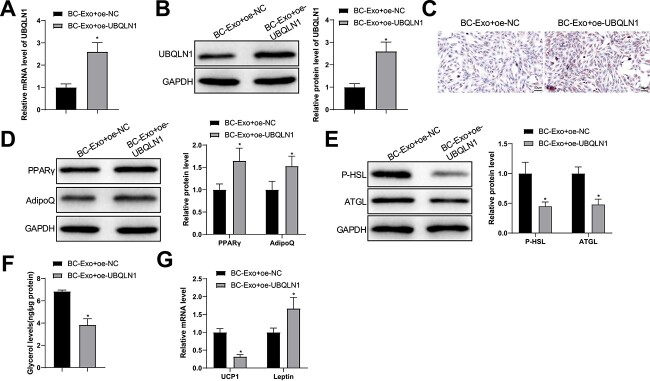
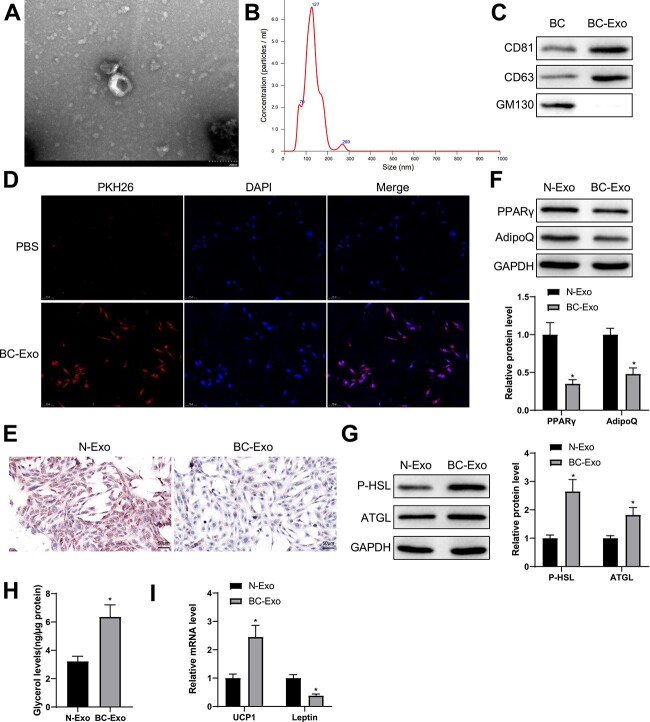
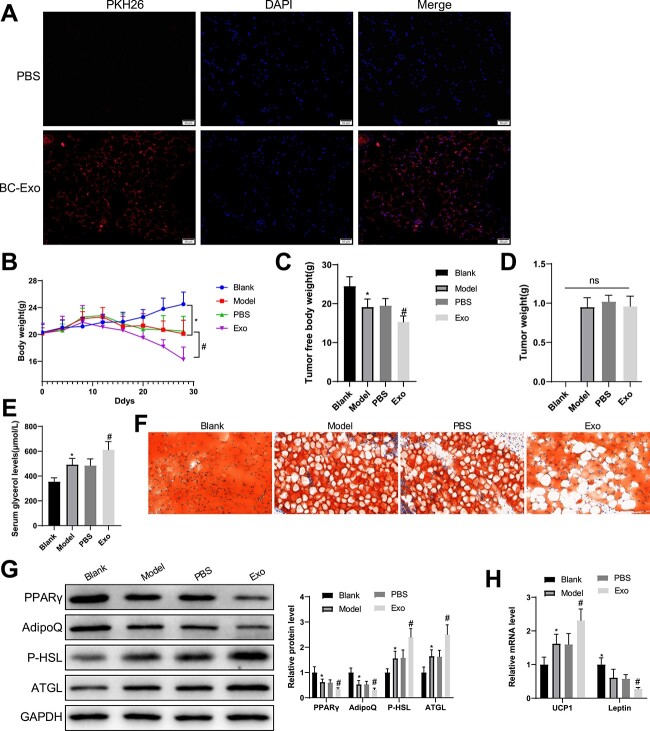
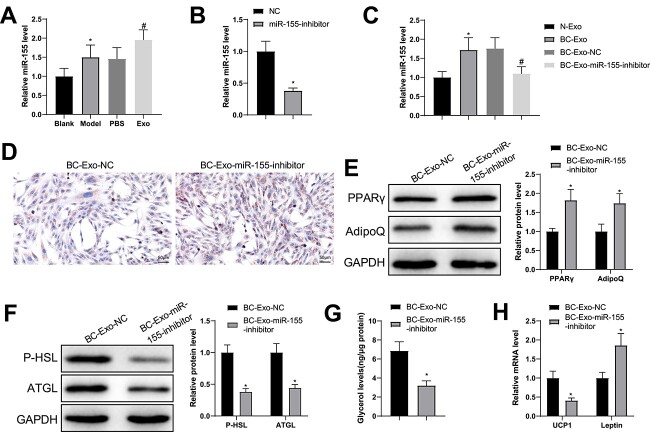
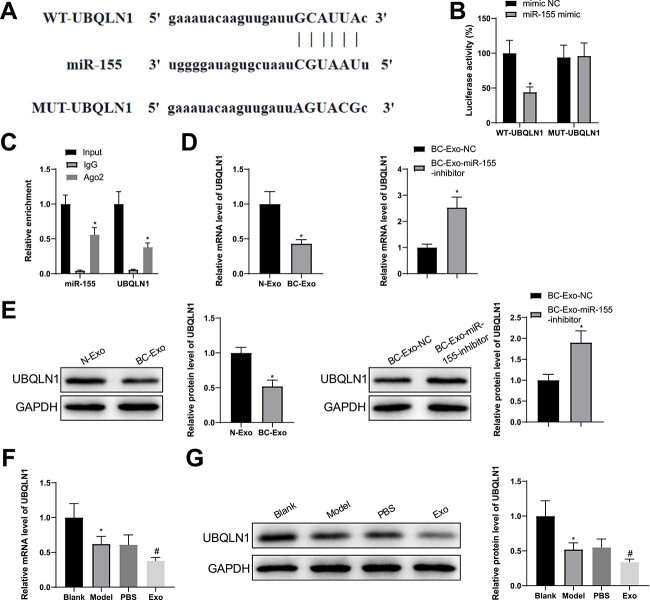
Cachexia occurrence and development are associated with loss of white adipose tissues, which may be involved with cancer-derived exosomes. This study attempted to characterize the functional mechanisms of breast cancer (BC) cell-derived exosome-loaded microRNA (miR)-155 in cancer cachexia-related fat loss. Exosomes were incubated with preadipocytes and cellular lipid droplet accumulation was observed using Oil Red O staining. Western blotting evaluated the cellular levels of lipogenesis marker peroxisome proliferator activated receptor gamma (PPARγ) and adiponectin, C1Q and collagen domain containing (AdipoQ). Differentiated adipocytes were incubated with exosomes, and phosphate hormone sensitive lipase (P-HSL), adipose triglyceride lipase (ATGL) and glycerol were detected in adipocytes, in addition to uncoupling protein 1 (UCP1) and leptin levels. A mouse model of cancer cachexia was established where cancer exosomes were injected intravenously. The changes in body weight and tumor-free body weights were recorded and serum glycerol levels and lipid accumulation in adipose tissues were determined. Also, the relationship between miR-155 and UBQLN1 was predicted and verified. BC exosome treatment reduced PPARγ and AdipoQ protein levels, promoted the levels of P-HSL and ATGL proteins, facilitated glycerol release, increased UCP1 expression and lowered leptin expression in adipocytes. Exosomal miR-155 inhibited lipogenesis in preadipocytes and boosted the browning of white adipose tissues. miR-155 downregulation alleviated cancer exosome-induced browning of white adipose tissues and fat loss. Mechanistically, miR-155 targeted UBQLN1, and UBQLN1 upregulation reversed the impacts of cancer exosomes. miR-155 loaded by BC cell-derived exosomes significantly affects white adipose browning and inhibition of cancer-derived exosomes.
恶病质的发生和发展与白色脂肪组织的丢失有关,这可能与癌症来源的外泌体有关。本研究试图描述乳腺癌(BC)细胞来源的外泌体负载 microRNA(miR)-155在癌症恶病质相关脂肪丢失中的功能机制。将外泌体与前体脂肪细胞孵育,并通过油红 O 染色观察细胞内脂滴积累。Western blot 评估细胞内脂生成标记物过氧化物酶体增殖物激活受体γ(PPARγ)和脂联素、C1Q 和胶原蛋白结构域(AdipoQ)的水平。分化的脂肪细胞与外泌体孵育,检测脂肪细胞中的磷酸激素敏感脂肪酶(P-HSL)、脂肪甘油三酯脂肪酶(ATGL)和甘油,以及解偶联蛋白 1(UCP1)和瘦素水平。建立癌症恶病质的小鼠模型,静脉注射癌症外泌体。记录体重和无肿瘤体重的变化,测定血清甘油水平和脂肪组织中的脂质积累。还预测和验证了 miR-155 和 UBQLN1 之间的关系。BC 外泌体处理降低了 PPARγ和 AdipoQ 蛋白水平,促进了 P-HSL 和 ATGL 蛋白水平,促进了甘油释放,增加了 UCP1 表达,降低了脂肪细胞中的瘦素表达。外泌体 miR-155 抑制前体脂肪细胞的脂生成,并促进白色脂肪组织的棕色化。miR-155 的下调减轻了癌症外泌体诱导的白色脂肪组织的棕色化和脂肪丢失。机制上,miR-155 靶向 UBQLN1,UBQLN1 的上调逆转了癌症外泌体的影响。BC 细胞来源的外泌体负载的 miR-155 显著影响白色脂肪的棕色化和抑制癌症来源的外泌体。