Department of Environmental Medicine and Public Health, Icahn School of Medicine at Mount Sinai, Box 1057, New York, NY 10029, USA.
Gangarosa Department of Environmental Health, Rollins School of Public Health Emory University, Atlanta, GA 30322, USA.
Toxicology. 2023 May 15;490:153498. doi: 10.1016/j.tox.2023.153498. Epub 2023 Apr 3.
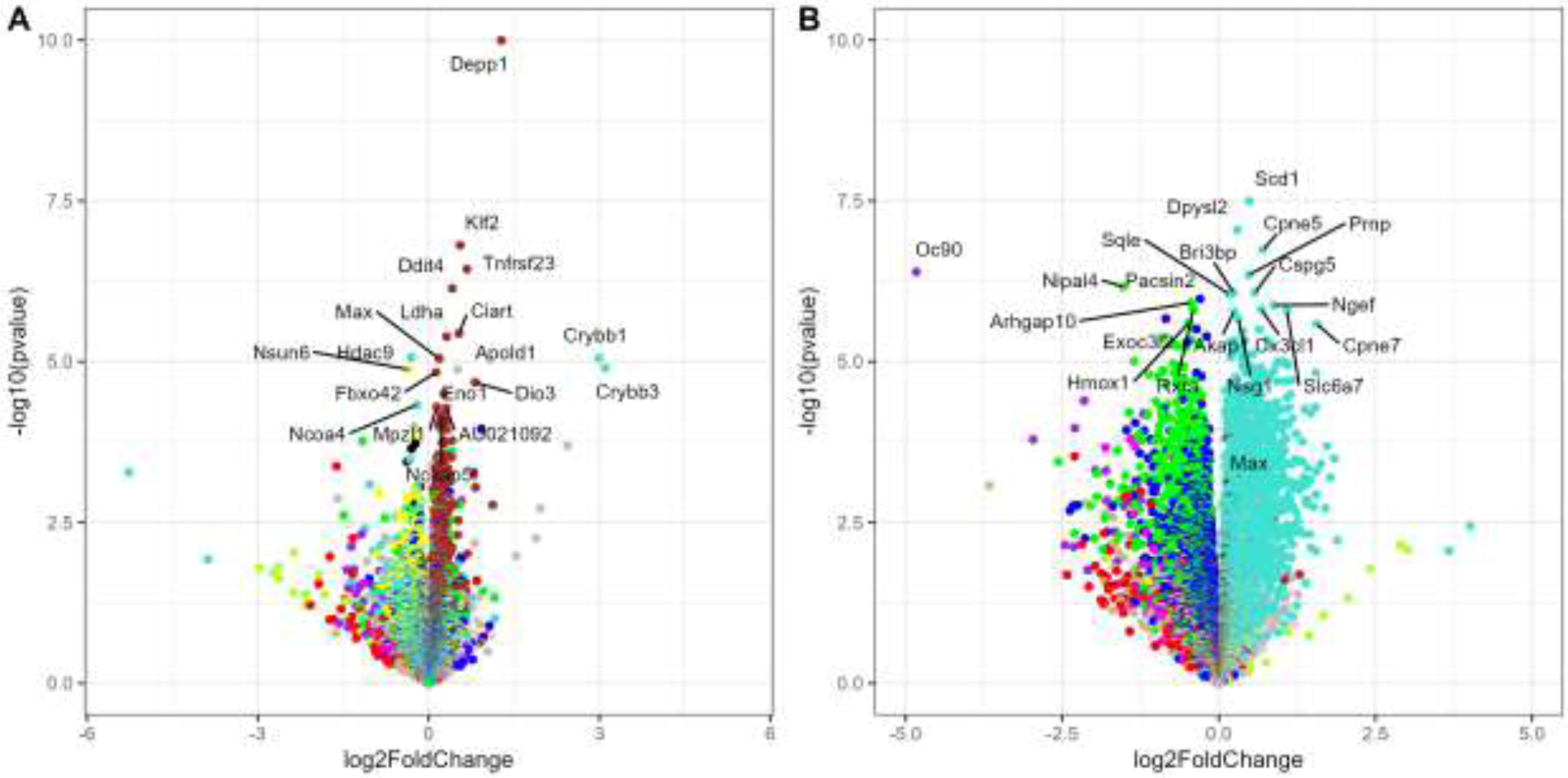
Organophosphate and pyrethroid pesticides are among the most extensively used insecticides worldwide. Prenatal exposures to both classes of pesticides have been linked to a wide range of neurobehavioral deficits in the offspring. The placenta is a neuroendocrine organ and the crucial regulator of the intrauterine environment; early-life toxicant exposures could impact neurobehavior by disrupting placental processes. Female C57BL/6 J mice were exposed via oral gavage to an organophosphate, chlorpyrifos (CPF) at 5 mg/kg, a pyrethroid, deltamethrin (DM), at 3 mg/kg, or vehicle only control (CTL). Exposure began two weeks before breeding and continued every three days until euthanasia at gestational day 17. The transcriptomes of fetal brain (CTL n = 18, CPF n = 6, DM n = 8) and placenta (CTL n = 19, CPF n = 16, DM n = 12) were obtained through RNA sequencing, and resulting data was evaluated using weighted gene co-expression networks, differential expression, and pathway analyses. Fourteen brain gene co-expression modules were identified; CPF exposure disrupted the module related to ribosome and oxidative phosphorylation, whereas DM disrupted the modules related to extracellular matrix and calcium signaling. In the placenta, network analyses revealed 12 gene co-expression modules. While CPF exposure disrupted modules related to endocytosis, Notch and Mapk signaling, DM exposure dysregulated modules linked to spliceosome, lysosome and Mapk signaling pathways. Overall, in both tissues, CPF exposure impacted oxidative phosphorylation, while DM was linked to genes involved in spliceosome and cell cycle. The transcription factor Max involved in cell proliferation was overexpressed by both pesticides in both tissues. In summary, gestational exposure to two different classes of pesticide can induce similar pathway-level transcriptome changes in the placenta and the brain; further studies should investigate if these changes are linked to neurobehavioral impairments.
有机磷和拟除虫菊酯类农药是世界上使用最广泛的杀虫剂之一。产前暴露于这两类农药都与后代广泛的神经行为缺陷有关。胎盘是一个神经内分泌器官,是宫内环境的关键调节者;早期毒物暴露可能会通过破坏胎盘过程来影响神经行为。雌性 C57BL/6J 小鼠通过口服灌胃暴露于有机磷杀虫剂毒死蜱(CPF),剂量为 5mg/kg,一种拟除虫菊酯类杀虫剂溴氰菊酯(DM),剂量为 3mg/kg,或仅给予载体对照(CTL)。暴露始于繁殖前两周,并持续每三天一次,直至妊娠第 17 天安乐死。通过 RNA 测序获得胎儿大脑(CTL n=18,CPF n=6,DM n=8)和胎盘(CTL n=19,CPF n=16,DM n=12)的转录组,并通过加权基因共表达网络、差异表达和途径分析评估所得数据。鉴定出 14 个大脑基因共表达模块;CPF 暴露破坏了与核糖体和氧化磷酸化相关的模块,而 DM 破坏了与细胞外基质和钙信号相关的模块。在胎盘上,网络分析显示了 12 个基因共表达模块。CPF 暴露破坏了与内吞作用、Notch 和 Mapk 信号相关的模块,DM 暴露则使与剪接体、溶酶体和 Mapk 信号通路相关的模块失调。总体而言,在两种组织中,CPF 暴露影响氧化磷酸化,而 DM 则与剪接体和细胞周期相关的基因有关。参与细胞增殖的转录因子 Max 在两种组织中都被这两种农药过度表达。总之,妊娠期暴露于两种不同类别的农药会在胎盘和大脑中引起类似的通路水平转录组变化;进一步的研究应调查这些变化是否与神经行为损伤有关。