Department of Biochemistry and Molecular Biology, Graduate School of Medicine, The University of Tokyo.
Cell Struct Funct. 2023 May 11;48(1):99-112. doi: 10.1247/csf.23016. Epub 2023 Apr 6.
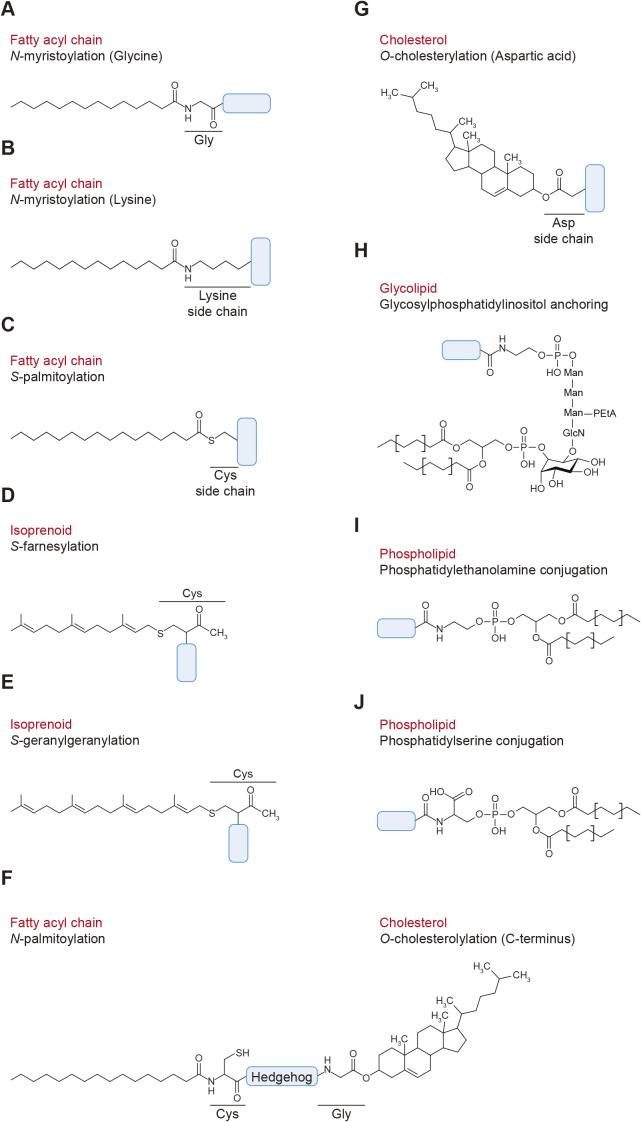
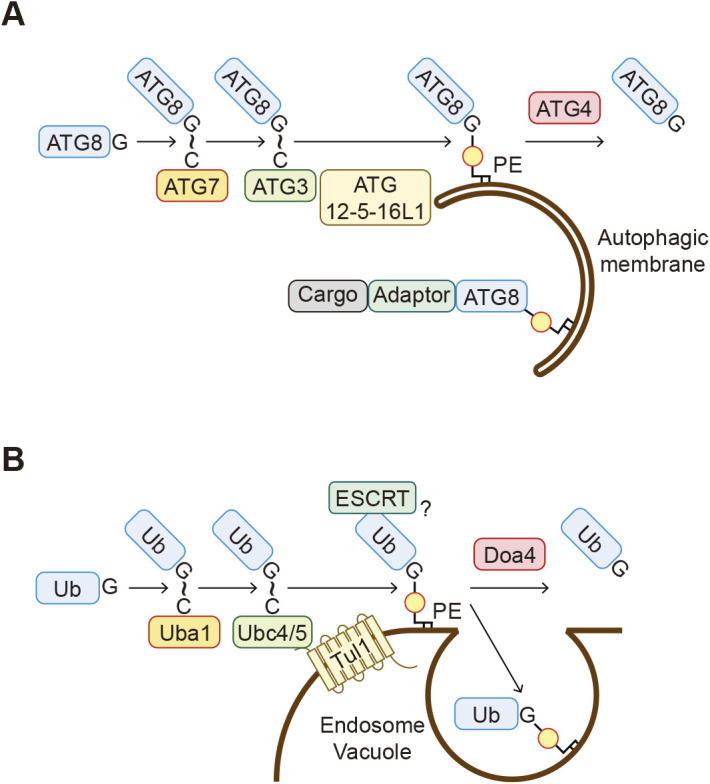
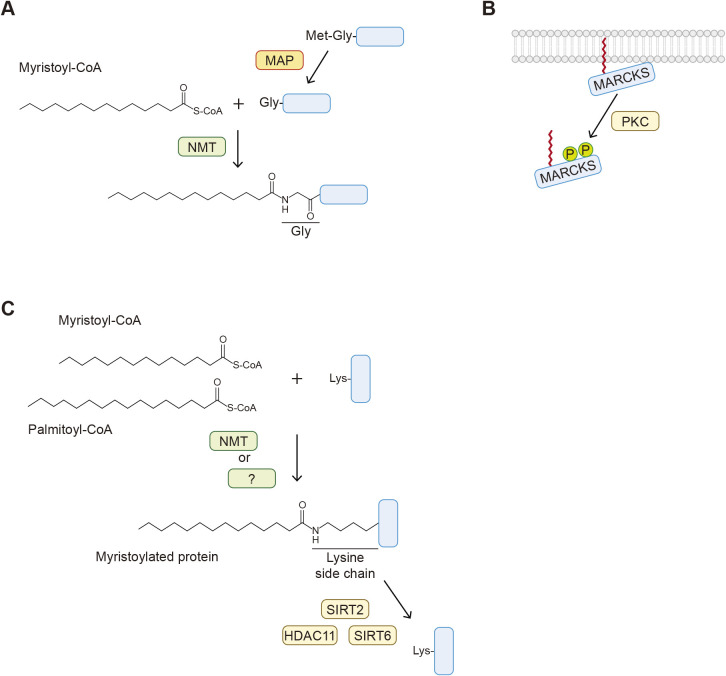
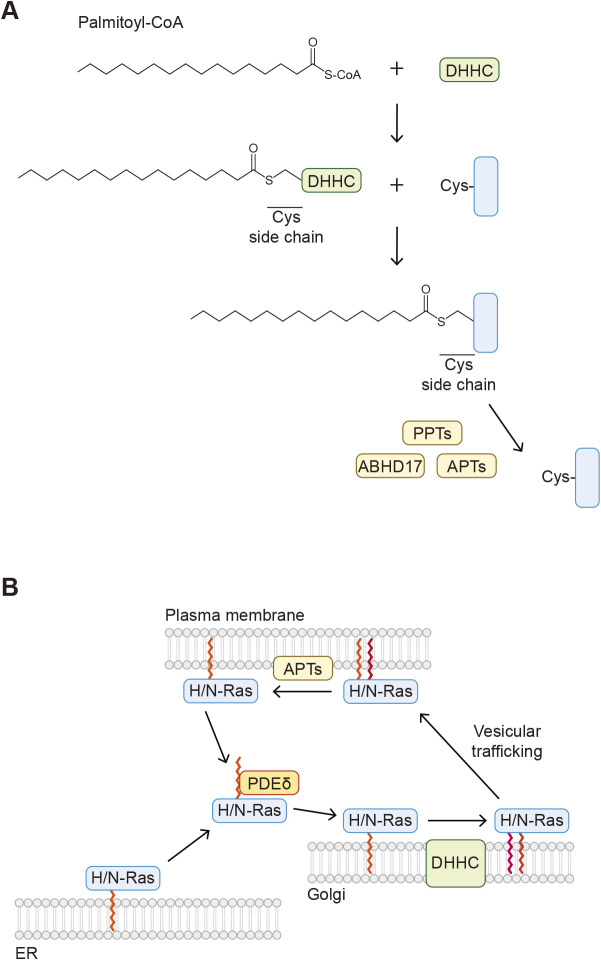
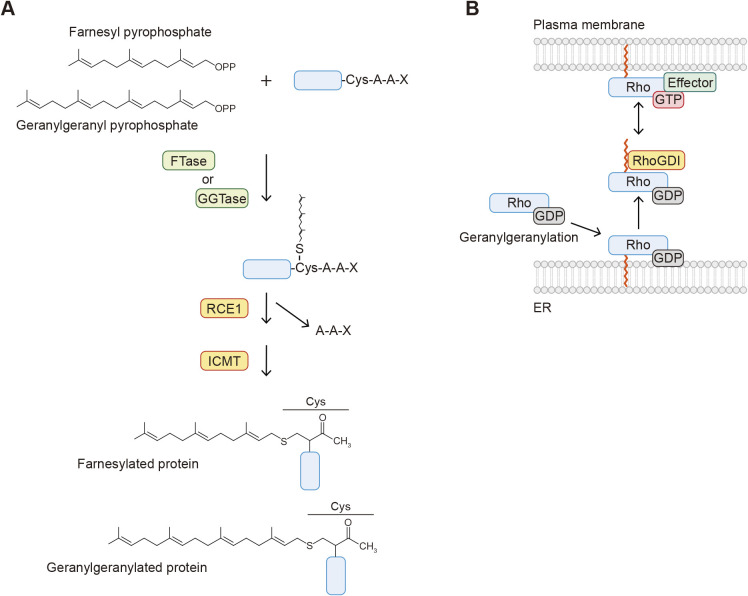
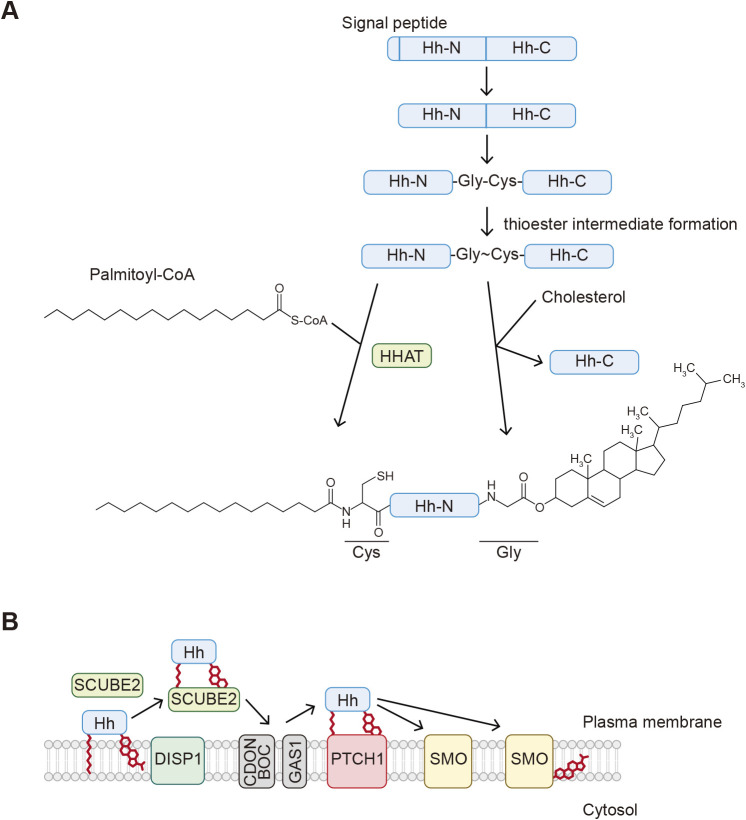
Protein-lipid conjugation is a widespread modification involved in many biological processes. Various lipids, including fatty acids, isoprenoids, sterols, glycosylphosphatidylinositol, sphingolipids, and phospholipids, are covalently linked with proteins. These modifications direct proteins to intracellular membranes through the hydrophobic nature of lipids. Some of these membrane-binding processes are reversible through delipidation or by reducing the affinity to membranes. Many signaling molecules undergo lipid modification, and their membrane binding is important for proper signal transduction. The conjugation of proteins to lipids also influences the dynamics and function of organellar membranes. Dysregulation of lipidation has been associated with diseases such as neurodegenerative diseases. In this review, we first provide an overview of diverse forms of protein-lipid conjugation and then summarize the catalytic mechanisms, regulation, and roles of these modifications.Key words: lipid, lipidation, membrane, organelle, protein modification.
蛋白质-脂质缀合是一种广泛存在的修饰方式,涉及许多生物过程。各种脂质,包括脂肪酸、异戊二烯、固醇、糖基磷脂酰肌醇、鞘脂和磷脂,都与蛋白质共价结合。这些修饰通过脂质的疏水性将蛋白质导向细胞内膜。其中一些膜结合过程可以通过去脂化或降低与膜的亲和力来逆转。许多信号分子经历脂质修饰,它们与膜的结合对于正确的信号转导很重要。蛋白质与脂质的缀合也会影响细胞器膜的动力学和功能。脂质化的失调与神经退行性疾病等疾病有关。在这篇综述中,我们首先概述了不同形式的蛋白质-脂质缀合,然后总结了这些修饰的催化机制、调节和作用。
脂质、脂质化、膜、细胞器、蛋白质修饰。